

News
Home > News
-
Uses of Acetyl Tetrapeptide-2
Acetyl Tetrapeptide-2 is a synthetic acetylated tetrapeptide primarily used as a cosmetic skin-conditioning and anti-aging active. It is generally incorporated into facial skincare and other leave-on formulations designed to improve the appearance of mature or stressed skin. 1. Anti-aging skincare Its principal cosmetic use is in products targeting visible signs of aging, including: It is commonly positioned as a peptide active that supports a smoother, firmer-looking complexion. 2. Firming and elasticity products Acetyl Tetrapeptide-2 may be used in formulations marketed for skin firmness and elasticity. It can be incorporated into: 3. Skin-conditioning formulations As a peptide cosmetic ingredient, it can…
-
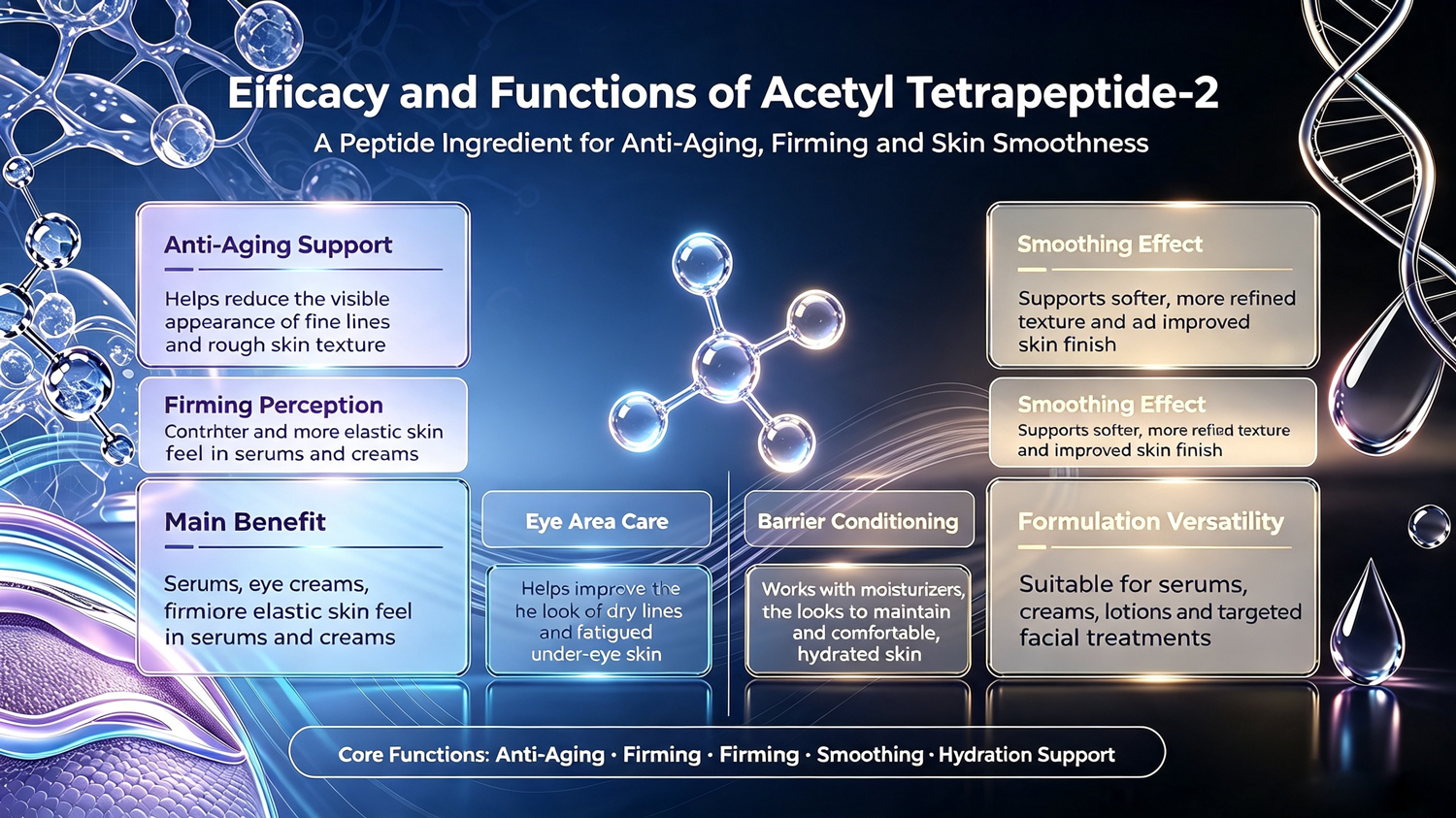
Efficacy and Functions of Acetyl Tetrapeptide-2
Acetyl Tetrapeptide-2 is a synthetic cosmetic peptide used primarily in anti-aging, firming, and skin-conditioning formulations. It is designed to support the skin’s extracellular matrix and improve the appearance of skin that has lost firmness and elasticity. Key efficacy Function Potential cosmetic effect Skin firming Helps improve the appearance of firmness and tightness Anti-aging Helps reduce the visible signs associated with skin aging Elasticity support May help skin appear more elastic and resilient Collagen/ECM support Intended to support processes associated with the skin extracellular matrix Fine-line improvement Can contribute to a smoother-looking skin surface Skin conditioning Helps maintain a soft, smooth,…
-
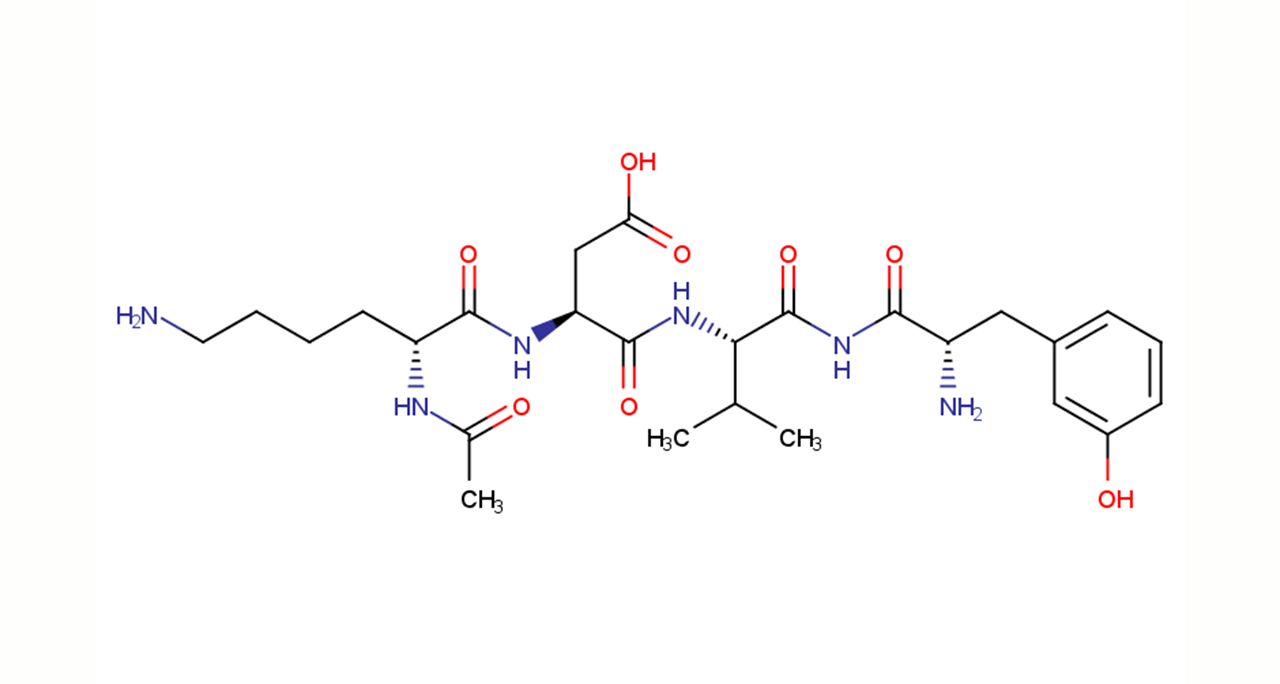
Chemical Structure and Physical Properties of Acetyl Tetrapeptide-2
Acetyl Tetrapeptide-2 is a synthetic N-acetylated tetrapeptide used primarily as a cosmetic peptide active. Chemically, it consists of four amino-acid residues—lysine, aspartic acid, valine, and tyrosine—with an acetyl group attached to the N-terminus. Its peptide sequence is Ac-Lys-Asp-Val-Tyr-OH (Ac-KDVY). 1. Chemical identity Property Acetyl Tetrapeptide-2 INCI name Acetyl Tetrapeptide-2 Common abbreviation Ac-KDVY Peptide sequence Ac-Lys-Asp-Val-Tyr-OH CAS No. 757942-88-4 Molecular formula C₂₆H₃₉N₅O₉ Molecular weight 565.6 g/mol IUPAC name N-acetyl-L-lysyl-L-α-aspartyl-L-valyl-L-tyrosine InChIKey ITIMHIATVYROGF-XWUOBKMESA-N Physical form Solid, typically white to off-white Charge Neutral as the free compound Stereocenters 4 defined stereocenters These structural identifiers are reported by PubChem and the U.S. National Center for…
-
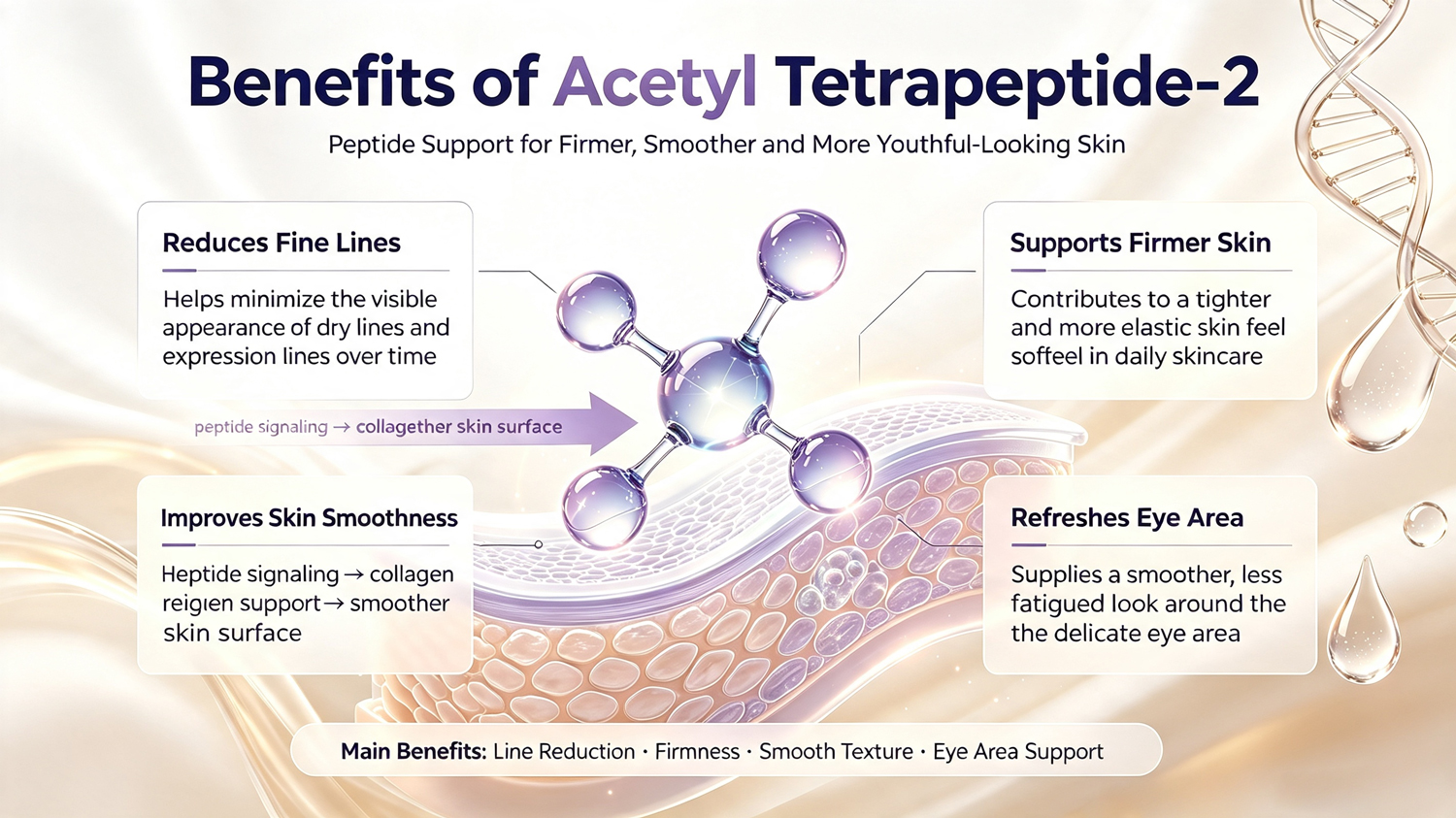
Benefits of Acetyl Tetrapeptide-2 in Cosmetics
Acetyl Tetrapeptide-2 is a synthetic cosmetic peptide used mainly in anti-aging, firming, and skin-quality formulations. Current clinical evidence suggests potential improvements in skin texture, fine lines, hydration, and firmness, although the evidence is still limited and most studies tested it as part of multi-ingredient formulas rather than as an isolated ingredient. Key cosmetic benefits Benefit Cosmetic effect Reduces appearance of fine lines Helps make superficial wrinkles and fine lines look less pronounced Supports skin firmness May improve the appearance of lax or less-toned skin Improves elasticity Can contribute to a more resilient, supple skin appearance Smooths skin texture May reduce…
-
What is Acetyl Tetrapeptide-2?
Acetyl Tetrapeptide-2 is a synthetic cosmetic peptide used mainly in anti-aging and skin-conditioning formulations. It is a short chain of four amino acids that has been chemically modified with an acetyl group to improve its cosmetic functionality. Basic information Property Description INCI name Acetyl Tetrapeptide-2 Type Synthetic peptide Peptide length Tetrapeptide (4 amino acids) Primary cosmetic role Anti-aging, skin conditioning, firming Main target Skin extracellular matrix and signs associated with aging Typical applications Serums, creams, eye products, anti-aging formulations Appearance Usually supplied as a peptide-containing cosmetic raw material, often in solution Function Helps improve the appearance of firmness, elasticity, and…
-
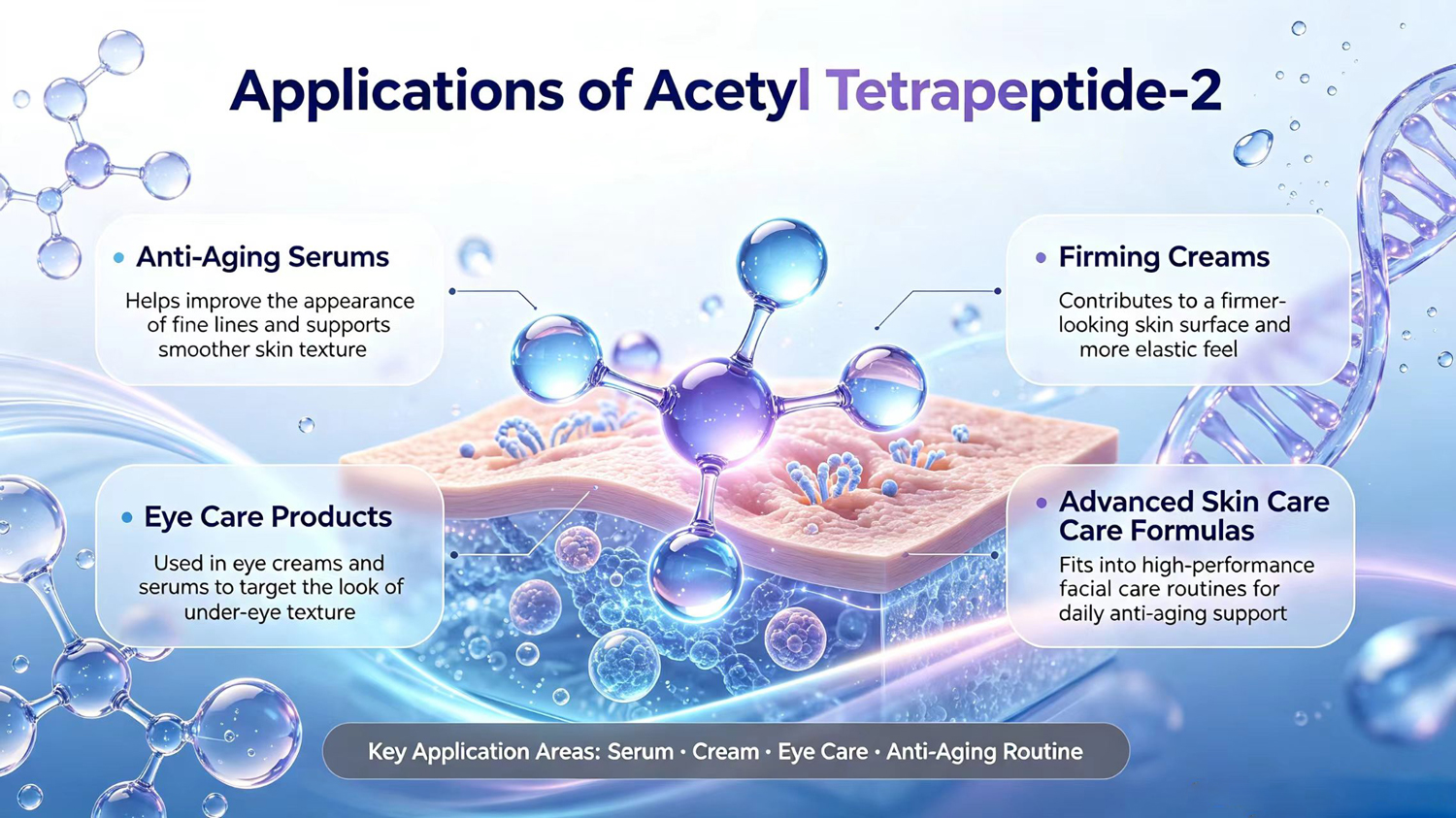
Applications of Acetyl Tetrapeptide-2
Acetyl Tetrapeptide-2 is a synthetic, acetylated tetrapeptide primarily used as a cosmetic anti-aging and skin-conditioning active. It is particularly associated with improving the appearance of mature, tired, or slack-looking skin and supporting a more youthful-looking facial contour. 1. Anti-aging skincare Its principal application is in products designed to address visible signs of aging, such as: It is commonly positioned as a firming/toning peptide rather than simply a moisturizing ingredient. 2. Skin-firming and contouring products Acetyl Tetrapeptide-2 is especially interesting for formulations targeting the appearance of facial sagging and loss of definition. It may be incorporated into: Its role is primarily…
-
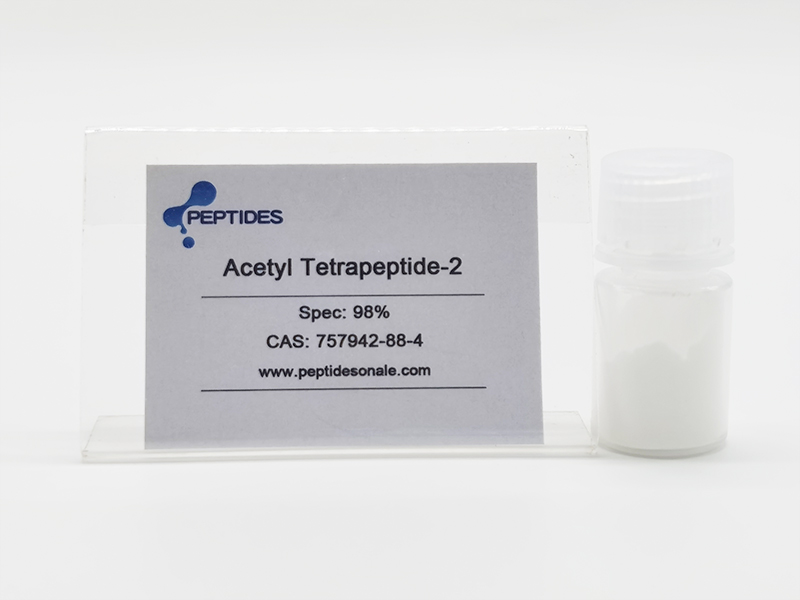
Origin, Properties, and Introduction of Acetyl Tetrapeptide-2
Acetyl Tetrapeptide-2 is a synthetic, acetylated tetrapeptide used primarily as an anti-aging and skin-conditioning cosmetic active. It belongs to the growing class of signal peptides designed to support the skin’s extracellular matrix and improve the appearance of firmness, elasticity, and age-related skin changes. Origin Acetyl Tetrapeptide-2 is synthetic rather than directly extracted from plants or animals. It is produced through controlled peptide synthesis, where four amino-acid residues are assembled into a specific sequence and an acetyl group is introduced at the N-terminal end. The acetylation is important because modifying the peptide terminus can influence its: It is therefore considered a…
-
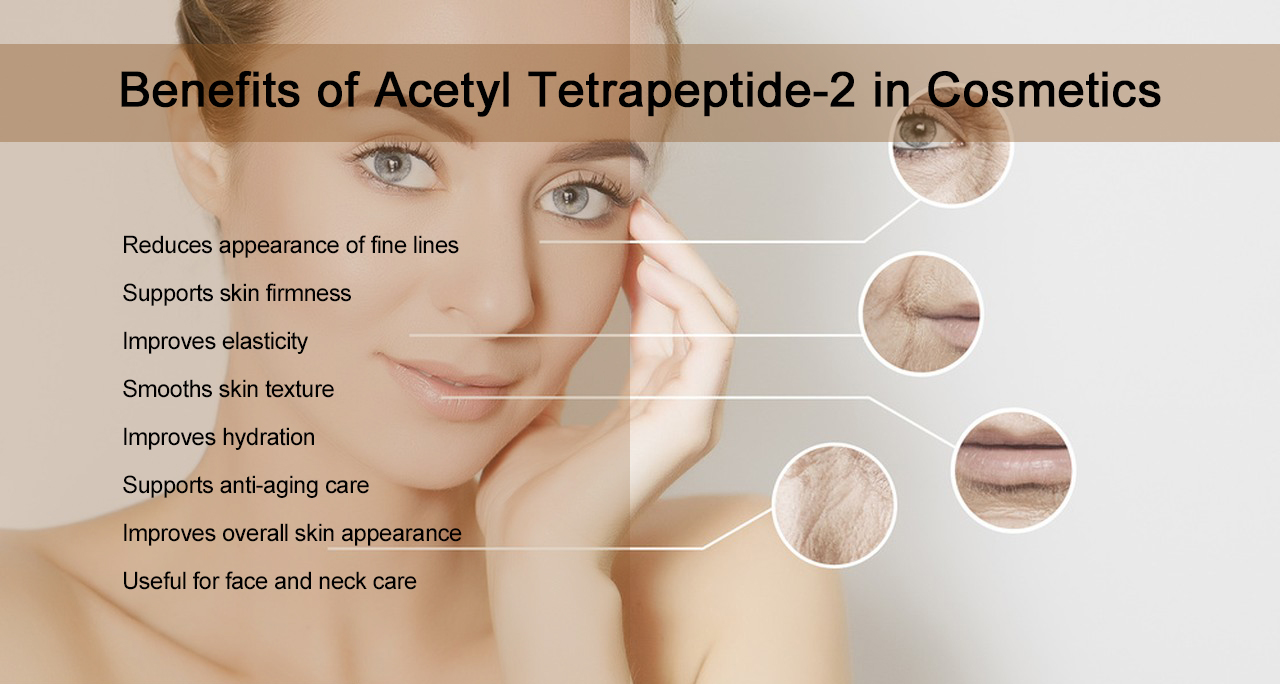
Benefits of Acetyl Tetrapeptide-2
Acetyl Tetrapeptide-2 is a synthetic signal peptide used primarily in anti-aging and skin-firming cosmetic formulations. It is designed to support extracellular-matrix-related processes and improve the appearance of skin affected by aging and loss of elasticity. Key benefits 1. Helps improve skin firmness 2. Supports skin elasticity 3. Reduces the appearance of wrinkles 4. Helps improve skin smoothness 5. Supports the extracellular matrix 6. May improve the appearance of mature skin 7. Useful in anti-aging formulations Summary Benefit Cosmetic role Firming Helps improve the appearance of skin firmness Elasticity Supports a more resilient-looking skin texture Fine lines Helps reduce the visible…
-
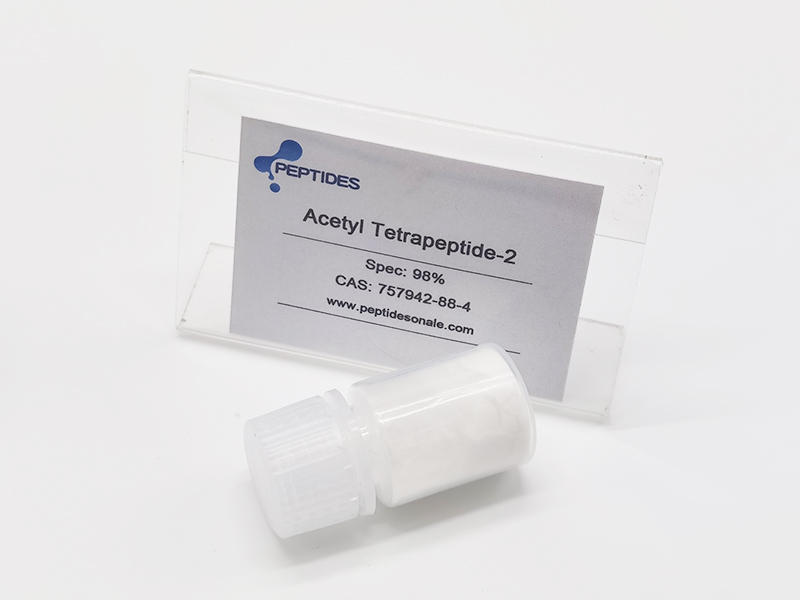
Basic information of Acetyl Tetrapeptide-2
Acetyl Tetrapeptide-2 is a synthetic, short-chain cosmetic peptide used primarily in anti-aging and skin-conditioning formulations. It belongs to the tetrapeptide family and is designed to support the skin’s appearance, particularly firmness, elasticity, smoothness, and signs of aging. 1. Basic profile Property Information INCI name Acetyl Tetrapeptide-2 Category Cosmetic peptide / signal peptide Peptide length Tetrapeptide (4 amino-acid residues) Type Synthetic, acetylated peptide Primary field Skin care and anti-aging cosmetics Main cosmetic role Skin conditioning and anti-aging support Typical formulations Serums, creams, lotions, eye-care products Target concerns Loss of firmness, elasticity, fine lines, mature-looking skin 2. What does the name mean?…
-
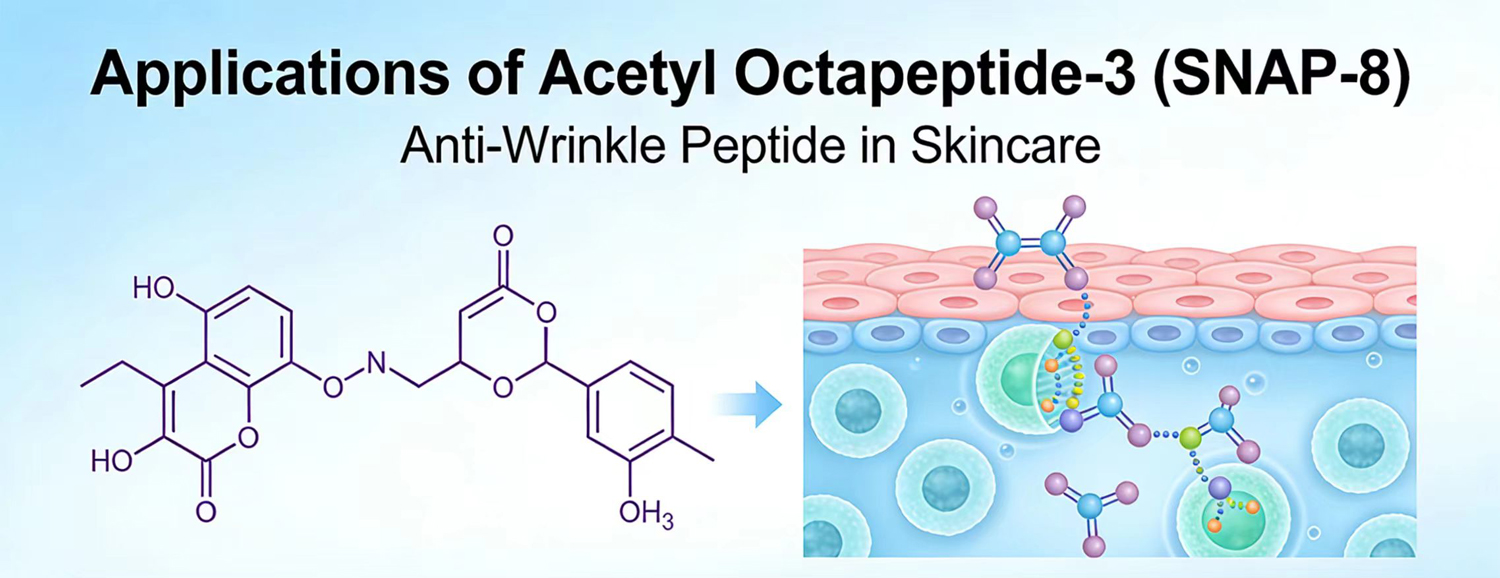
Applications of Acetyl Octapeptide-3
Acetyl Octapeptide-3 is primarily used in cosmetic and dermatological skincare formulations for its mild anti-wrinkle and muscle-relaxing properties. Its applications are centered on improving the appearance of expression lines rather than treating medical conditions. Main applications 1. Anti-aging facial skincare It is widely used in products aimed at reducing visible signs of aging, such as: Typically found in: 2. Eye contour treatments Because the eye area is prone to dynamic wrinkles, it is commonly formulated into: Goal: soften repeated muscle-driven creasing around the eyes. 3. Preventive skincare (early anti-aging) It is also used in products for younger users focusing on…
-
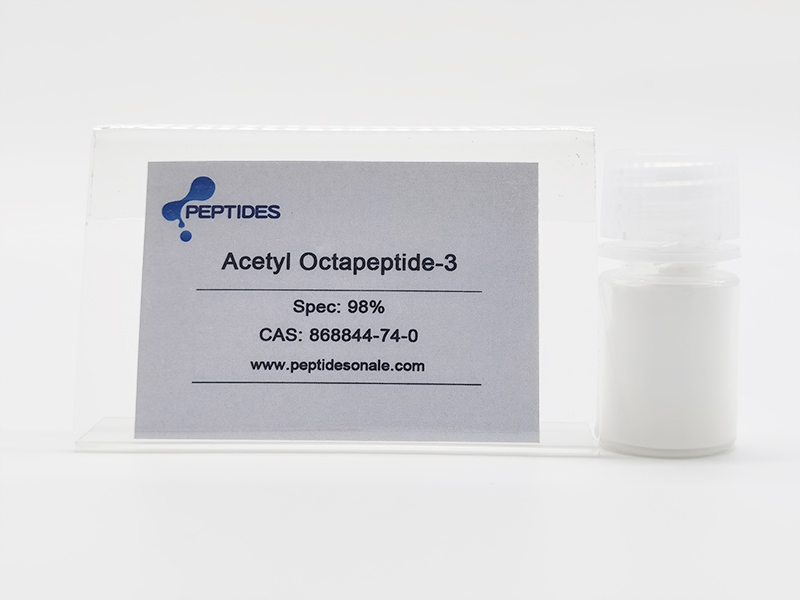
Pros and Cons of Acetyl Octapeptide-3
Acetyl Octapeptide-3 (SNAP-8) is a synthetic biomimetic peptide widely used in anti-aging skincare. It was developed as an enhanced version of Acetyl Hexapeptide-8 (Argireline) to reduce the appearance of expression lines by modulating neurotransmitter release. While it is valued as a non-invasive cosmetic ingredient, it also has limitations compared with clinical anti-wrinkle treatments such as botulinum toxin injections. Pros of Acetyl Octapeptide-3 1. Reduces Dynamic Wrinkles The primary benefit of Acetyl Octapeptide-3 is its ability to reduce the appearance of wrinkles caused by repeated facial expressions. It is particularly effective for: By reducing repetitive muscle contractions, it helps soften expression lines…
-
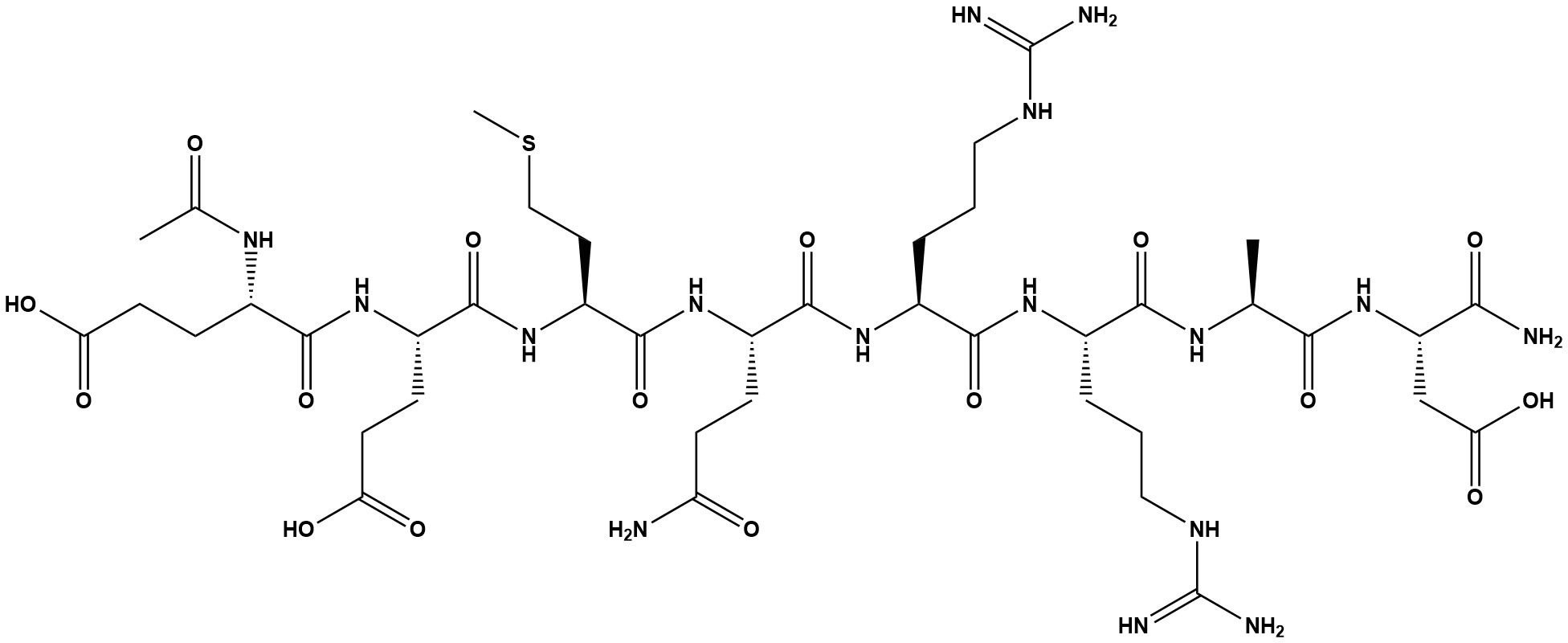
Chemical Structure and Physical Properties of Acetyl Octapeptide-3
Acetyl Octapeptide-3, commonly known by the trade name SNAP-8, is a synthetic biomimetic peptide developed for cosmetic applications, particularly in anti-aging skincare. It is an octapeptide (composed of eight amino acids) designed as an extended analog of Acetyl Hexapeptide-8 (Argireline). By mimicking part of the SNAP-25 protein involved in neurotransmitter release, it helps reduce the appearance of expression lines through a topical, non-invasive mechanism. Chemical Structure of Acetyl Octapeptide-3 Basic Information Property Description INCI Name Acetyl Octapeptide-3 Common Name SNAP-8 Chemical Type Synthetic acetylated oligopeptide Peptide Length 8 amino acids (octapeptide) Molecular Formula C₄₁H₇₀N₁₆O₁₆S Approximate Molecular Weight ~1,075 Da Appearance White…