

News
Home > News
-
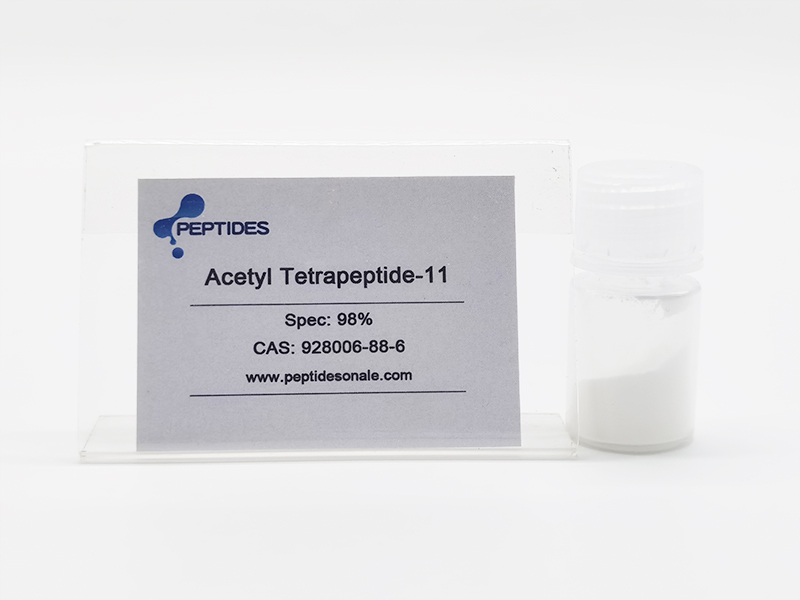
Origin, Properties, and Introduction of Acetyl Tetrapeptide-11
Acetyl Tetrapeptide-11 is a synthetic cosmetic peptide used primarily as a skin-conditioning and anti-aging active. It is designed to support epidermal structure and skin firmness by influencing proteins involved in cell adhesion and epidermal cohesion. 1. Basic introduction Structurally, it consists of four amino-acid residues—proline, proline, tyrosine, and leucine—with an acetyl group attached at the N-terminus. Regulatory databases identify it as 1-acetyl-L-prolyl-L-prolyl-L-tyrosyl-L-leucine. 2. Origin Acetyl Tetrapeptide-11 is synthetically produced rather than extracted directly from plants or animals. COSMILE Europe classifies its origin as synthetic, while Korean and Japanese cosmetic ingredient databases describe it as the reaction product obtained by acetylating…
-
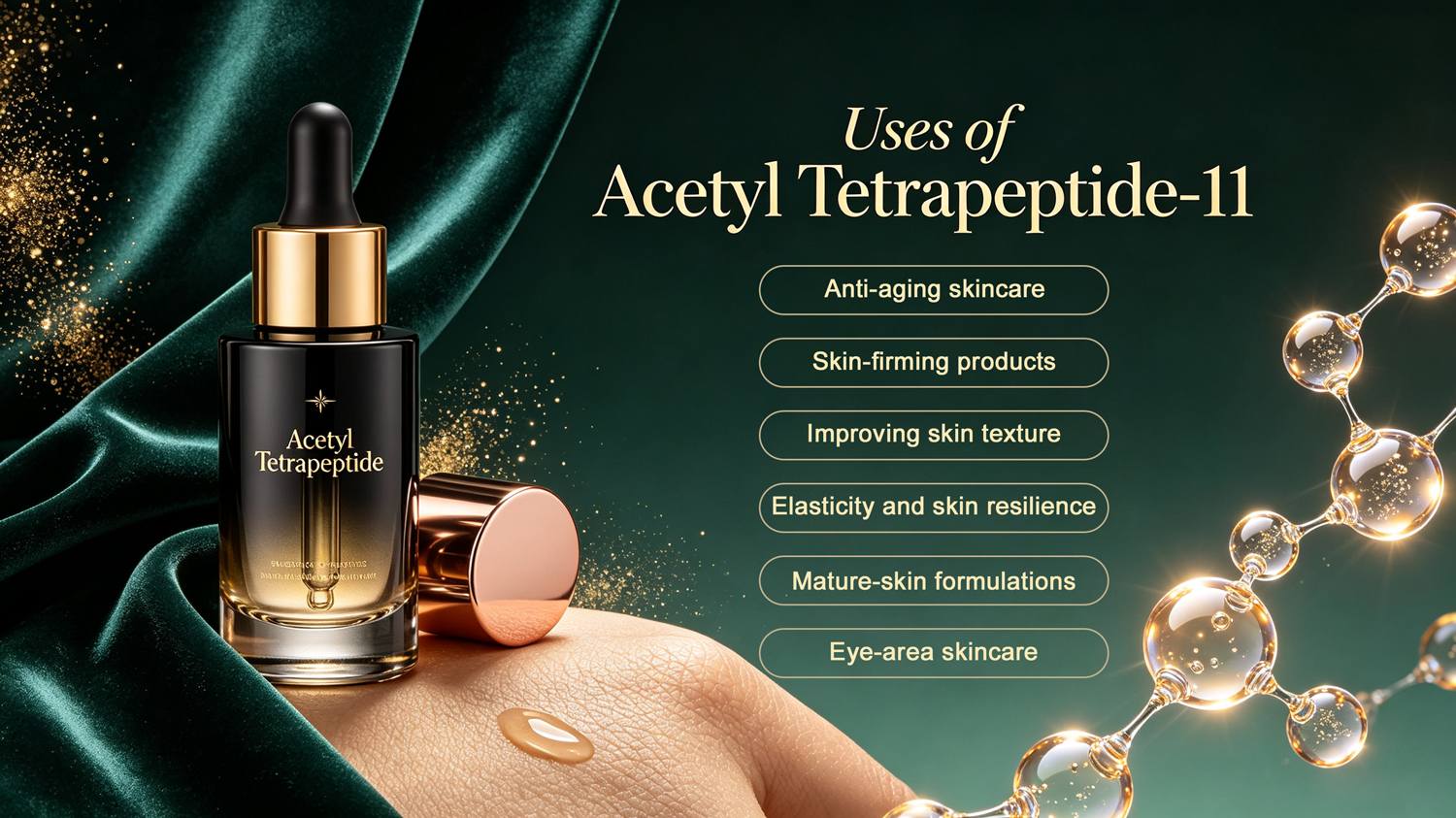
Uses of Acetyl Tetrapeptide-11
Acetyl Tetrapeptide-11 is a synthetic cosmetic peptide primarily used in anti-aging and skin-conditioning formulations. It is designed to support the skin’s structural and extracellular-matrix environment and is commonly positioned as a peptide for improving the appearance of firmness, elasticity, smoothness, and overall skin quality. Main uses 1. Anti-aging skincare 2. Skin-firming products 3. Improving skin texture 4. Elasticity and skin resilience 5. Mature-skin formulations 6. Eye-area skincare Typical formulation applications Product type Purpose Facial serum Anti-aging, firmness, skin conditioning Face cream Firming and smoothing Eye cream Fine-line and firmness care Neck cream Skin-firming/anti-aging care Anti-aging mask Skin conditioning and smoothing…
-
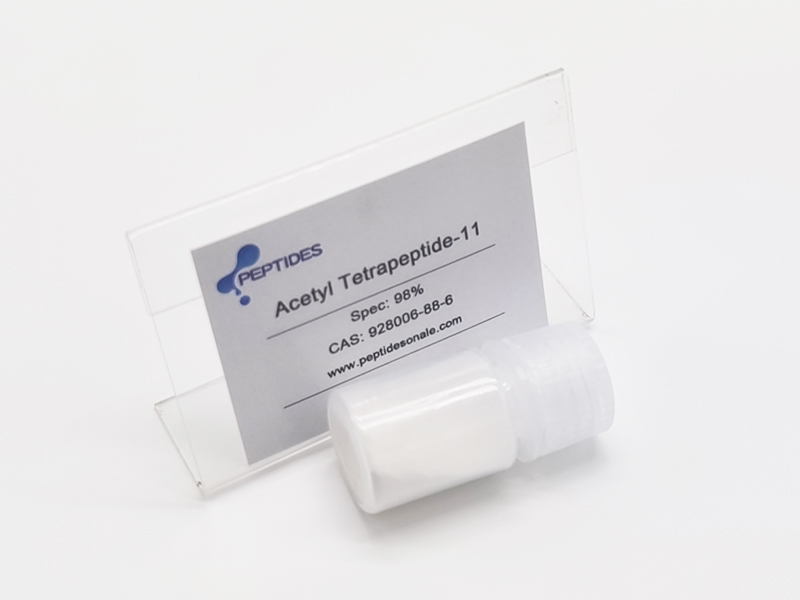
Basic Information of Acetyl Tetrapeptide-11
Acetyl Tetrapeptide-11 is a synthetic cosmetic peptide used primarily in anti-aging and skin-conditioning formulations. It belongs to the family of short, acetylated tetrapeptides and is designed to support the appearance of firmer, smoother, and more youthful-looking skin. 1. Basic profile Property Information Name Acetyl Tetrapeptide-11 INCI name Acetyl Tetrapeptide-11 Type Synthetic tetrapeptide Peptide size 4 amino-acid residues + N-terminal acetyl group Main field Cosmetic skincare Primary positioning Anti-aging, skin firmness, skin conditioning Typical formulations Serums, creams, lotions, eye-care products Appearance Generally supplied as a peptide-containing cosmetic raw material, often in an aqueous solution or blend Origin Synthetic/manufactured peptide rather than…
-
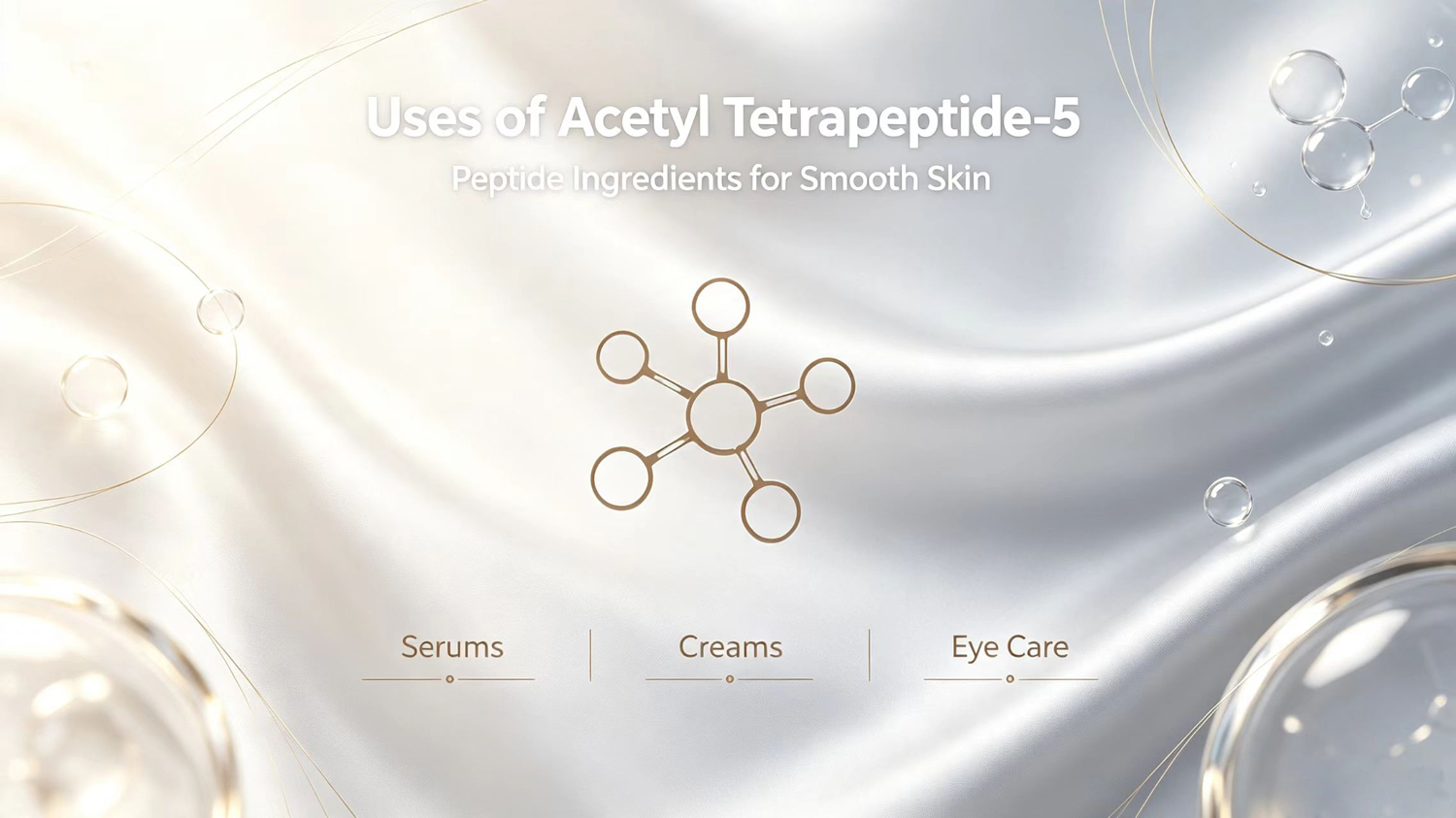
Uses of Acetyl Tetrapeptide-5
Acetyl Tetrapeptide-5 is a synthetic biomimetic tetrapeptide widely used as a cosmetic skin-conditioning and anti-puffiness active, particularly in products formulated for the eye area. It is commonly associated with improving the appearance of under-eye bags, puffiness, dark-circle appearance, and signs of fatigue. 1. Under-eye puffiness and bags One of its main cosmetic uses is in eye-care products designed to reduce the appearance of puffiness and under-eye bags. It is often incorporated into eye creams, gels, serums, and roll-on formulations. 2. Improving the appearance of dark circles Acetyl Tetrapeptide-5 is used in formulations targeting dark-circle appearance, particularly when the appearance is…
-
Pros and Cons of Acetyl Tetrapeptide-5
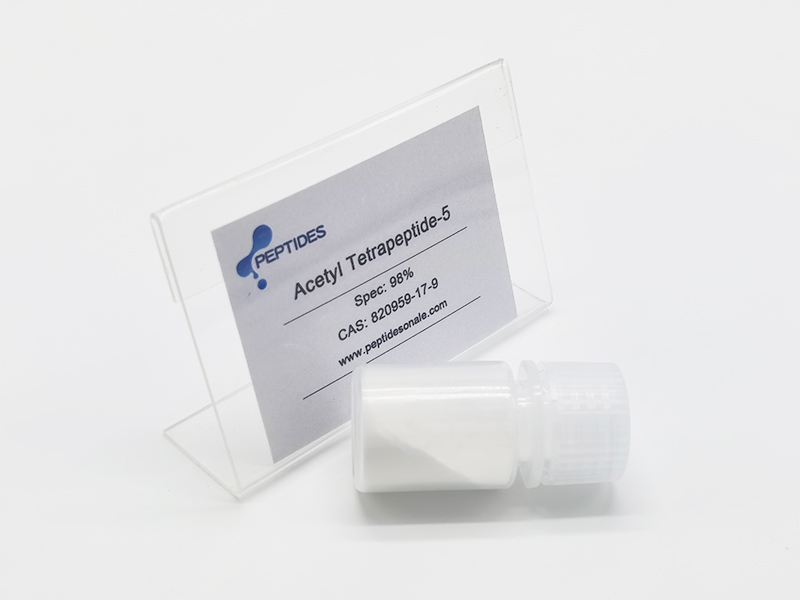
Acetyl Tetrapeptide-5 is a synthetic four-amino-acid peptide commonly used in eye creams, eye serums, and other anti-aging formulations. It is particularly marketed for under-eye puffiness, fluid retention, and the appearance of dark circles. Pros of Acetyl Tetrapeptide-5 1. May reduce under-eye puffiness 2. Potential benefit for dark-circle appearance 3. Hydrating and skin-conditioning properties 4. Low irritation potential for most users 5. Suitable for anti-aging formulations 6. Works well in targeted eye-care products Cons of Acetyl Tetrapeptide-5 1. Clinical evidence is relatively limited 2. Not effective for every type of eye bag 3. Dark circles have many causes 4. Possible eye-area…
-
Comprehensive Study of Acetyl Tetrapeptide-5
Acetyl Tetrapeptide-5 is a synthetic cosmetic tetrapeptide primarily developed for periorbital skincare, especially products targeting the appearance of under-eye puffiness, eye bags, dark circles, dehydration, and loss of elasticity. It is commonly associated with the trade name EYESERYL®. Chemically, it is N-acetyl-β-alanyl-L-histidyl-L-seryl-L-histidine, with the peptide sequence: Ac-β-Ala-His-Ser-His-OH Its reported cosmetic activity includes modulation of processes associated with fluid accumulation, vascular permeability, skin hydration, and glycation. Importantly, most evidence for its cosmetic benefits comes from supplier/manufacturer studies and formulation research, rather than large, independently replicated clinical trials. Therefore, claims should be interpreted as cosmetic efficacy rather than established drug-level treatment of…
-
Efficacy and Functions of Acetyl Tetrapeptide-5
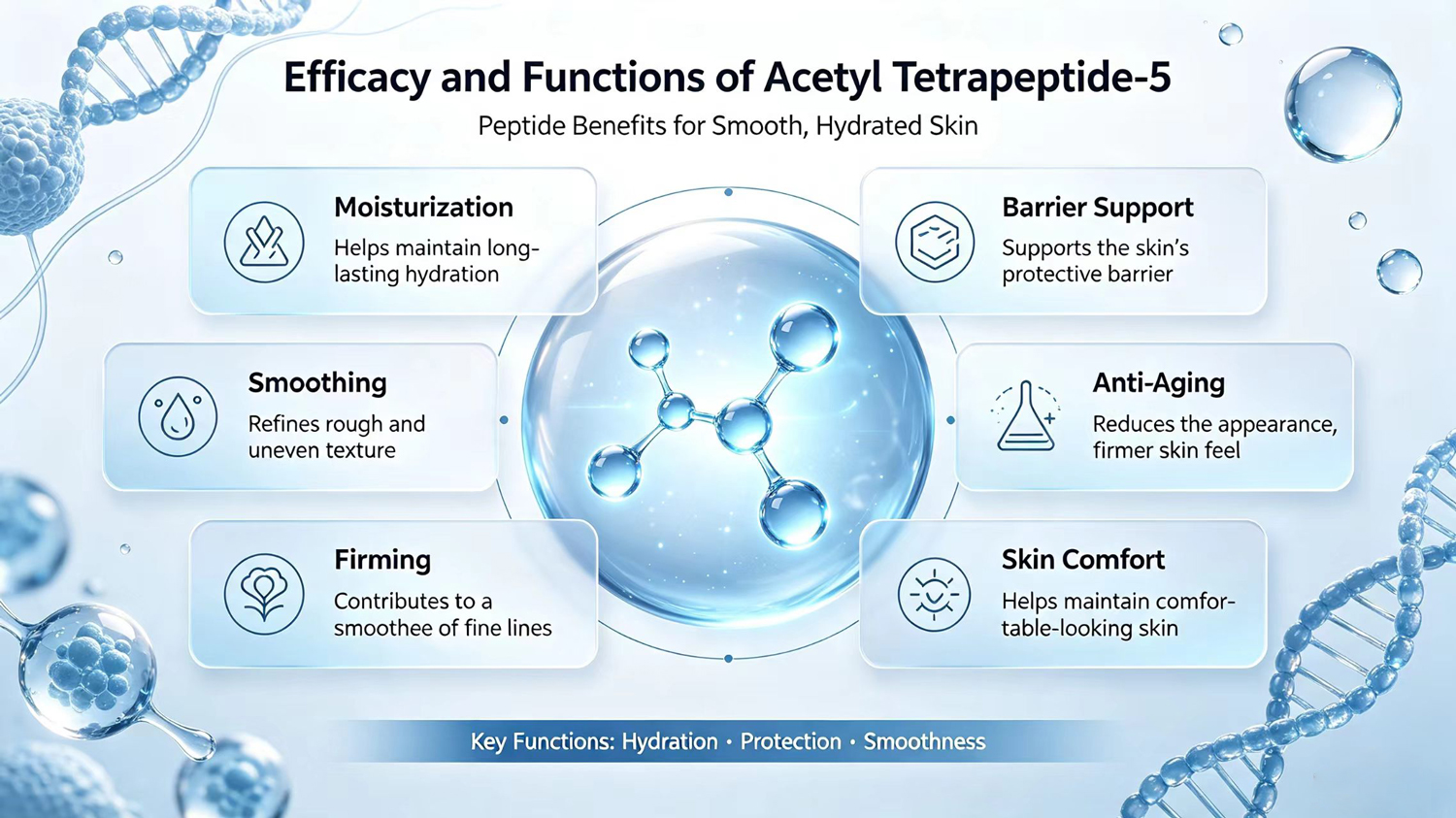
Acetyl Tetrapeptide-5 is a synthetic cosmetic tetrapeptide commonly used in eye-area and anti-aging formulations. It is particularly associated with improving the appearance of under-eye puffiness, dark circles, and signs of fatigue, while also supporting smoother-looking skin. 1. Main efficacy Function Potential cosmetic effect Mechanistic rationale Reduces the appearance of under-eye puffiness Eyes look less swollen or tired May influence fluid balance and the appearance of edema around the eye Helps improve dark-circle appearance Under-eye area can appear brighter and more even May reduce factors associated with fluid accumulation and skin optical irregularities Improves skin smoothness Fine lines and uneven texture…
-
Origin, Properties, and Introduction of Acetyl Tetrapeptide-5
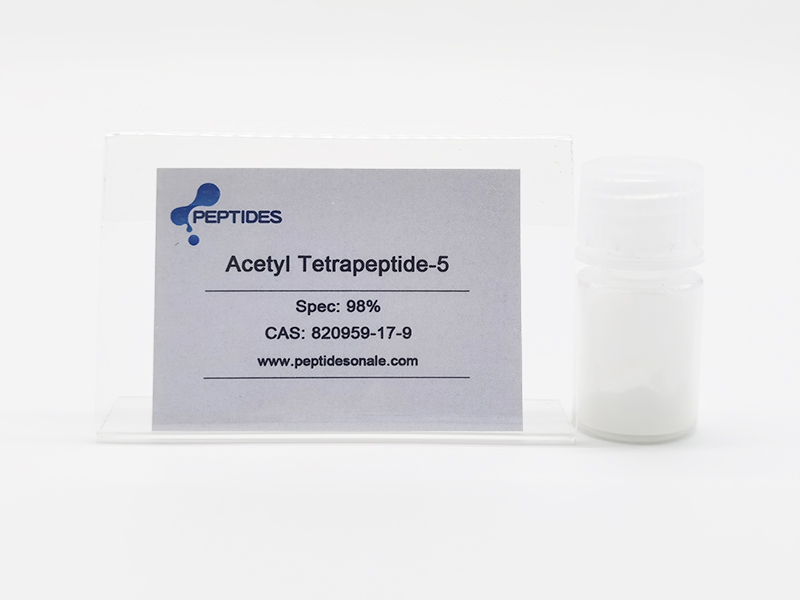
Acetyl Tetrapeptide-5 is a synthetic tetrapeptide widely used as a cosmetic active ingredient, particularly in products targeting under-eye puffiness, dark circles, and signs of fatigue. It belongs to the class of signal/functional peptides used in modern skincare. The peptide is designed to influence biological processes associated with fluid accumulation, skin appearance, and extracellular-matrix-related functions. In cosmetic ingredient lists, it is generally identified by the INCI name Acetyl Tetrapeptide-5. 1. Origin Acetyl Tetrapeptide-5 is not typically obtained directly from plants or animals. It is produced through controlled chemical or biochemical peptide synthesis. Its development is associated with cosmetic peptide technology, where…
-
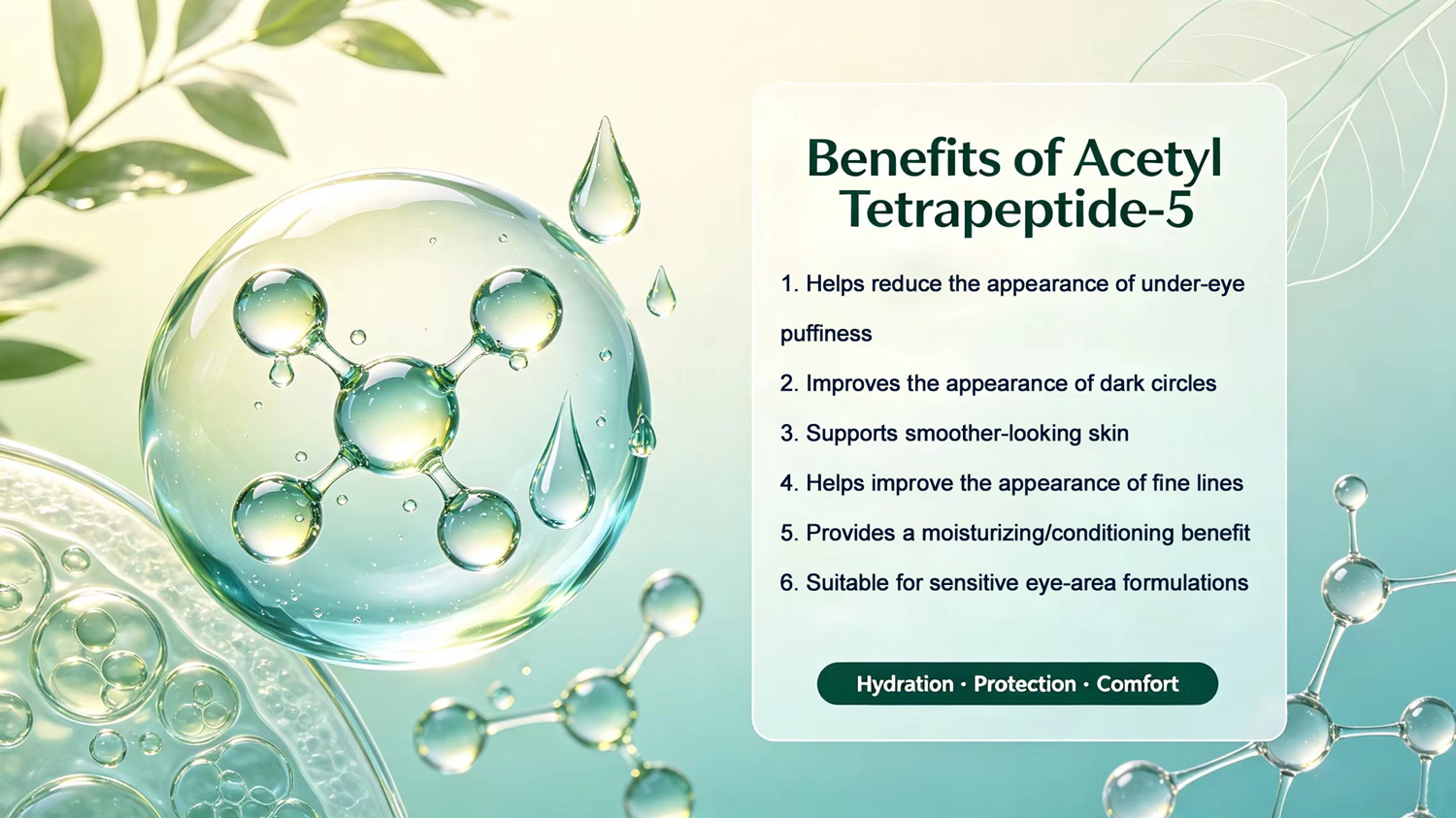
Benefits of Acetyl Tetrapeptide-5
Acetyl Tetrapeptide-5 is a synthetic tetrapeptide widely used in cosmetic formulations, particularly eye-area products. It is best known for targeting the appearance of under-eye puffiness, dark circles, and signs of fatigue. Key benefits 1. Helps reduce the appearance of under-eye puffiness 2. Improves the appearance of dark circles 3. Supports smoother-looking skin 4. Helps improve the appearance of fine lines 5. Provides a moisturizing/conditioning benefit 6. Suitable for sensitive eye-area formulations How the benefits are generally understood Acetyl Tetrapeptide-5 is associated with mechanisms involving skin microcirculation, fluid balance, and the appearance of the extracellular matrix. It is particularly known in…
-
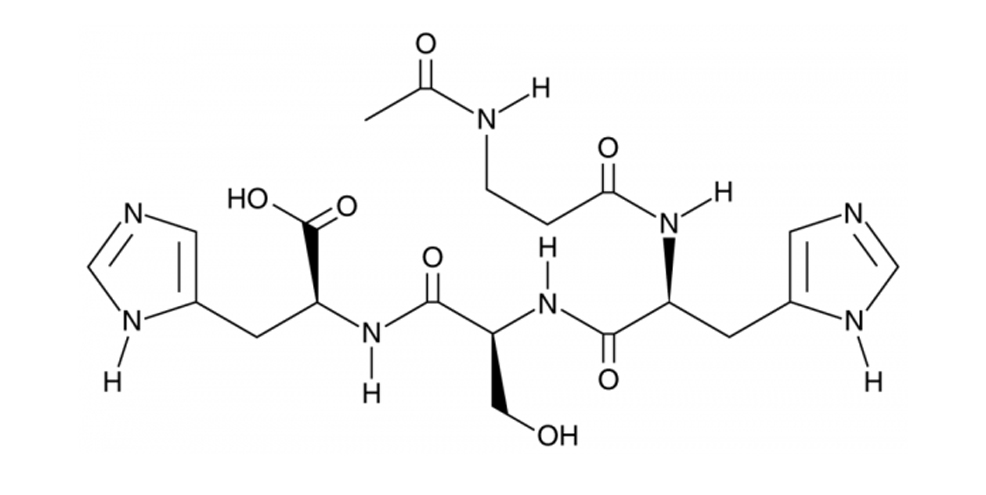
Chemical Structure and Physical Properties of Acetyl Tetrapeptide-5
Acetyl Tetrapeptide-5 is a synthetic tetrapeptide derivative widely used as a cosmetic active, particularly in products targeting under-eye puffiness, dark circles, and signs of fatigue. It is also known by the INCI name Acetyl Tetrapeptide-5 and is commonly associated with the trade ingredient Eyeseryl®. 1. Chemical structure Acetyl Tetrapeptide-5 consists of a four-amino-acid peptide chain with an acetyl group attached to the N-terminal end. A commonly represented sequence is: N-Acetyl-Lys-Asp-Val-Tyr-NH₂ or, using one-letter amino-acid notation: Ac-Lys-Asp-Val-Tyr-NH₂ Its structure therefore contains: The combination of acetylation and terminal amidation changes the peptide’s charge, stability, solubility, and biological behavior compared with an unmodified…
-
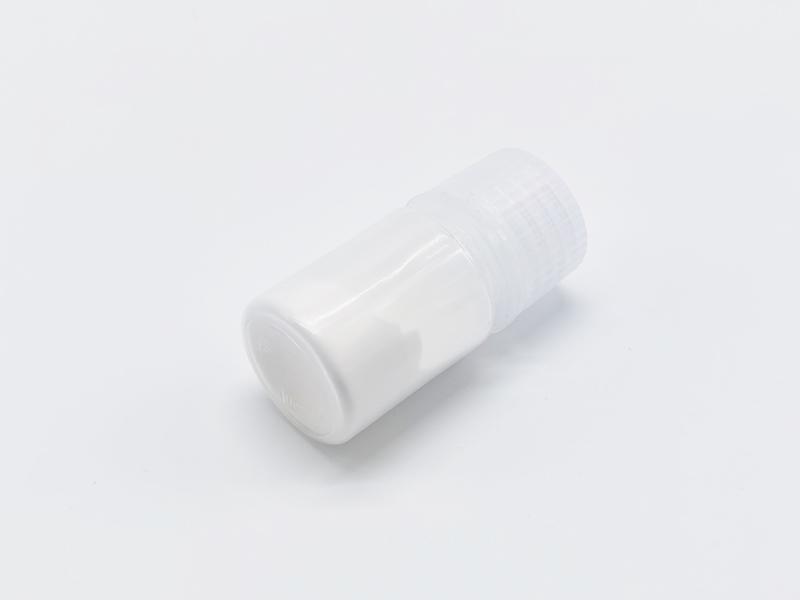
Basic Information of Acetyl Tetrapeptide-5
Acetyl Tetrapeptide-5 is a synthetic cosmetic peptide consisting of four amino-acid residues with an acetyl group attached to the peptide structure. It is primarily used in skincare products designed to improve the appearance of under-eye puffiness, dark circles, and signs of fatigue, and is particularly common in eye creams, serums, and anti-aging formulations. 1. Basic profile Property Information INCI name Acetyl Tetrapeptide-5 Type Synthetic tetrapeptide Peptide length 4 amino acids Main cosmetic role Skin-conditioning and anti-aging active Primary application Eye-area and facial skincare Target concerns Puffiness, tired-looking eyes, fine lines, loss of firmness Typical formulation Eye creams, eye serums, facial…
-
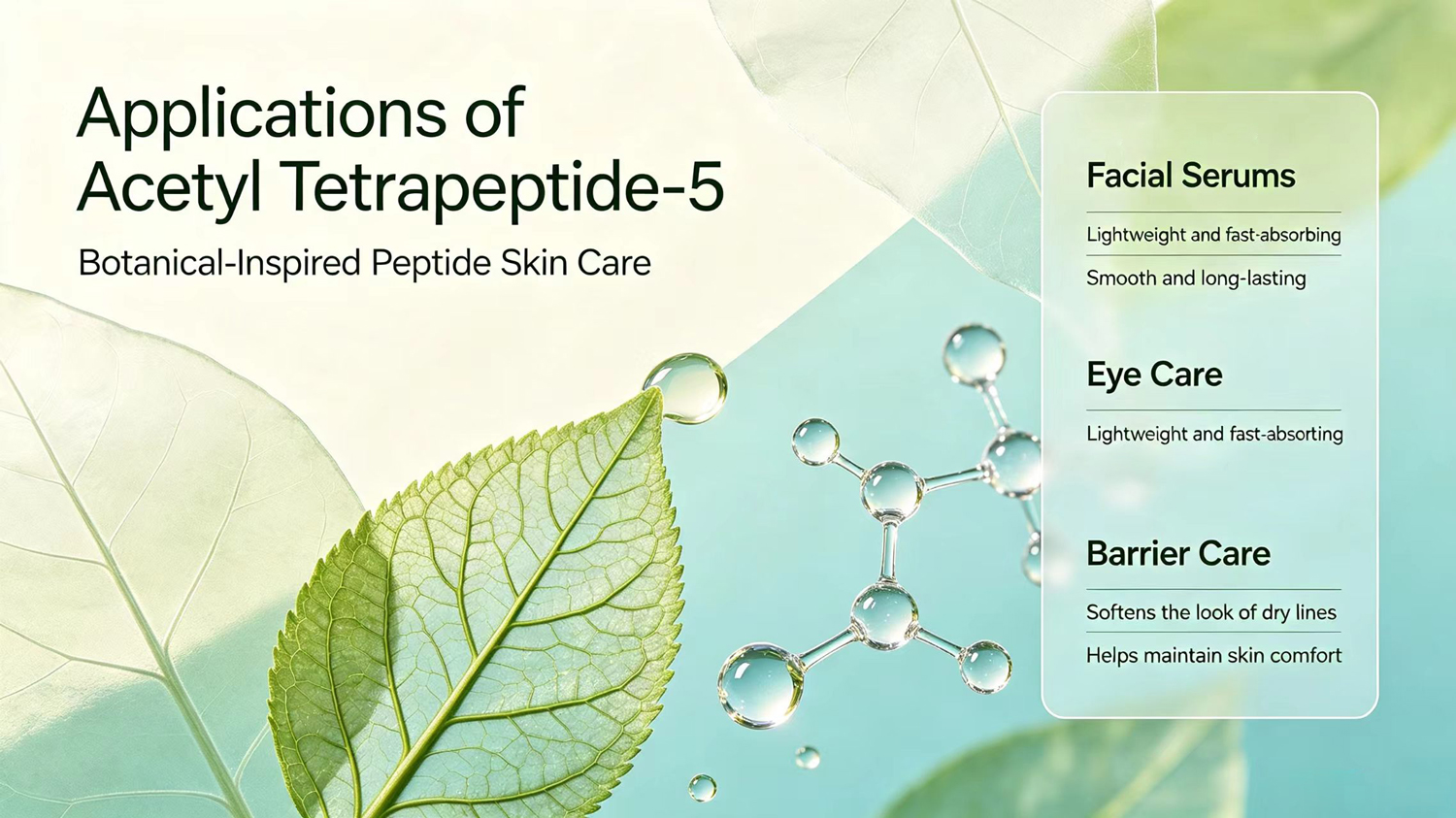
Applications of Acetyl Tetrapeptide-5
Acetyl Tetrapeptide-5 is a synthetic cosmetic peptide commonly used in eye-area and anti-aging formulations. It is particularly associated with improving the appearance of under-eye puffiness, dark circles, and signs of fatigue. 1. Under-eye care Its primary cosmetic application is in products designed for the delicate eye contour, including: It is often selected for formulations targeting a tired or puffy-looking eye area. 2. Reduction of the appearance of eye bags Acetyl Tetrapeptide-5 is marketed for helping reduce the appearance of under-eye bags and puffiness. Its proposed activity is associated with influencing processes involved in fluid balance and the appearance of edema…