
Acetyl Tetrapeptide-11 is a synthetic cosmetic peptide primarily used in anti-aging and skin-conditioning formulations. It is designed to support the skin’s structural and extracellular-matrix environment and is commonly positioned as a peptide for improving the appearance of firmness, elasticity, smoothness, and overall skin quality.
Main uses
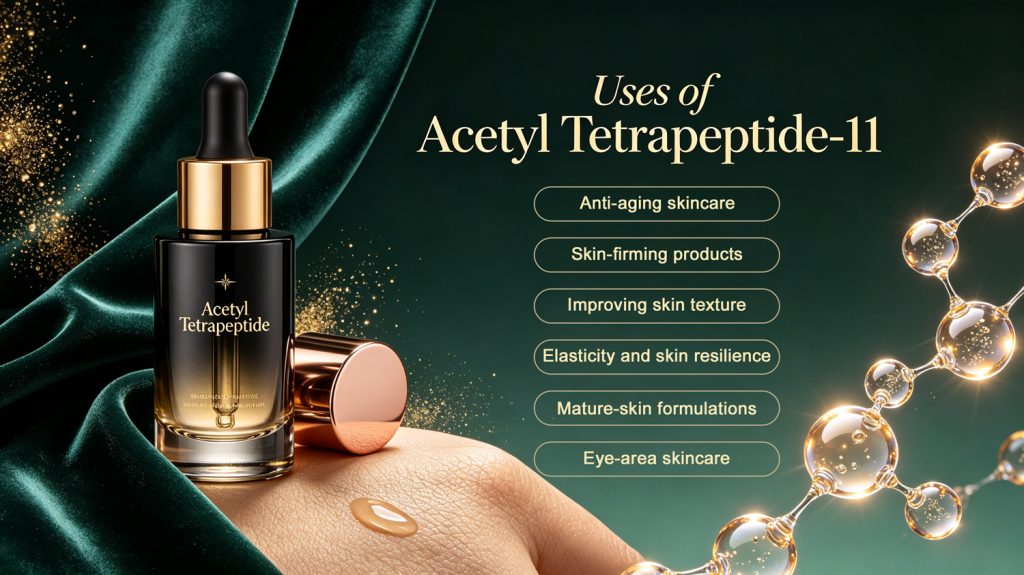
1. Anti-aging skincare
- Used in creams, serums, lotions, and other facial treatments targeting visible signs of aging.
- Often formulated to help improve the appearance of fine lines and skin laxity.
2. Skin-firming products
- Used in products marketed for firmer, more resilient-looking skin.
- Particularly suitable for formulations targeting loss of firmness associated with aging.
3. Improving skin texture
- Can be incorporated into products intended to make skin appear smoother and more refined.
- Often combined with other peptides, humectants, and barrier-supporting ingredients.
4. Elasticity and skin resilience
- Used as part of peptide-based formulations aimed at maintaining the skin’s youthful appearance and supporting its structural properties.
5. Mature-skin formulations
- Appropriate for anti-aging products designed for mature or photoaged-looking skin.
- It may be combined with ingredients such as hyaluronic acid, ceramides, antioxidants, or other cosmetic peptides.
6. Eye-area skincare
- It can be used in eye creams and serums designed to address the appearance of fine lines and loss of firmness around the eyes, provided the finished formulation is appropriately tested for this sensitive area.
Typical formulation applications
| Product type | Purpose |
| Facial serum | Anti-aging, firmness, skin conditioning |
| Face cream | Firming and smoothing |
| Eye cream | Fine-line and firmness care |
| Neck cream | Skin-firming/anti-aging care |
| Anti-aging mask | Skin conditioning and smoothing |
| Ampoule/concentrate | High-value peptide treatment |
Formulation considerations
Acetyl Tetrapeptide-11 is generally used as a low-concentration cosmetic active, rather than as a bulk ingredient. The appropriate concentration depends on the supplier’s recommended usage level, purity, delivery system, and supporting formulation data. Because peptide stability can depend on pH, temperature, preservatives, and processing conditions, the supplier’s technical documentation should be followed.
It is also important to distinguish ingredient-level potential from proven clinical performance: the benefits of a finished cosmetic product depend on the peptide concentration, formulation, skin penetration, stability, and overall product design.
In short: Acetyl Tetrapeptide-11 is mainly used in anti-aging, firming, smoothing, and skin-conditioning cosmetics, particularly serums, creams, and eye-area products.