
Acetyl Octapeptide-3, commonly known by the trade name SNAP-8, is a synthetic biomimetic peptide developed for cosmetic applications, particularly in anti-aging skincare. It is an octapeptide (composed of eight amino acids) designed as an extended analog of Acetyl Hexapeptide-8 (Argireline). By mimicking part of the SNAP-25 protein involved in neurotransmitter release, it helps reduce the appearance of expression lines through a topical, non-invasive mechanism.
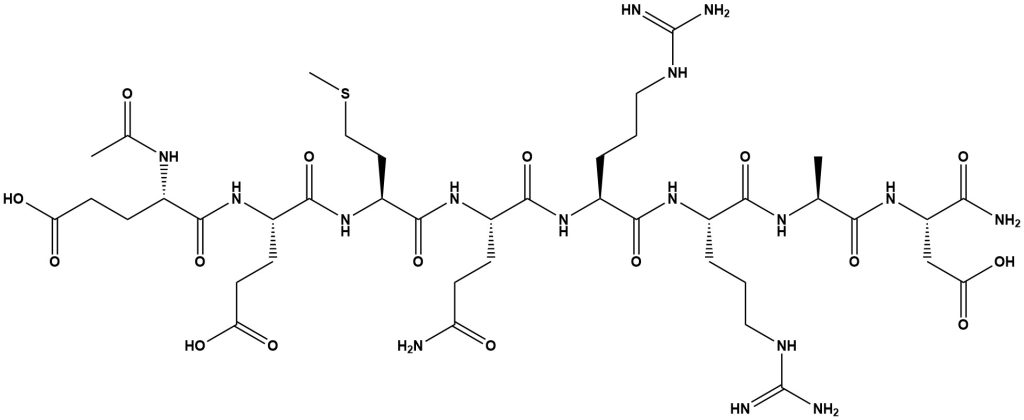
Chemical Structure of Acetyl Octapeptide-3
Basic Information
| Property | Description |
| INCI Name | Acetyl Octapeptide-3 |
| Common Name | SNAP-8 |
| Chemical Type | Synthetic acetylated oligopeptide |
| Peptide Length | 8 amino acids (octapeptide) |
| Molecular Formula | C₄₁H₇₀N₁₆O₁₆S |
| Approximate Molecular Weight | ~1,075 Da |
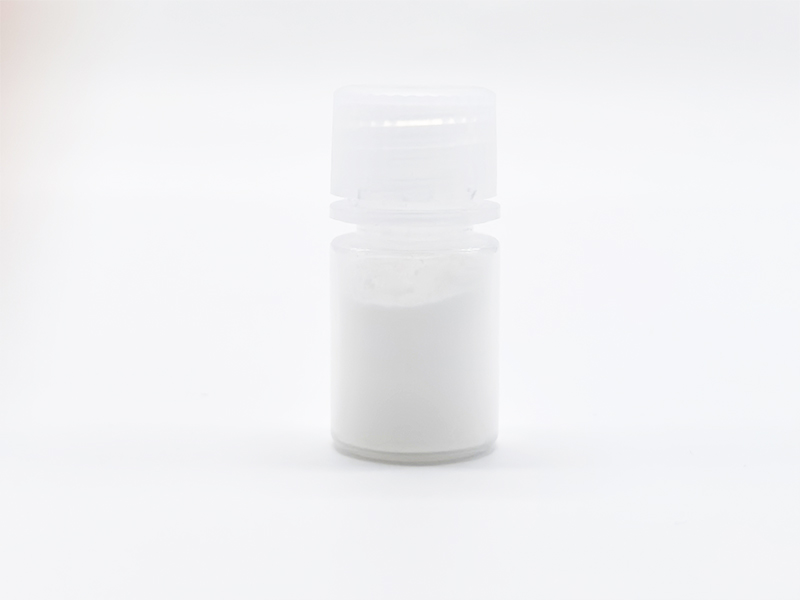
| Appearance | White to off-white lyophilized powder |
| Solubility | Highly soluble in water |
| Origin | Synthetic (solid-phase peptide synthesis) |
Amino Acid Sequence
The amino acid sequence of Acetyl Octapeptide-3 is:
Ac-Glu-Glu-Met-Gln-Arg-Arg-Ala-Asp-NH₂
where:
- Ac– indicates N-terminal acetylation.
- NH₂ indicates C-terminal amidation.
These terminal modifications improve peptide stability and resistance to enzymatic degradation while preserving biological activity.
Structural Characteristics
Acetyl Octapeptide-3 contains:
- Eight naturally occurring amino acids.
- One sulfur-containing residue (methionine).
- Multiple charged amino acids (glutamic acid, arginine, aspartic acid).
- Several amide (peptide) bonds linking the amino acids.
- An acetylated N-terminus and amidated C-terminus.
These features contribute to its biological function and physicochemical stability.
Molecular Structure Features
The peptide includes several important functional groups:
- Peptide bonds (-CONH-) that form the backbone of the molecule.
- Acetyl group (-COCH₃) at the N-terminus, improving stability.
- Primary amide (-CONH₂) at the C-terminus.
- Carboxyl groups (-COOH) from glutamic acid and aspartic acid side chains.
- Guanidinium groups from arginine residues, providing positive charges.
- Thioether group (-S-) in methionine.
Because it contains both acidic and basic residues, the peptide is amphoteric and carries different net charges depending on pH.
Physical Properties of Acetyl Octapeptide-3
| Property | Value / Description |
| Physical State | Lyophilized powder or aqueous solution |
| Color | White to off-white |
| Odor | Odorless or faint characteristic odor |
| Water Solubility | Excellent |
| Solubility in Oils | Poor |
| Typical Cosmetic pH Stability | Approximately pH 4.5–7.5 |
| Melting Point | Not well defined (peptides generally decompose before melting) |
| Density | Not typically reported for lyophilized peptides |
| Hygroscopicity | Slightly hygroscopic |
| Storage Temperature | 2–8°C for solutions; −20°C for long-term storage of powders |
| UV Absorption | Weak (no aromatic amino acids present) |
Three-Dimensional Structure
In aqueous solution, Acetyl Octapeptide-3 does not adopt a rigid three-dimensional conformation. Instead, it exists as a flexible peptide with transient secondary structures influenced by:
- Temperature
- pH
- Salt concentration
- Solvent composition
Its flexibility allows it to interact with components of the SNARE protein complex.
Stability Characteristics
Thermal Stability
- Stable under refrigerated conditions.
- Elevated temperatures accelerate degradation.
- Long-term exposure above approximately 40°C should be avoided during formulation and storage.
pH Stability
Most stable near neutral pH (roughly 5–7). Strongly acidic or alkaline environments can promote hydrolysis or chemical degradation.
Oxidative Stability
Methionine is susceptible to oxidation, which may reduce peptide activity. Formulations often include antioxidants or oxygen-limiting packaging to enhance stability.
Enzymatic Stability
N-terminal acetylation and C-terminal amidation improve resistance to proteolytic enzymes compared with unmodified peptides, although enzymatic degradation can still occur after topical application.
Cosmetic Formulation Characteristics
Acetyl Octapeptide-3 is compatible with many water-based cosmetic systems, including:
- Anti-aging serums
- Facial creams
- Eye creams
- Gel formulations
- Ampoules
- Sheet masks
It is commonly used at concentrations of 0.005% to 0.05% active peptide, depending on the formulation and supplier recommendations.
Penetration Properties
With a molecular weight of approximately 1,075 Da, Acetyl Octapeptide-3 is larger than the often-cited ~500 Da threshold for efficient passive skin penetration. As a result:
- Penetration through intact skin is limited.
- It primarily acts in the superficial layers of the skin.
- Formulators may use penetration-enhancing systems such as liposomes, nanoemulsions, or specialized delivery vehicles to improve bioavailability.
Comparison with Acetyl Hexapeptide-8
| Property | Acetyl Octapeptide-3 | Acetyl Hexapeptide-8 |
| Peptide Length | 8 amino acids | 6 amino acids |
| Molecular Weight | ~1,075 Da | ~889 Da |
| Structure | Extended analog | Original biomimetic peptide |
| Water Solubility | Excellent | Excellent |
| Stability | High | High |
| Mechanism | SNARE complex modulation | SNARE complex modulation |
| Skin Penetration | Limited | Slightly greater due to lower molecular weight |
Summary
Acetyl Octapeptide-3 is a synthetic, water-soluble acetylated octapeptide with the sequence Ac-Glu-Glu-Met-Gln-Arg-Arg-Ala-Asp-NH₂. Its N-terminal acetylation and C-terminal amidation enhance chemical and enzymatic stability, making it suitable for cosmetic formulations. It is highly soluble in water, stable under mildly acidic to neutral conditions, and widely used in anti-aging products targeting expression lines. Although its relatively large molecular size limits passive skin penetration, modern delivery systems can improve its effectiveness in topical applications.