

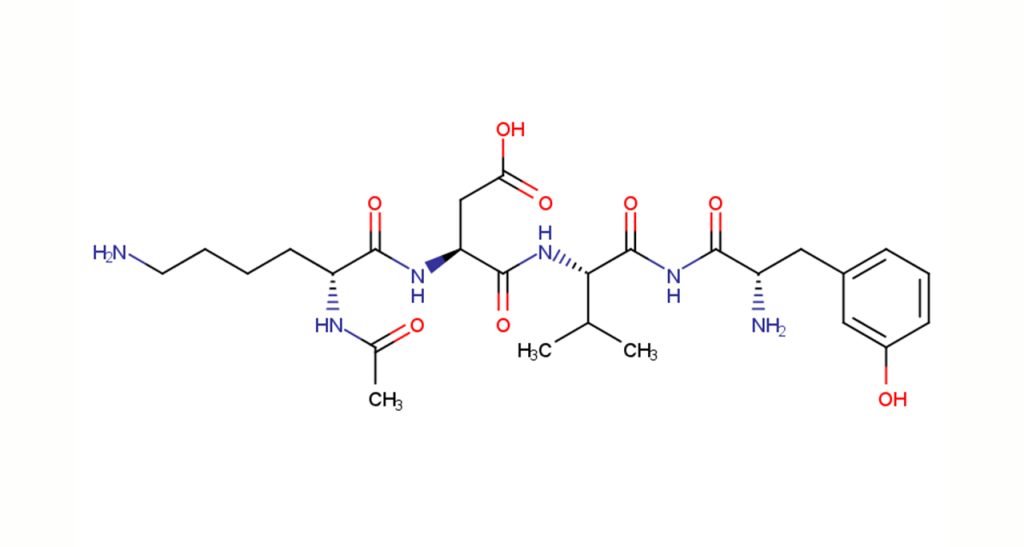
Acetyl Tetrapeptide-2 is a synthetic cosmetic peptide used mainly in anti-aging and skin-conditioning formulations. It is a short chain of four amino acids that has been chemically modified with an acetyl group to improve its cosmetic functionality.
Basic information
| Property | Description |
| INCI name | Acetyl Tetrapeptide-2 |
| Type | Synthetic peptide |
| Peptide length | Tetrapeptide (4 amino acids) |
| Primary cosmetic role | Anti-aging, skin conditioning, firming |
| Main target | Skin extracellular matrix and signs associated with aging |
| Typical applications | Serums, creams, eye products, anti-aging formulations |
| Appearance | Usually supplied as a peptide-containing cosmetic raw material, often in solution |
| Function | Helps improve the appearance of firmness, elasticity, and wrinkles |

How does it work?
Acetyl Tetrapeptide-2 is designed to act as a bioactive signaling peptide. Cosmetic peptides of this type can interact with skin cells or extracellular-matrix-related pathways and are intended to encourage processes associated with maintaining the skin’s structural environment.
Its proposed cosmetic effects include:
- Supporting skin firmness – may help improve the appearance of lax or less-firm skin.
- Supporting extracellular matrix components – peptide signaling is intended to help maintain structural proteins and matrix organization.
- Improving the appearance of wrinkles – particularly as part of a broader anti-aging formulation.
- Improving elasticity and skin quality – continued use may make skin appear smoother and more resilient.
- Skin conditioning – contributes to an overall healthier-looking skin surface.
Where is it used?
It is particularly suitable for formulations targeting:
- Anti-aging and mature skin
- Fine lines and wrinkles
- Loss of firmness
- Skin elasticity
- Neck and décolletage care
- Eye-area products
- Firming serums and creams
Important distinction
Acetyl Tetrapeptide-2 should not be confused with Acetyl Hexapeptide-8 (Argireline). They are different peptides with different intended mechanisms. Acetyl Hexapeptide-8 is primarily associated with expression-line/wrinkle appearance, whereas Acetyl Tetrapeptide-2 is generally positioned more toward skin firmness, structural support, and anti-aging skin conditioning.
Overall, Acetyl Tetrapeptide-2 is a cosmetic signaling tetrapeptide intended to help maintain youthful-looking skin, particularly firmness, elasticity, and the appearance of wrinkles. Its actual performance depends strongly on peptide concentration, formulation, stability, delivery system, and the quality of supporting clinical/in-vitro evidence.