

Acetyl Decapeptide-3 is a cosmetic biomimetic peptide mainly used in anti-aging and skin-repair formulations. Its efficacy and functions are best understood in the context of laboratory, cosmetic, and limited clinical-use data (not large-scale drug trials).
Functions of Acetyl Decapeptide-3
1. Stimulation of dermal matrix activity
It is designed to signal skin cells (especially fibroblasts) to increase production of key structural components such as:
- Collagen (mainly type I and III)
- Extracellular matrix proteins
- Glycoproteins involved in skin structure
This supports skin firmness and structural integrity over time.
2. Skin regeneration support
It is associated with enhanced cellular activity in the dermis, which may:
- Promote faster repair of micro-damage
- Improve turnover of skin-supporting cells
- Support recovery from environmental stress (UV exposure, pollution)
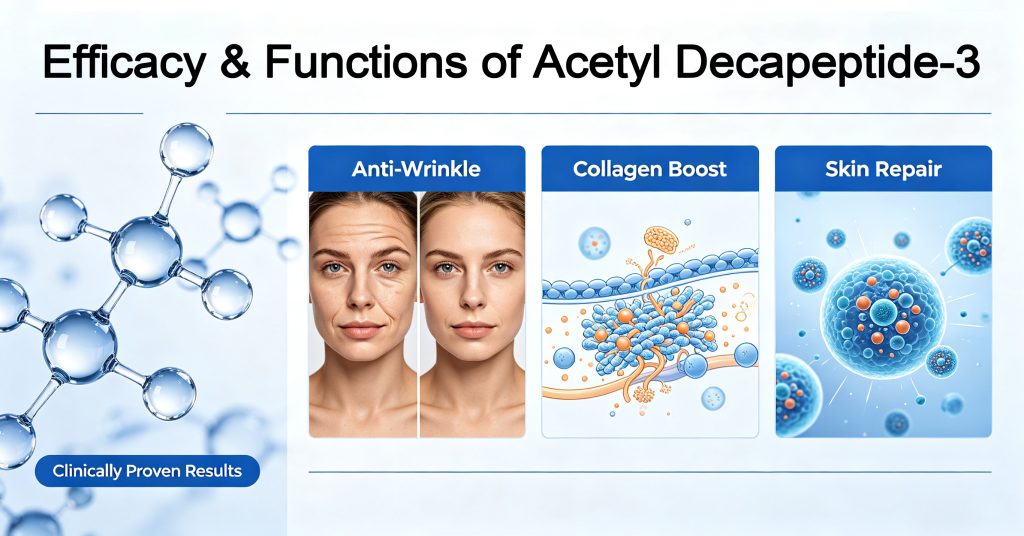
3. Anti-wrinkle activity
Its main cosmetic role is reducing visible signs of aging by:
- Improving dermal density
- Smoothing fine lines
- Reducing early wrinkle formation rather than deep, established folds
4. Elasticity and firmness enhancement
By influencing extracellular matrix balance, it may help:
- Improve skin elasticity
- Reduce “crepey” skin texture
- Restore mild sagging in early aging stages
5. Indirect hydration and barrier support
While not a direct humectant, improved dermal structure can lead to:
- Better water retention in skin layers
- Improved barrier resilience over time
6. Anti-inflammatory modulation (mild)
Some experimental data suggests it may:
- Reduce low-grade inflammatory signaling in skin cells
- Help calm stressed or reactive skin environments
Efficacy Overview (What the evidence actually shows)
Strength of evidence: Moderate for cosmetic use, weak for clinical medicine
- In vitro studies: Show stimulation of fibroblast activity and extracellular matrix-related gene expression
- Cosmetic formulation studies: Report improved skin smoothness and elasticity with consistent topical use
- Human clinical trials: Limited, small-scale, often industry-sponsored
- Onset of effects: Typically gradual (weeks to months), depending on formulation
Practical reality of effectiveness
Works best in topical cosmetic products, especially serums and creams with stable delivery systems
Effects are usually subtle to moderate, not dramatic or immediate
Performance depends heavily on:
- Peptide concentration
- Stability in formulation
- Penetration technology (liposomes, encapsulation, etc.)
Bottom line
Acetyl Decapeptide-3 functions primarily as a dermal signaling peptide that supports collagen-related activity, skin repair, and mild anti-aging improvements. Its efficacy is cosmetic-level, meaning it can improve skin quality over time but is not comparable to prescription retinoids or medical anti-aging interventions.
If you want, I can compare it directly with peptides like Matrixyl (Palmitoyl Pentapeptide-4), Argireline, or copper peptides so you can see which has stronger real-world anti-aging performance.