

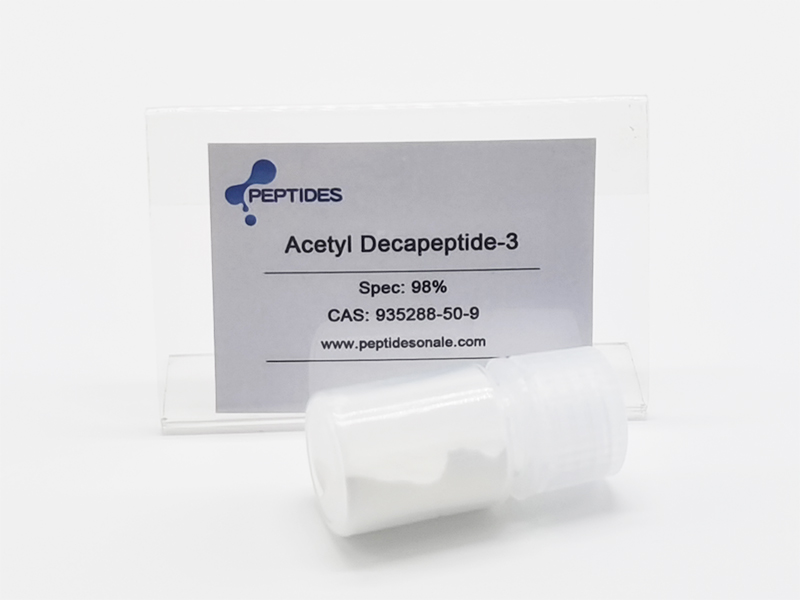
Acetyl Decapeptide-3 is a synthetic cosmetic biomimetic peptide belonging to the broader family of signal peptides used in anti-aging skincare formulations. It is typically marketed under trade or INCI naming conventions and is included in topical serums and creams aimed at improving skin structure and appearance.
It is not a drug, but a cosmetic active ingredient.
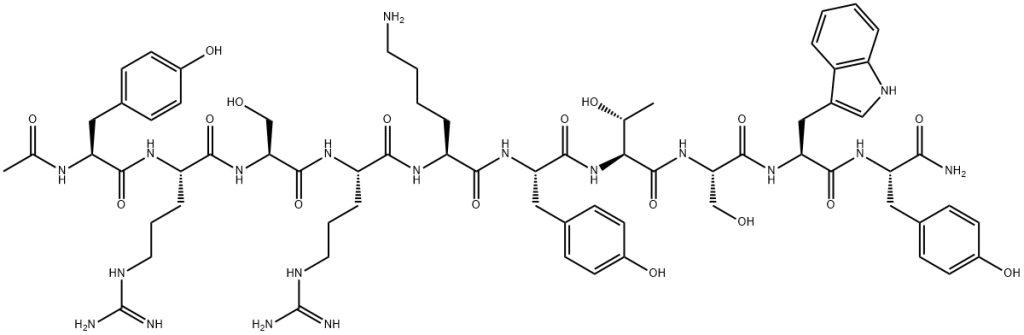
1. Chemical Identity
Core structural class
- Type: Linear decapeptide (10 amino acids)
- Modification: N-terminal acetylation (Ac-)
- General structure: Ac–(AA)₁₀–OH
- Molecular weight: ~900–1300 Da (depends on amino acid sequence)
- Charge: Variable (depends on side chains; often near neutral to mildly charged)
Key structural features
- Linear peptide backbone (no cyclization)
- No disulfide bridges
- N-acetyl cap increases metabolic stability
- C-terminal carboxyl group (-COOH)
2. Physicochemical Properties
Appearance
- White to off-white lyophilized powder (pure form)
- Often dissolved into aqueous cosmetic bases
Solubility
- Highly water soluble
- Poor lipid solubility
- Requires emulsions, gels, or aqueous serums for formulation
Stability
Moderately stable under cosmetic conditions
Degrades under:
- High temperature
- Extreme pH (<4 or >7–8)
- Proteolytic enzymes (skin peptidases)
Acetylation improves resistance to enzymatic breakdown compared to unmodified peptides
3. Mechanism of Action (Proposed)
Available evidence suggests multiple cosmetic signaling pathways, although mechanisms are not fully mapped in peer-reviewed clinical literature.
3.1 Fibroblast stimulation
May stimulate dermal fibroblasts
Leads to increased synthesis of:
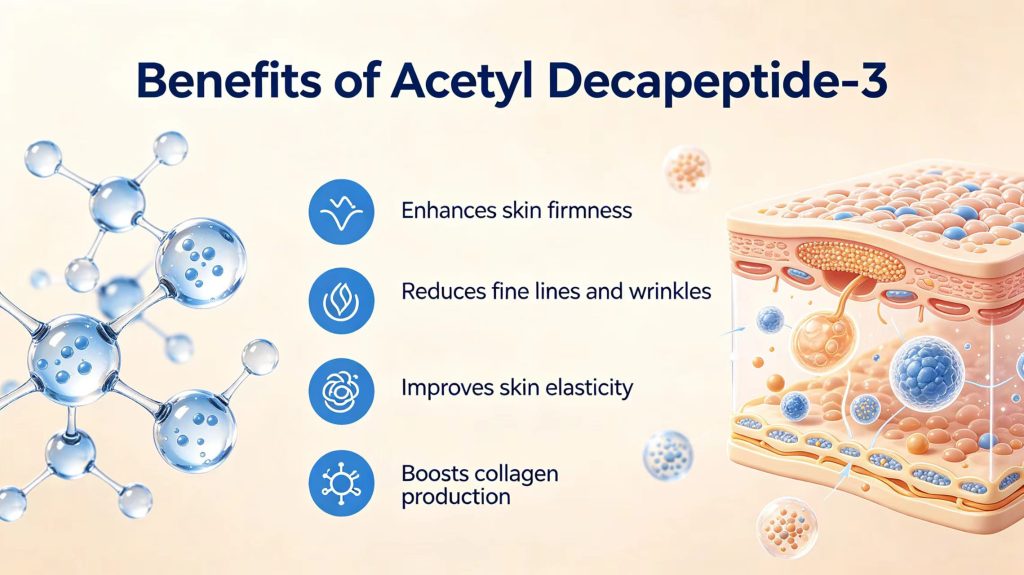
- Collagen (types I & III)
- Extracellular matrix proteins
- Structural glycoproteins
This supports improved dermal density and firmness.
3.2 Extracellular matrix remodeling
Influences ECM turnover balance:
- Increased matrix production
- Reduced degradation signaling (theoretical)
This is associated with smoother skin texture in cosmetic use.
3.3 Wound-healing–like signaling
Some data from peptide analog systems suggest:
- Activation of repair-associated pathways
- Enhanced keratinocyte-fibroblast communication
- Improved micro-repair of skin barrier stress
3.4 Anti-wrinkle functional outcome
Clinically observed cosmetic endpoints include:
- Reduction in fine line depth
- Improved skin smoothness
- Increased elasticity in superficial dermis
A controlled study of related peptides (including acetylated neurocosmetic peptides) supports modest wrinkle improvement over ~4–8 weeks of topical use .
4. Evidence Base
4.1 In vitro evidence
- Fibroblast stimulation assays (limited published datasets)
- ECM protein upregulation suggested in cosmetic supplier research
- Cellular signaling activity observed in peptide models
4.2 Human studies
Direct, high-quality clinical trials on Acetyl Decapeptide-3 specifically are limited
Evidence is often:
- Small-scale
- Industry-sponsored
- Combined with other peptides
4.3 Weight of evidence
| Evidence Type | Strength |
| In vitro cellular studies | Moderate |
| Cosmetic formulation studies | Moderate |
| Randomized clinical trials | Weak to limited |
| Independent replication | Limited |
5. Skin Penetration and Bioavailability
Key limitation: molecular size
- ~1 kDa peptide → limited passive dermal penetration
Delivery dependence
Effectiveness depends heavily on:
- Liposomal encapsulation
- Nanocarriers
- Formulation enhancers (penetration boosters)
- pH-optimized serums
Without delivery systems, most activity remains in upper epidermis.
6. Functional Outcomes in Cosmetic Use
Observed or reported effects:
- Improved skin texture
- Mild to moderate wrinkle reduction
- Enhanced elasticity
- Better hydration retention (indirect effect via ECM support)
- Improved appearance of photoaged skin
Important interpretation:
Effects are generally:
- Gradual (weeks to months)
- Subtle to moderate
- Not comparable to retinoids or injectables
7. Safety Profile
Topical safety
- Generally well tolerated
- Low irritation potential
- Minimal sensitization risk reported in cosmetic literature
Systemic absorption
- Negligible under normal topical use
- Degraded into amino acids if absorbed
Known concerns
- Stability variability in formulations
- Limited long-term independent safety datasets (as with most cosmetic peptides)
8. Comparison to Related Peptides
Acetyl Decapeptide-3 sits in the same functional category as:
- Matrix peptides (e.g., Matrixyl family)
- Neurocosmetic peptides (e.g., Argireline-type peptides)
- Signal peptides involved in ECM remodeling
Compared to them:
- Likely moderate potency
- More ECM-focused than neuromuscular (not “Botox-like”)
- Less studied than flagship peptides like Palmitoyl Pentapeptide-4
9. Limitations of Current Science
Key gaps include:
- Lack of large randomized controlled trials
- Unclear exact amino acid sequence in public literature
- Limited mechanistic mapping at receptor level
- High reliance on cosmetic industry data
10. Conclusion
Acetyl Decapeptide-3 is a water-soluble, N-acetylated decapeptide cosmetic active designed to support dermal matrix function. Its primary role is to modestly improve skin structure, elasticity, and wrinkle appearance through fibroblast and extracellular matrix signaling.
Its efficacy is best characterized as:
- Cosmetic-level, not pharmacological
- Supportive rather than transformative
- Highly dependent on formulation technology