

Acetyl Hexapeptide-1 is a synthetic acetylated hexapeptide (6 amino acids) used in cosmetic formulations for skin tone regulation and anti-aging support. It is designed as a biomimetic signaling molecule, not a drug.
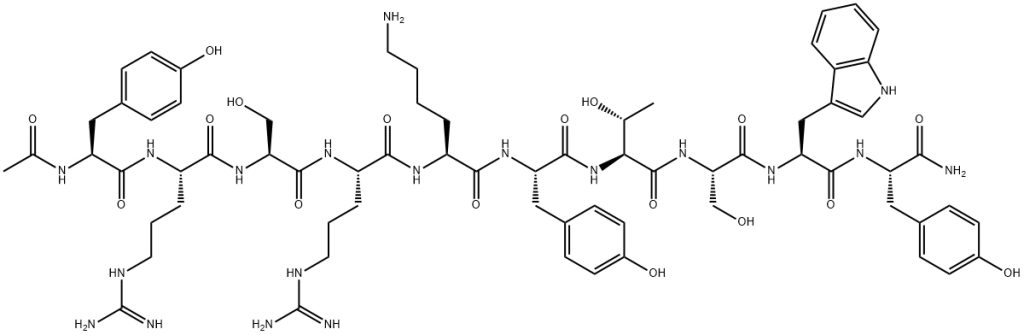
1. Chemical Structure
1.1 Basic structural identity
- Type: Linear hexapeptide (6 amino acids)
- Modification: N-terminal acetylation (Ac- group)
- General formula: Ac–(Amino acid)₆–OH
- Molecular weight: ~700–900 Daltons (depends on exact sequence)
1.2 Structural characteristics
Linear peptide chain
- No cyclization
- No disulfide bonds
N-terminal acetyl group (Ac-)
- Reduces positive charge at N-terminus
- Improves enzymatic stability
- Enhances compatibility with skin environment
C-terminal carboxyl group (-COOH)
- Contributes to hydrophilic behavior
1.3 Functional structural implications
- Short chain length → allows signaling activity in skin
- Hydrophilic nature → interacts with aqueous skin environments
- Designed to mimic natural regulatory peptide fragments involved in pigmentation signaling
2.1 Appearance
- White to off-white powder (pure isolated form)
- Often used in diluted aqueous solutions in cosmetics
2.2 Solubility
- Highly soluble in water
- Poor solubility in oils and non-polar solvents
- Requires aqueous or emulsified formulation systems
2.3 Stability
Acetyl Hexapeptide-1 is moderately stable under cosmetic conditions:
Stable under:
- Mild acidic to neutral pH (~4–7)
- Low-temperature storage
- Encapsulation systems
Unstable under:
- High heat
- Strong acidic or alkaline conditions
- Enzymatic degradation (skin proteases)
2.4 Molecular behavior in skin
Limited passive penetration through skin barrier
Primarily active in:
- Stratum corneum
- Upper epidermis
Requires delivery systems (liposomes, nano-carriers) for improved bioavailability
2.5 Storage properties
Typically stored:
- Refrigerated (2–8°C) in bulk form
- Protected from light and moisture
Stability improved in lyophilized (freeze-dried) form
3. Biophysical Characteristics
- Charge behavior: Variable depending on amino acid composition (often slightly polar or neutral overall)
- Lipophilicity: Low (hydrophilic peptide)
- Reactivity: Low chemical reactivity under normal cosmetic conditions
- Degradation pathway: Enzymatic breakdown into amino acids
4. Functional Link Between Structure and Activity
The structure directly supports its cosmetic function:
- Small size (6 aa): Enables signaling interactions in skin cells
- Acetylation: Improves stability and prolongs activity
- Hydrophilicity: Allows interaction with extracellular skin environment
- Flexibility: Supports receptor or membrane-associated signaling behavior
5. Key Summary
Acetyl Hexapeptide-1 is a small, water-soluble, N-acetylated linear hexapeptide with moderate stability and limited skin penetration. Its physical and chemical properties make it suitable for cosmetic formulations targeting pigmentation balance and skin tone improvement, especially when combined with advanced delivery systems.