

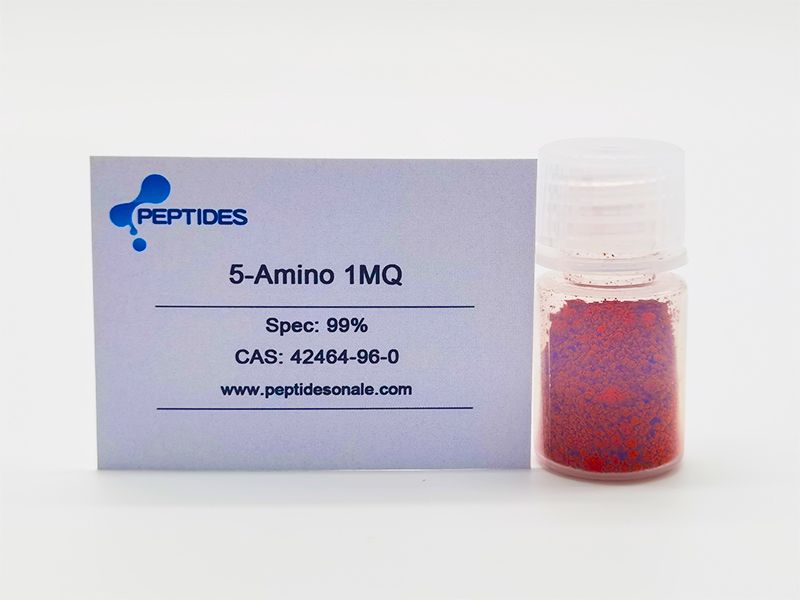
5-Amino 1MQ is a research-stage small molecule that inhibits the enzyme Nicotinamide N-methyltransferase, which regulates both fat metabolism and NAD⁺ energy pathways. Its efficacy profile is based almost entirely on cell and animal studies, not human clinical trials.
1. Core Biological Function (What it does)
5-Amino 1MQ works by blocking NNMT activity.
Normally, NNMT:
- Converts nicotinamide (vitamin B3 derivative)
- Uses up methyl groups (SAM)
- Reduces availability of NAD⁺ precursors
When NNMT is inhibited:
- Nicotinamide availability
- NAD⁺ production potential
- Cellular energy metabolism
- Excess methyl consumption
In simple terms: it helps cells preserve and reuse energy-building resources instead of wasting them.
2. Metabolic Efficacy (Fat loss & energy)
Strongest observed effects (animal studies)
In obese rodent models, NNMT inhibition has been associated with:
- Body fat mass
- Adipocyte (fat cell) size
- Fat oxidation (burning stored fat)
- Resting energy expenditure
No major increase in appetite suppression (mechanism is metabolic, not hormonal)
Key interpretation:
It appears to shift fat cells from “storage mode” → “burning mode.”
3. Mitochondrial & Energy Function
Because of its effect on NAD⁺ metabolism, 5-Amino 1MQ is studied for:
- Mitochondrial activity
- ATP (cellular energy) production efficiency
- Cellular metabolic flexibility
- Improved energy utilization in fat and muscle tissue
This is why it is often discussed in the context of “cellular energy optimization.”
4. Insulin Sensitivity & Glucose Metabolism
Preclinical research suggests possible improvements in:
- Insulin sensitivity
- Glucose uptake efficiency
- Blood sugar regulation markers
This is linked to improved mitochondrial function and reduced metabolic stress in adipose tissue.
5. Body Composition Effects
Across animal models, reported outcomes include:
- Fat loss without major appetite change
- Relative preservation of lean mass
- Improved body recomposition signals
However:
- Human data is not established
- Dosing and long-term effects remain unclear
6. NAD⁺ Pathway Effects (Central mechanism)
One of its most important biochemical roles is:
- Preserving nicotinamide for NAD⁺ synthesis
- Reducing waste through methylation pathways
- Supporting NAD⁺-dependent enzymes (e.g., sirtuins)
This connects it to broader research on:
- Aging biology
- Energy metabolism
- Cellular repair systems
7. Summary of Efficacy (Evidence strength)
| Effect / Function | Evidence Level |
| Fat reduction (rodents) | Moderate–strong |
| Increased energy expenditure | Moderate |
| NAD⁺ pathway modulation | Strong mechanistic |
| Insulin sensitivity | Moderate |
| Muscle preservation | Limited/preclinical |
| Human fat loss efficacy | Not established |
| Long-term safety | Unknown |
Bottom Line
5-Amino 1MQ is core function is NNMT inhibition, which affects NAD⁺ metabolism and cellular energy balance.
Its observed efficacy (in animals) includes:
- Fat loss without appetite suppression
- Increased energy expenditure
- Improved mitochondrial activity
- Better metabolic efficiency
But in humans:
- There are no confirmed clinical trials proving efficacy
- Its real-world effectiveness and safety remain unverified