

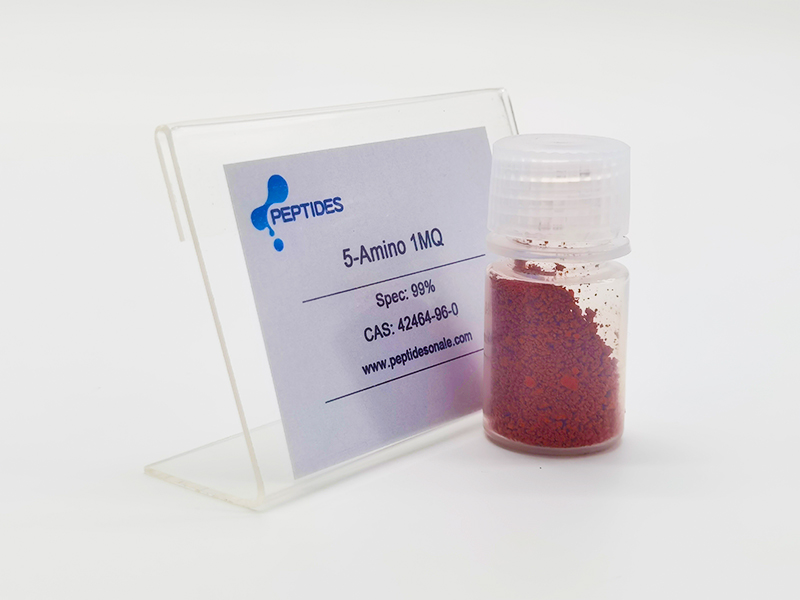
5-Amino 1MQ (5-amino-1-methylquinolinium) is a research-stage NNMT inhibitor studied for effects on metabolism and cellular energy. Its profile is based mainly on cell and animal studies, not human clinical trials.
Pros of 5-Amino 1MQ
1. Strong metabolic effects in preclinical studies
- Reduces body fat in obese animal models
- Shrinks adipocyte (fat cell) size
- Improves overall body composition in experiments
One of its most notable findings is fat loss without strong appetite suppression, suggesting a metabolic mechanism rather than a hormonal one.
2. Increased energy expenditure
- Shifts metabolism toward higher calorie burning
- Increases lipid oxidation (fat utilization)
- May improve resting metabolic rate (animal data)
3. NAD⁺ pathway support (indirect)
By inhibiting Nicotinamide N-methyltransferase:
- Preserves nicotinamide (vitamin B3 derivative)
- May increase NAD⁺ availability
- Supports mitochondrial energy metabolism
4. Improved metabolic health markers (preclinical)
Animal studies suggest:
- Better insulin sensitivity
- Improved glucose handling
- Reduced metabolic dysfunction in obesity models
5. Small-molecule advantages
Compared with peptides or biologics:
- Orally active in research models
- Chemically stable
- Easy cellular penetration
- Low molecular weight (~159 Da core structure)
6. Useful research tool
- Helps scientists study NNMT’s role in metabolism
- Used in obesity, aging, and NAD⁺ biology research
- Helps validate NNMT as a drug target
Cons of 5-Amino 1MQ
1. No confirmed human efficacy
- No large human clinical trials
- No approved medical indication
- Effects seen in animals may not translate to humans
2. Unknown long-term safety
Because it is still experimental:
- Long-term metabolic effects are unknown
- Chronic NNMT inhibition may have unintended consequences
3. Potential methylation imbalance (theoretical concern)
NNMT uses methyl groups (SAM cycle). Blocking it could:
- Alter methylation balance
- Affect homocysteine or epigenetic regulation (theoretical risk)
- Disrupt normal metabolic signaling if over-inhibited
4. Limited pharmacological data in humans
Unknowns include:
- Optimal dosing
- Bioavailability in humans
- Metabolism and elimination pathways
- Drug–drug interactions

5. Not a targeted “fat loss drug” in humans
Even though animal data is promising:
- No proven predictable fat-loss effect in people
- Not comparable to approved therapies like GLP-1 drugs
6. Research-only status
- Not FDA-approved for medical use
- Not prescribed clinically
- Quality and purity vary in non-lab settings (important limitation outside research contexts)
Bottom Line
5-Amino 1MQ is best described as:
A promising experimental metabolic research compound with strong animal-data evidence for fat-loss and energy metabolism effects, but without validated human efficacy or safety.