

5-Amino 1MQ (5-amino-1-methylquinolinium) is a synthetic small-molecule NNMT inhibitor studied primarily in metabolic, obesity, and NAD⁺ biology research. It is not a peptide and not an approved drug, but a preclinical research tool compound used to probe how cellular metabolism is regulated through nicotinamide and methylation pathways.
1. Chemical and Structural Profile
Core identity
- Chemical class: Quinolinium-based small molecule
- Molecular formula: C₁₀H₁₁N₂⁺ (free cation)
- Typical salt forms: iodide or chloride
- Molecular weight: ~159 g/mol (free base), ~286 g/mol (iodide salt)
- Structure type: Aromatic heterocycle with:
- N-methyl quinolinium (permanent positive charge)
- 5-position amino substitution
Structural significance
The molecule’s positive charge + aromatic ring system allows it to:
- Mimic NNMT substrates (nicotinamide/1-MNA transition state behavior)
- Bind competitively to the enzyme active site
- Penetrate cells despite being charged (unusual but important feature)

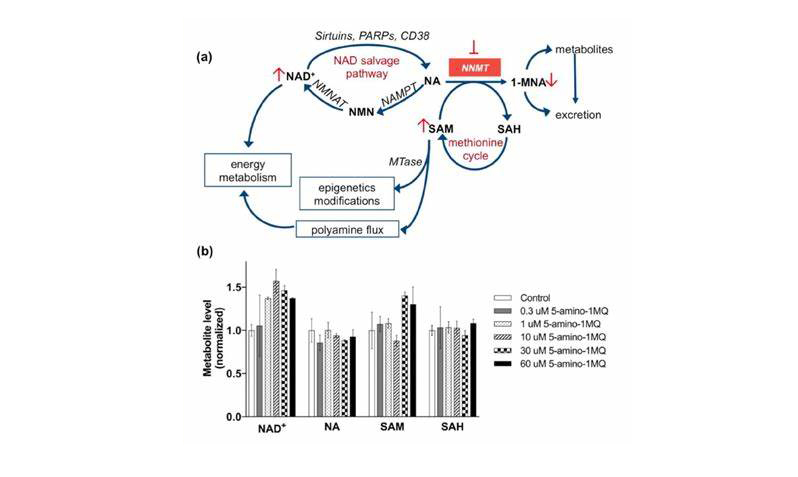
2. Biological Target and Core Mechanism
Primary target
- Enzyme: Nicotinamide N-methyltransferase (NNMT)
NNMT normally:
- Uses SAM (methyl donor)
- Converts nicotinamide → 1-methylnicotinamide
- Removes nicotinamide from the NAD⁺ salvage pathway
What 5-Amino 1MQ does
It inhibits NNMT, causing:
(1) Preservation of nicotinamide
- More substrate available for NAD⁺ production
(2) Reduced methyl-group consumption
- Less depletion of SAM (S-adenosylmethionine)
(3) Increased NAD⁺ availability (indirect)
- Supports mitochondrial energy pathways
(4)Metabolic reprogramming in fat tissue
- Shifts adipocytes away from storage toward energy use
3. Pharmacology and Bioactivity
Enzyme potency
Reported IC₅₀ ~1 µM range (selective NNMT inhibition)
Selectivity
Minimal inhibition of:
- Other methyltransferases
- Core NAD⁺ salvage enzymes
Bioavailability (animal data)
Oral administration in rats shows:
- ~38% oral bioavailability
- Reasonable systemic absorption
4. Mechanistic Effects in Biological Systems
A. Metabolic reprogramming (core effect)
Observed in preclinical models:
- ↓ Fat accumulation
- ↓ Adipocyte size
- ↑ Lipid oxidation
- ↑ Energy expenditure
This is often described as:
shifting fat cells from “storage mode” → “burn mode”
B. NAD⁺ metabolism effects
Because NNMT consumes nicotinamide:
Blocking it leads to:
- Increased NAD⁺ precursor availability
- Improved mitochondrial redox capacity
- Enhanced NAD⁺-dependent signaling (e.g., sirtuins)
C. Mitochondrial function
Reported downstream effects:
- ↑ ATP production efficiency
- ↑ Fatty acid oxidation
- ↑ metabolic flexibility
D. Insulin and glucose metabolism
Preclinical findings suggest:
- Improved insulin sensitivity
- Better glucose uptake in peripheral tissues
- Reduced metabolic stress in adipose tissue
5. Preclinical Efficacy Summary
Strongest evidence (animal studies)
Body composition
- Significant fat mass reduction
- Reduced adipose tissue inflammation
- No strong appetite suppression effect
Metabolic function
- Increased resting energy expenditure
- Improved insulin signaling markers
Tissue-specific effects
- Most pronounced in adipose tissue and liver metabolism models
6. Safety and Toxicology Profile (Known Limits)
Human data
- ❌ No completed human clinical trials
- ❌ No established therapeutic dosing
Animal data
- Generally well tolerated in short-term studies
- Long-term toxicity not well characterized
Theoretical concerns
Because it affects methylation metabolism:
- Possible SAM depletion imbalance (theoretical)
- Potential epigenetic or methylation pathway shifts
- Unknown long-term endocrine or hepatic effects
7. Pharmacokinetics (what is known)
From rodent and analytical studies:
- Absorbed orally (moderate bioavailability)
- Detectable plasma levels after oral dosing
- Measured via LC-MS/MS methods in plasma and urine
8. Research Applications
5-Amino 1MQ is mainly used to study:
(1) Obesity biology
- Why NNMT is upregulated in obese adipose tissue
(2)NAD⁺ metabolism
- How nicotinamide is partitioned between pathways
(3)Methylation balance
- SAM consumption vs NAD⁺ production trade-offs
(4)Metabolic disease modeling
- Insulin resistance
- Fatty liver disease
- Energy imbalance disorders
(5)Aging and mitochondrial research
- NAD⁺ decline with age
- Sirtuin activation pathways (indirectly)
9. Limitations of Current Science
Despite strong preclinical interest:
- No large human trials exist
- No FDA-approved medical use
- No standardized dosing or clinical protocol
- Effects may differ significantly in humans vs rodents
10. Overall Scientific Conclusion
5-Amino 1MQ is best understood as:
A selective NNMT inhibitor tool compound that alters NAD⁺ metabolism and fat-cell energetics in preclinical models.
What is well supported:
- NNMT inhibition is real and measurable
- Fat metabolism changes occur in animals
- NAD⁺ pathway modulation is biologically plausible
What is NOT established:
- Human fat-loss efficacy
- Long-term safety
- Clinical therapeutic value
Bottom Line
5-Amino 1MQ is a mechanistically interesting metabolic research compound that:
- Targets NNMT
- Influences NAD⁺ biology
- Produces fat-loss and metabolic effects in animals
But it remains:
Experimental, preclinical, and not validated as a human therapy
If you want, I can next compare it directly with GLP-1 drugs (semaglutide, tirzepatide) or explain how it stacks conceptually with NAD⁺ boosters like NMN/NR—that’s where the differences become much clearer.