

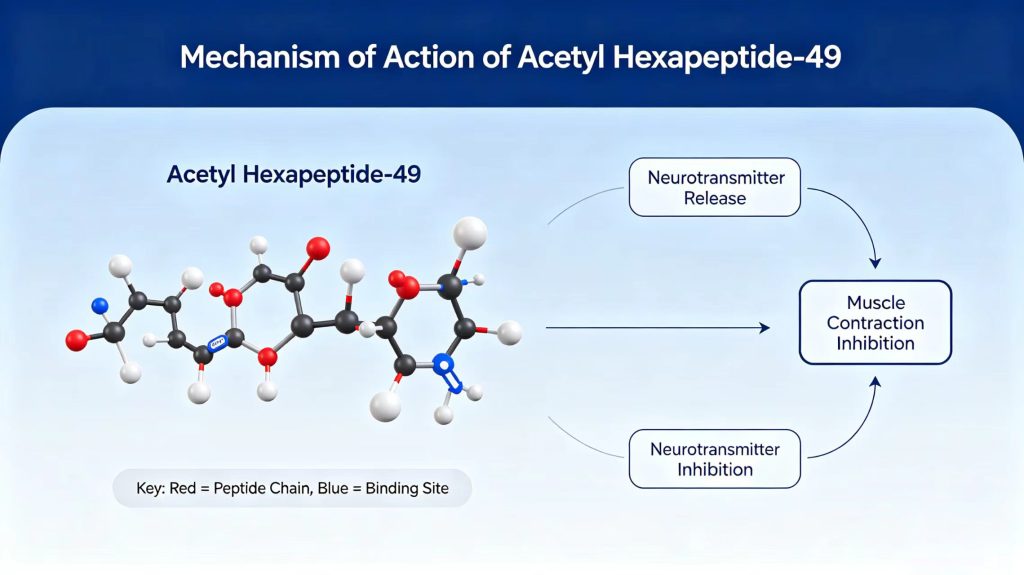
Acetyl Hexapeptide-49 is a cosmetic signaling peptide designed primarily for skin barrier repair and anti-inflammatory modulation, rather than neuromuscular “wrinkle freezing” (like Acetyl Hexapeptide-8).
Because it is a relatively new proprietary peptide with limited independent pharmacological literature, its mechanism is described mainly from in vitro data and supplier/ingredient dossier models rather than large clinical trials. Still, the proposed mechanism can be understood in a few key biological pathways:
1. Skin barrier reinforcement signaling
Acetyl Hexapeptide-49 is thought to act on keratinocytes, stimulating pathways involved in:
- Filaggrin synthesis
- Involucrin and loricrin expression
- Corneocyte cohesion improvement
Result: strengthened stratum corneum and reduced transepidermal water loss (TEWL)
2. Activation of repair-associated growth signaling
It is proposed to modulate epidermal repair signaling cascades, including:
- TGF-β–related repair signaling (indirect modulation)
- MAPK/ERK pathways in keratinocyte renewal
- Increased cellular turnover in damaged epidermis
Result: faster recovery of irritated or compromised skin
3. Anti-inflammatory modulation
The peptide is also suggested to reduce inflammation by:
- Downregulating pro-inflammatory cytokines such as IL-6 and IL-8
- Reducing NF-κB pathway activation (indirect suppression)
- Lowering stress-induced inflammatory responses in epidermal cells
Result: calmer skin, reduced redness and sensitivity
4. Hydration and extracellular matrix support (indirect)
Unlike collagen-stimulating peptides, Acetyl Hexapeptide-49 does not directly build collagen, but may:
- Improve epidermal lipid organization
- Support extracellular matrix homeostasis indirectly via reduced inflammation
5. Functional classification (important)
It is best categorized as:
- Barrier-repair peptide
- Soothing / anti-redness peptide
- Skin resilience enhancer
NOT:
- A neuromodulator (no botulinum-like activity)
- A strong collagen-boosting matrix peptide like Palmitoyl Pentapeptide-4
Summary
Acetyl Hexapeptide-49 works mainly by strengthening epidermal barrier proteins and reducing inflammatory signaling in keratinocytes, leading to improved skin resilience, hydration, and reduced irritation.