

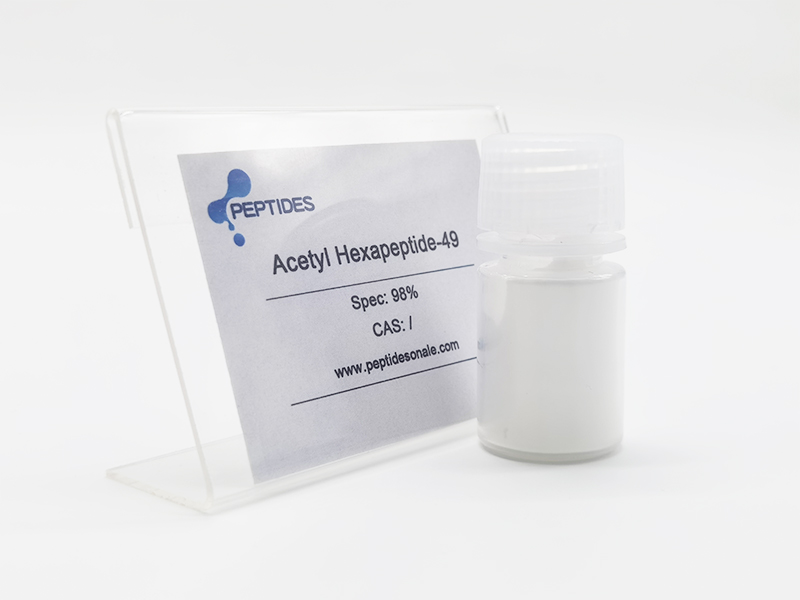
Acetyl Hexapeptide-49 is a synthetic cosmetic signaling peptide developed for sensitive skin management, primarily targeting inflammation, irritation, and skin barrier dysfunction. It belongs to the modern class of neurocosmetic and anti-inflammatory peptides used in advanced skincare formulations.
1. Identity and General Characteristics
- Name: Acetyl Hexapeptide-49
- Type: Synthetic hexapeptide (6 amino acids)
- Typical sequence: Ac-Phe-Phe-Trp-Phe-His-Val
- Category: Cosmetic active ingredient (not a drug)
- Functional class: Anti-inflammatory / barrier-support peptide
- Commercial names: Often marketed as part of complexes such as Delisens™
It is designed for topical use only, primarily in skincare formulations for sensitive or reactive skin.
2. Origin and Development Background
2.1 Synthetic origin
Fully laboratory-synthesized
Built via stepwise peptide synthesis
Modified with an acetyl group to improve:
- Stability
- Skin compatibility
- Resistance to enzymatic breakdown
It is not naturally extracted from plants, animals, or microbes.
2.2 Scientific development context
It was developed as part of a broader cosmetic trend:
- “Neurocosmetics” (skin–nerve–immune interaction targeting)
- “Sensitive skin active ingredients”
- “Barrier repair peptides”
Its design focuses on calming skin hyperreactivity, especially irritation caused by:
- Surfactants
- Acids (AHA/BHA)
- Environmental stress (UV, pollution)
2.3 Research status
Scientific literature shows:
- Limited peer-reviewed mechanistic studies
- Most data comes from supplier dossiers and in vitro testing
- Minimal clinical trial evidence in humans
So, it is considered:
A promising but not fully clinically validated cosmetic peptide
3. Molecular Nature and Biological Target
3.1 Primary target: PAR-2 receptor
The main proposed mechanism is modulation of:
Proteinase-Activated Receptor-2 (PAR-2)
PAR-2 is involved in:
- Skin inflammation signaling
- Itch sensation
- Mast cell activation
- Cytokine release
3.2 Downstream inflammatory cascade
When PAR-2 is overactivated, it triggers:
- IL-6 (pro-inflammatory cytokine)
- IL-8 (chemotactic inflammatory cytokine)
- TRPV1 activation (itch/burning sensation pathway)
- CGRP release (neurogenic inflammation)
Acetyl Hexapeptide-49 is proposed to reduce this cascade, lowering skin reactivity.
4. Mechanism of Action (Integrated View)
Acetyl Hexapeptide-49 acts through three interconnected pathways:
4.1 Anti-inflammatory modulation
- Downregulates IL-6 and IL-8 production (in vitro reduction ~70%)
- Suppresses PAR-2 mediated inflammatory signaling
- Reduces mast cell–driven skin irritation
Result: calmer, less reactive skin
4.2 Neuro-sensory desensitization
- Reduces activation of TRPV1 channels
- Lowers itch and stinging sensation signaling
- Decreases neurogenic inflammation (CGRP pathway)
Result: improved skin comfort and reduced “burning” response
4.3 Barrier function enhancement
Observed in cell studies:
- Faster keratinocyte migration during wound healing models
- Improved epidermal regeneration markers
- Enhanced barrier recovery after damage
Result: stronger, more resilient stratum corneum
5. Experimental Evidence
5.1 In vitro findings
Studies using human keratinocytes show:
- ↓ IL-6 production: ~69.6% reduction
- ↓ IL-8 production: ~71.5% reduction
- Improved “scratch wound” closure in cell models
5.2 Evidence limitations
However:
- No large randomized human clinical trials
- No standardized pharmacokinetic data
- Structure and synthesis details remain poorly documented in literature
Evidence quality: moderate-to-low (cosmetic-grade, not pharmaceutical-grade)
6. Functional Applications in Skincare
6.1 Sensitive skin formulations
- Reduces irritation from external triggers
- Used in “anti-redness” skincare lines
6.2 Post-procedure recovery
- Laser aftercare creams
- Chemical peel soothing formulations
- Microdermabrasion recovery products
6.3 Barrier repair systems
Often combined with:
- Ceramides
- Niacinamide
- Panthenol
6.4 Anti-stinging / anti-reactivity products
Used in:
- Acid-buffering skincare systems
- Retinoid-support creams
- “Tolerance-building” skincare
6.5 Neurocosmetic skincare
Used for:
- Stress-reactive skin
- Environmentally sensitive skin
- Skin “hyper-responsiveness”
7. Safety Profile
7.1 General safety
- Considered low toxicity in topical use
- Large peptides generally remain in the stratum corneum
- Minimal systemic absorption expected
7.2 Known limitations
No long-term human safety datasets
Potential for:
- Mild irritation in sensitive individuals
- Rare allergic response (peptide hypersensitivity risk)
7.3 Regulatory classification
- Cosmetic ingredient (not FDA-approved drug)
- Safety evaluation follows modern peptide risk frameworks
8. Advantages and Limitations
Advantages
- Strong anti-inflammatory signaling potential (in vitro)
- Targets key irritation pathway (PAR-2)
- Good compatibility with barrier-repair systems
- Suitable for sensitive skin formulations
Limitations
- Weak clinical validation in humans
- Mechanism mostly based on supplier data
- Uncertain skin penetration depth
- Effects likely modest rather than transformative
9. Position Among Cosmetic Peptides
Compared to other peptides:
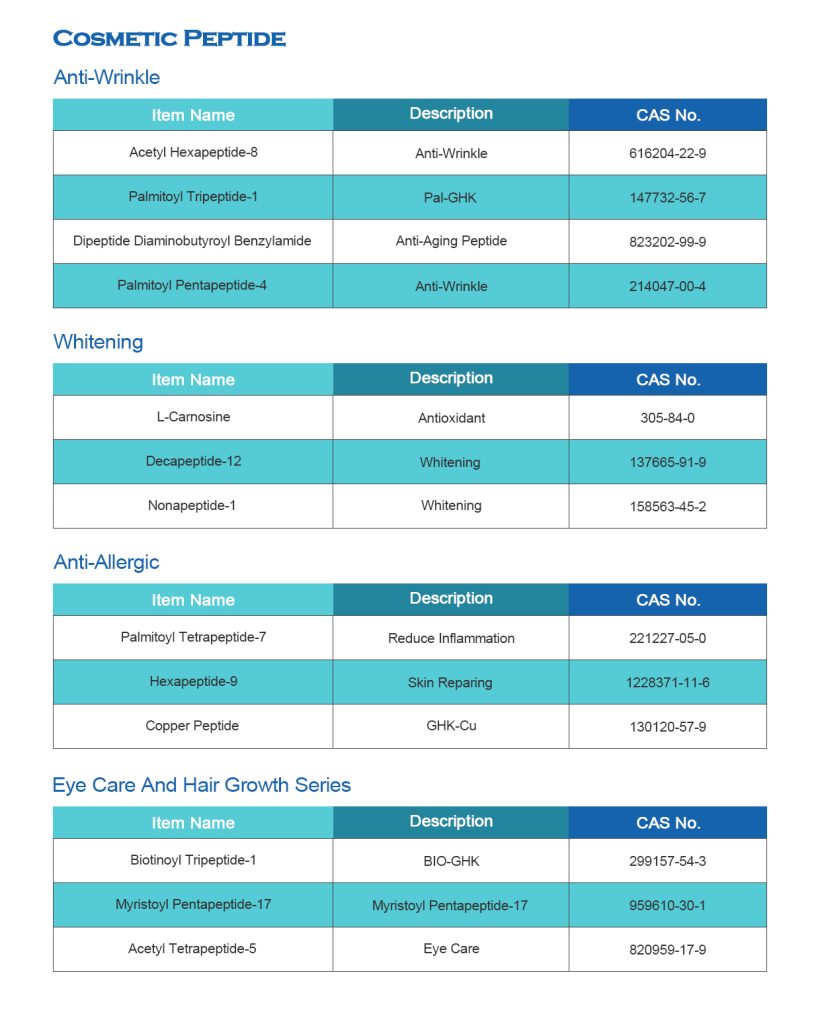
- More anti-inflammatory than Acetyl Hexapeptide-8
- Less collagen-focused than Matrixyl-type peptides
- More “calming” than anti-aging structural peptides
It sits in the category of:
- Skin-soothing / neurocosmetic barrier peptides
10. Overall Conclusion
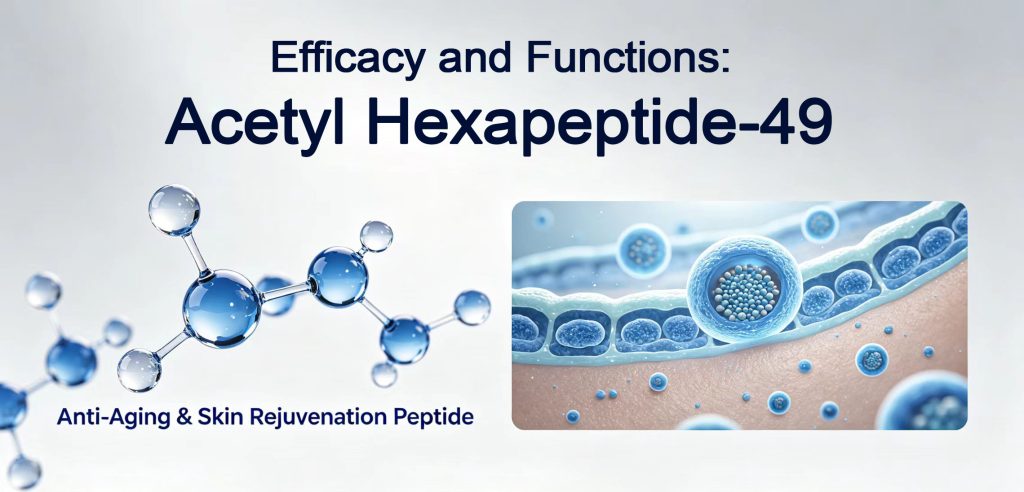
Acetyl Hexapeptide-49 is a synthetic anti-inflammatory cosmetic peptide designed to regulate PAR-2-mediated skin irritation pathways, reducing cytokine-driven inflammation and improving skin barrier recovery.
Core scientific concept:
It does not “rebuild skin” directly—it reduces overreaction of skin immune signaling, allowing the barrier to recover more efficiently.