

Acetyl Tetrapeptide-3 is a short synthetic cosmetic peptide consisting of four amino-acid residues with an acetyl group attached to the peptide chain. It is primarily used in skin-care and hair-care formulations, particularly products positioned for skin conditioning, anti-aging, and improvement of the appearance of hair and scalp.
1. Basic profile
| Property | Information |
| Name | Acetyl Tetrapeptide-3 |
| INCI name | Acetyl Tetrapeptide-3 |
| Type | Synthetic tetrapeptide |
| Peptide length | 4 amino-acid residues |
| Acetylation | N-terminal acetyl modification |
| Main field | Cosmetics and personal care |
| Common applications | Skin care, scalp care, hair care |
| Typical positioning | Skin conditioning, anti-aging, hair/scalp care |
| Formulation role | Cosmetic active rather than a conventional pharmaceutical drug |
2. What does “tetrapeptide” mean?
A tetrapeptide contains four amino-acid units joined by peptide bonds. The acetyl prefix indicates that an acetyl group has been introduced onto the peptide, generally at the N-terminal end.
Acetylation can modify characteristics such as:
- molecular polarity and charge
- chemical stability
- interaction with biological targets
- compatibility with cosmetic formulations
- resistance to certain enzymatic degradation processes
The exact physicochemical characteristics depend on the peptide sequence and its formulation grade.
3. How it is obtained
Acetyl Tetrapeptide-3 is generally produced through controlled peptide synthesis, rather than being extracted directly from plants or animals. Commercial peptide manufacturing commonly involves sequential amino-acid coupling, protection/deprotection steps, acetylation, purification, and quality-control testing.
The final cosmetic ingredient may be supplied as a diluted peptide solution or blend rather than as 100% pure peptide.
4. Cosmetic significance
Acetyl Tetrapeptide-3 belongs to the broader class of bioactive cosmetic peptides. Such peptides are incorporated into formulations because relatively small amounts can be used to target specific biological pathways associated with the appearance and condition of skin or hair.
Depending on the supplier and formulation, Acetyl Tetrapeptide-3 is particularly associated with skin-supporting and hair/scalp-care concepts. Claims should be distinguished from clinical drug claims: evidence for cosmetic peptides often consists of in-vitro, ex-vivo, supplier-sponsored, or small human cosmetic studies, and the strength of evidence can vary considerably between products.
5. Main areas of application
Skin care
- Anti-aging formulations
- Firming and elasticity-focused products
- Skin-conditioning serums and creams
- Products targeting the appearance of fine lines
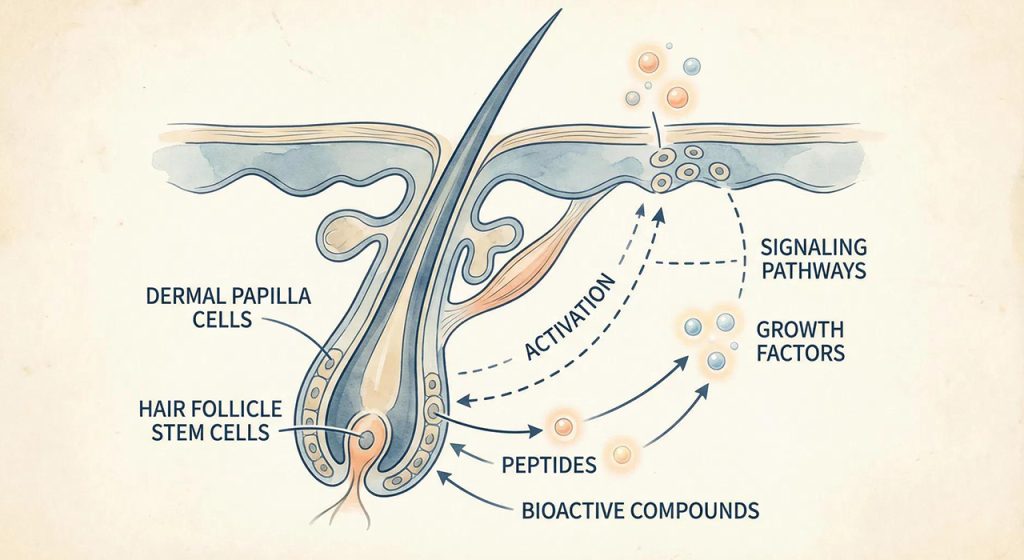
Hair and scalp care
- Scalp-conditioning formulations
- Hair-density or hair-strengthening cosmetic products
- Leave-on scalp serums
- Products designed to improve the appearance of weakened or thinning hair
6. Important distinction
Acetyl Tetrapeptide-3 should not automatically be considered equivalent to pharmaceutical treatments for hair loss or skin disease. Its role is primarily cosmetic, and the actual performance depends on peptide concentration, delivery system, formulation stability, and the condition of the skin or scalp.