

Acetyl Tetrapeptide-3 is a synthetic biomimetic tetrapeptide used primarily in hair-care and scalp-care cosmetics, with secondary applications in skin-conditioning and anti-aging formulations. It is often associated with hair-density complexes such as Capixyl, where it is combined with red clover-derived ingredients.
1. Hair-growth and hair-density products
Its most important cosmetic application is in products designed for thinning hair and reduced hair density.
It is incorporated into:
- Scalp serums
- Hair-growth/density treatments
- Leave-on scalp lotions
- Anti-hair-loss cosmetic products
- Hair-follicle strengthening treatments
- Ampoules and intensive scalp treatments
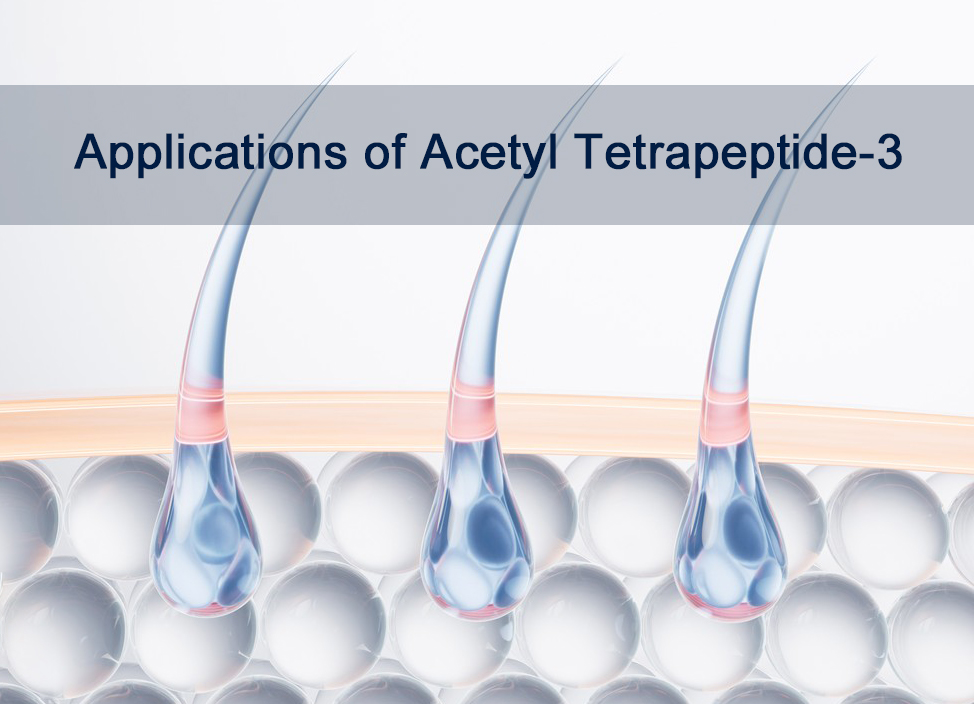
Research indicates that Acetyl Tetrapeptide-3 can influence extracellular-matrix components around the follicle, including collagen and laminin, potentially helping support the follicular environment.
2. Supporting hair-follicle anchoring
A major proposed application is improving the structural environment surrounding the hair follicle.
By promoting extracellular-matrix proteins, the ingredient is used in formulations intended to:
- Support follicle structure
- Improve hair anchoring
- Reduce the appearance of hair thinning
- Improve the overall appearance of hair density
These effects are particularly relevant to scalp serums designed for weakened or thinning hair.
3. Scalp-care formulations
Acetyl Tetrapeptide-3 can also be used as a scalp-conditioning active. It is commonly combined with other scalp ingredients such as caffeine, botanical extracts, niacinamide, or other peptides.
The goal is generally to create a multifunctional formula addressing:
scalp condition → follicular environment → hair anchoring → hair-density appearance
It is therefore more appropriate for leave-on scalp products than conventional rinse-off shampoos, where contact time is much shorter.
4. Anti-hair-loss cosmetic formulations
Acetyl Tetrapeptide-3 is frequently marketed for cosmetic products targeting hair shedding and thinning. However, it is important to distinguish cosmetic evidence from medical hair-loss treatment.
The FDA’s review of cosmetic hair-loss ingredients notes that Acetyl Tetrapeptide-3 is used in cosmetics and that its effects alone on hair growth remain uncertain.
Therefore, it is best described as a hair-density/scalp-support cosmetic active, rather than an established drug treatment for alopecia.
5. Skin-care and skin-repair applications
Although its commercial prominence is in hair care, Acetyl Tetrapeptide-3 is also relevant to skin-conditioning and skin-rejuvenation formulations.
Research on the related AcSDKP peptide system has reported effects on fibroblasts, keratinocytes, extracellular-matrix proteins, epidermal structure, and barrier-associated proteins.
Potential cosmetic applications include:
- Skin-conditioning serums
- Firming formulations
- Skin-repair products
- Anti-aging formulations
- Products targeting loss of skin structural support
The evidence base for these skin applications is considerably less established commercially than its scalp/hair application.
6. Combination with other cosmetic actives
Acetyl Tetrapeptide-3 is particularly useful in multi-active hair formulations. It may be combined with:
| Combination | Formulation rationale |
| Biotinoyl Tripeptide-1 | Complementary follicle-support approach |
| Caffeine | Frequently used in scalp-density products |
| Red clover extract | Commonly combined with Acetyl Tetrapeptide-3 in hair complexes |
| Niacinamide | Scalp-conditioning and barrier-support role |
| Hyaluronic acid | Scalp hydration |
| Panthenol | Hair/scalp conditioning |
| Other peptides | Multi-pathway cosmetic hair-density formulations |
A notable example is the combination of Acetyl Tetrapeptide-3 with red clover extract, which has been investigated as a hair-growth cosmetic complex.
7. Typical product formats
Acetyl Tetrapeptide-3 is particularly suitable for:
Best suited
- Leave-on scalp serums
- Hair-density serums
- Scalp ampoules
- Hair-growth cosmetic treatments
- Lightweight scalp lotions
- Multi-peptide scalp treatments
Less ideal
- Conventional rinse-off shampoos
- Short-contact conditioners
Because peptides are generally used at relatively low concentrations, formulation stability, pH, preservation, and delivery can have a major influence on practical performance. The FDA document reports cosmetic use of Acetyl Tetrapeptide-3 in the approximate 0.5–5% range, although commercial complexes may contain substantially lower amounts of the peptide itself.
Bottom line
The primary application of Acetyl Tetrapeptide-3 is hair and scalp care, especially products targeting hair thinning, follicle support, hair anchoring, and the appearance of increased hair density. Its proposed action on extracellular-matrix components makes it particularly interesting for follicle-support formulations. Evidence for the isolated peptide’s ability to produce clinically meaningful hair growth, however, is less robust than marketing claims for some commercial complexes may imply.