

Acetyl Hexapeptide-49 is a synthetic cosmetic neurocosmetic peptide mainly used for skin calming, anti-irritation, and barrier support. Its strengths and weaknesses reflect its role as a supportive signaling peptide rather than a structural anti-aging active.
✅ Pros of Acetyl Hexapeptide-49
1. Strong anti-inflammatory potential (cosmetic-level)
- Reduces pro-inflammatory cytokines (e.g., IL-6, IL-8 in vitro)
- Helps suppress irritation signaling pathways such as PAR-2
Benefit: calmer, less reactive skin
2. Excellent for sensitive or reactive skin
- Designed specifically for skin hypersensitivity
- Helps reduce redness, stinging, and discomfort
Benefit: improved tolerance to skincare products (acids, retinoids, surfactants)
3. Neurocosmetic “soothing” effect
- Targets sensory irritation pathways (TRPV1-related signaling)
- Helps reduce itch/burning sensations
Benefit: improved skin comfort and reduced “skin stress” response
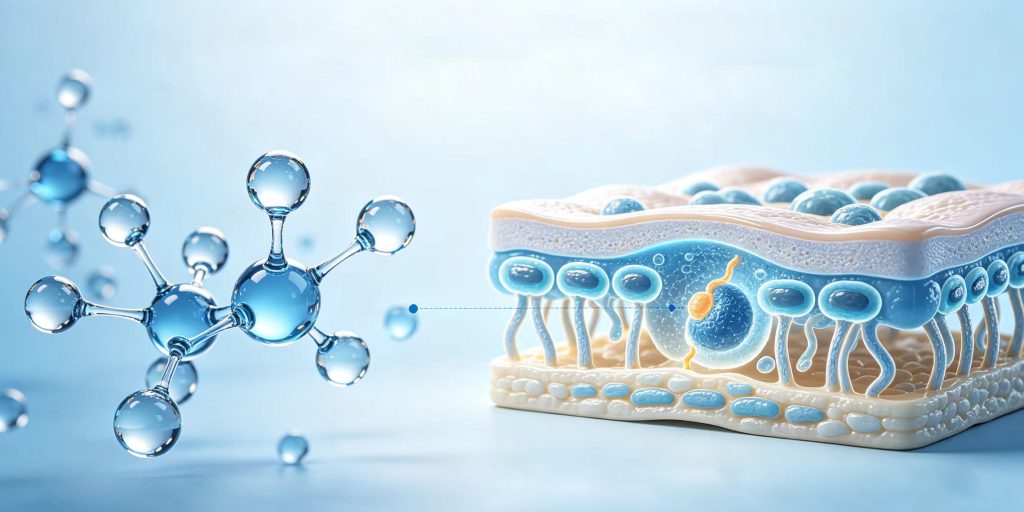
4. Supports skin barrier recovery (indirectly)
- Improves keratinocyte repair activity in models
- Helps skin recover after irritation or procedures
Benefit: faster normalization after stress (peels, exfoliation, environmental damage)
5. Good compatibility in formulations
Can be combined with:
- Niacinamide
- Ceramides
- Panthenol
- Hyaluronic acid
Benefit: easy to integrate into barrier-repair or soothing skincare systems
6. Low systemic risk
- Large peptide → minimal skin penetration into bloodstream
- Topical cosmetic safety profile generally favorable
❌ Cons of Acetyl Hexapeptide-49
1. Limited clinical evidence in humans
Most data comes from:
- In vitro studies
- Supplier technical dossiers
- Lack of strong, independent clinical trials
Limitation: real-world efficacy not fully validated
2. Not a direct anti-aging structural peptide
Does NOT:
- Stimulate collagen significantly
- Remodel dermal matrix
- Act like Matrixyl-type peptides
Limitation: weak for wrinkle reduction or skin firming
3. Indirect and modest visible effects
- Works mainly by reducing irritation, not by changing skin structure
- Results may be subtle unless skin is sensitive or inflamed
Limitation: not a “dramatic” cosmetic active
4. Depends heavily on formulation quality
Effectiveness can vary based on:
- Delivery system
- Concentration
- Combination with other actives
Limitation: inconsistent performance across products
5. Mechanism still not fully verified
- PAR-2 modulation and cytokine reduction are proposed mechanisms
- Not fully mapped in robust human dermatology studies
Limitation: scientific uncertainty remains
6. Narrow functional scope
Primarily:
- Anti-irritation
- Soothing
- Barrier support
Does not address pigmentation, deep wrinkles, or acne directly
Limitation: limited multifunctionality
Balanced Summary
What it is good at:
- Calming sensitive skin
- Reducing irritation and redness
- Improving tolerance to active skincare
- Supporting skin recovery after stress
What it is not good at:
- Strong anti-wrinkle effects
- Collagen rebuilding
- Pigmentation correction
- Acne treatment
One-line conclusion
Acetyl Hexapeptide-49 is a specialized anti-irritation and skin-calming peptide with good supportive benefits for sensitive skin, but limited direct anti-aging or structural skin-rebuilding power.