

Acetyl Hexapeptide-1 is a synthetic cosmetic hexapeptide used in skincare formulations to support skin tone regulation, brightness, and photoaging improvement. It is best known in cosmetic science as a signal peptide ingredient used in anti-pigmentation and anti-aging products.
1. Introduction
Acetyl Hexapeptide-1 is a small peptide (6 amino acids) modified with an acetyl group, designed for topical skincare use. It functions as a biomimetic signaling molecule, meaning it mimics or influences natural skin communication pathways—especially those involved in pigmentation control.
It is commonly included in:
- Brightening serums
- Anti-dark spot treatments
- Anti-aging skincare products
- Skin tone–correcting formulations
Its main cosmetic goal is to promote a more even, radiant complexion.
2. Origin
2.1 Synthetic development
- Created through peptide engineering in cosmetic biotechnology
- Not naturally extracted from biological sources
- Designed as a lab-synthesized biomimetic peptide
2.2 Scientific inspiration
Its development is based on understanding that:
- Skin cells communicate through small peptide signals
- Melanocytes (pigment cells) respond to biochemical “stress signals”
- Controlling these signals can influence pigmentation balance
2.3 Cosmetic industry use
- Developed for inclusion in anti-pigmentation cosmetic complexes
- Often used in combination formulas (multi-peptide or brightening blends)
- Commercially known in some formulations as Melitane™
3. Chemical and Structural Properties
3.1 Basic structure
- Type: Hexapeptide (6 amino acids)
- Modification: N-terminal acetylation (Ac- group)
- Molecular weight: ~700–900 Daltons
- Structure: Linear peptide (non-cyclic)
3.2 Physical properties
Appearance
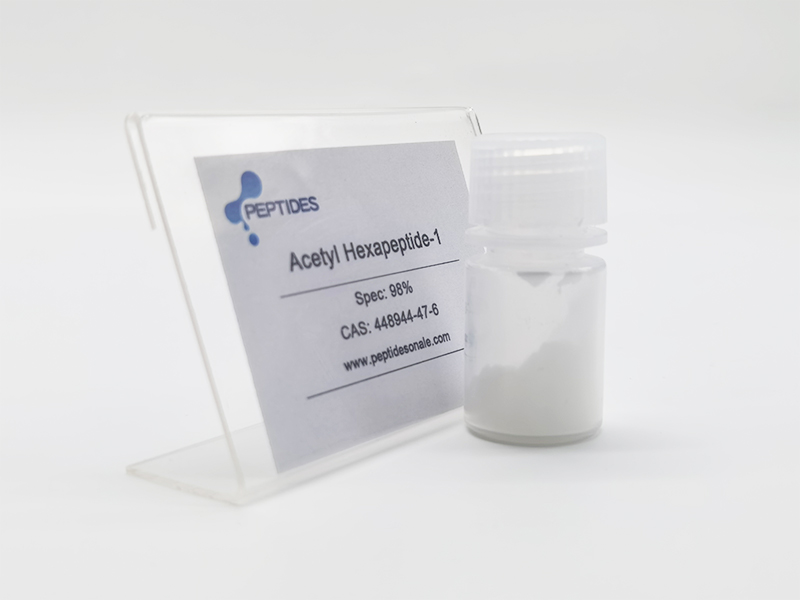
- White to off-white powder (pure form)
- Used in dissolved form in cosmetic products
Solubility
- Highly soluble in water
- Poor solubility in oils or non-polar solvents
Stability
Moderately stable, but sensitive to:
- Heat
- Extreme pH conditions
- Enzymatic degradation (skin proteases)
Acetylation improves stability compared to non-modified peptides.
3.3 Functional characteristics
- Acts as a signal peptide in skin
- Primarily influences melanocyte behavior
- Functions mainly in epidermal layers
- Requires formulation support for optimal delivery

4. Biological Role (Functional Property Overview)
Acetyl Hexapeptide-1 is associated with:
- Regulation of melanin production
- Modulation of UV-induced pigmentation responses
- Support of skin tone balance
- Reduction of uneven pigmentation appearance
It does not act as a bleaching agent but as a regulatory signaling peptide.
5. Key Takeaway
Acetyl Hexapeptide-1 is a synthetic, acetylated hexapeptide developed for cosmetic use, primarily aimed at improving skin brightness and pigmentation balance through modulation of melanocyte signaling pathways. Its properties make it suitable for topical anti-aging and skin tone–correcting formulations, with effects that are gradual and formulation-dependent.