

Acetyl Decapeptide-3 is a synthetic biomimetic peptide used in cosmetic science, primarily formulated for anti-aging and skin-repair applications. It belongs to the broader class of signal peptides, which are designed to communicate with skin cells and influence their activity, especially in dermal remodeling.
Introduction
Acetyl Decapeptide-3 is a topical cosmetic ingredient used in skincare products such as serums, creams, and anti-wrinkle formulations. Its main purpose is to:
- Support skin firmness and elasticity
- Reduce visible signs of aging (fine lines, wrinkles)
- Improve overall skin texture and quality
It is not a pharmaceutical drug and does not act on systemic biological targets. Instead, it works locally in the skin through cell signaling effects, mainly on fibroblasts.
Origin
Synthetic development
- Developed through peptide engineering and cosmetic biotechnology
- Designed in laboratory settings rather than extracted from natural sources
- Inspired by naturally occurring extracellular matrix (ECM) fragments
Conceptual inspiration
Its design is based on the idea that:
- When skin collagen breaks down during aging, small peptide fragments are released
- These fragments can act as biological signals (“repair cues”)
- Synthetic peptides like Acetyl Decapeptide-3 aim to mimic these signals to trigger skin repair responses
Cosmetic industry context
- Developed for inclusion in anti-aging peptide complexes
- Often used alongside other signal peptides in multi-ingredient formulas
Chemical and Physical Properties
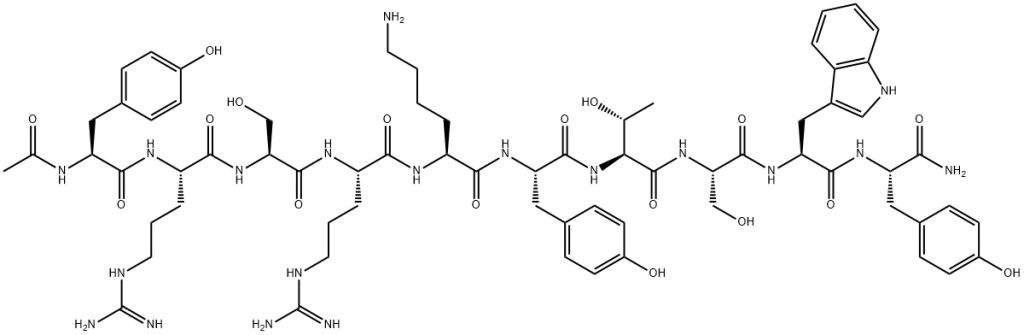
1. Chemical structure
- Type: Linear decapeptide (10 amino acids)
- Modification: N-terminal acetylation (Ac- group)
- General structure: Ac–(amino acids)₁₀–OH
- Molecular weight: ~900–1300 Da (depends on sequence)
- Structure form: Flexible linear chain (non-cyclic, no disulfide bonds)
2. Physical properties
Appearance
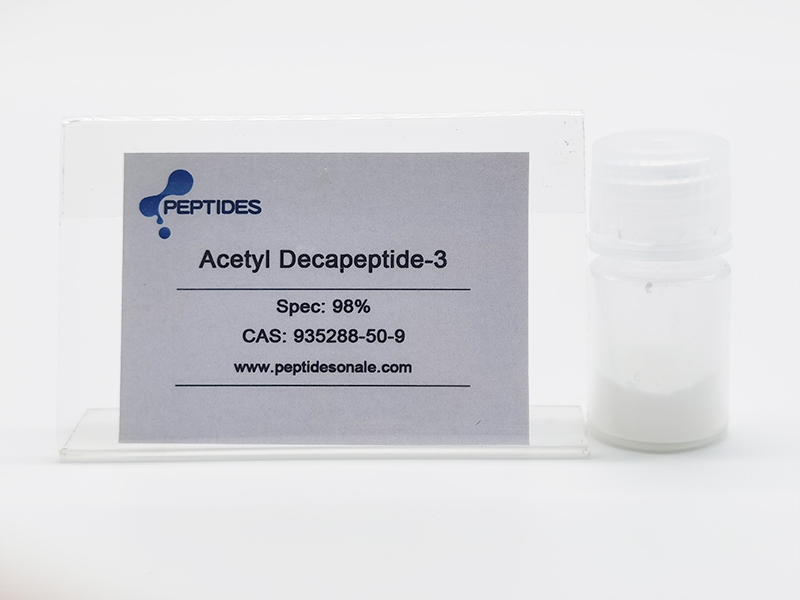
- White to off-white powder (pure form)
- May be dissolved in aqueous cosmetic solutions
Solubility
- Highly soluble in water
- Poor solubility in oils and non-polar solvents
Stability
Moderately stable under cosmetic conditions
Sensitive to:
- Heat
- Extreme pH (outside ~4–7 range)
- Enzymatic degradation (skin peptidases)
Acetylation improves resistance to breakdown compared to non-acetylated peptides
3. Functional properties (biological relevance)
- Acts as a signal peptide for dermal cells
- Influences fibroblast activity (collagen-producing cells)
- Supports extracellular matrix (ECM) remodeling
- Works primarily in the epidermis and upper dermis
Key Functional Profile (Summary)
Acetyl Decapeptide-3 is characterized by:
- Type: Cosmetic signal peptide
- Primary role: Skin rejuvenation support
- Target system: Fibroblast and extracellular matrix signaling
- Main effect: Improved skin firmness, elasticity, and texture
- Use context: Anti-aging skincare formulations
Core Takeaway
Acetyl Decapeptide-3 is a synthetically designed, water-soluble decapeptide derived from biomimetic skin-repair concepts, created to imitate natural “repair signals” in aging skin. Its properties—small size, acetyl stability, and hydrophilicity—make it suitable for cosmetic formulations aimed at gradual improvement of skin structure and appearance.