

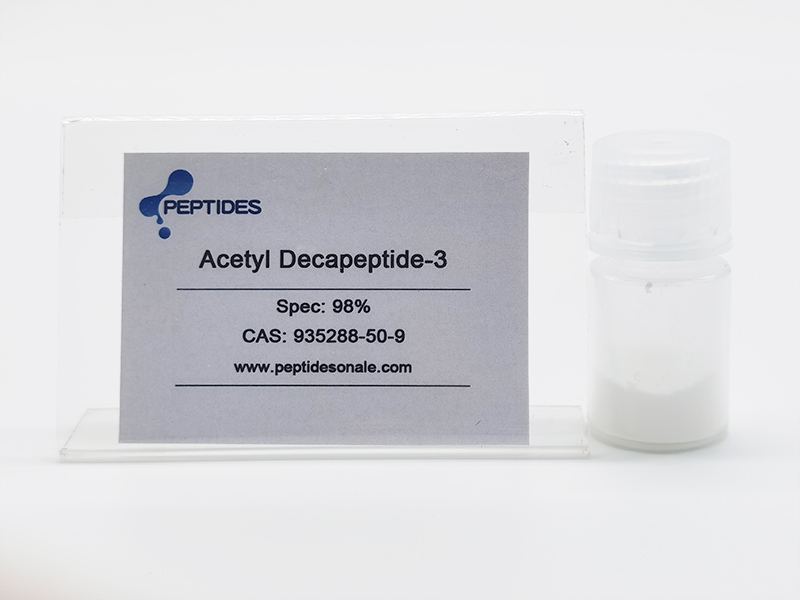
Acetyl Decapeptide-3 is a synthetic biomimetic peptide commonly used in advanced skincare and cosmetic formulations. It is designed to mimic certain regenerative signals involved in skin repair and renewal, making it a popular ingredient in anti-aging and skin-rejuvenation products.
Benefits of Acetyl Decapeptide-3
1. Promotes Skin Regeneration
One of the primary benefits of Acetyl Decapeptide-3 is its ability to support the skin’s natural renewal process.
Potential effects:
- Stimulates skin cell turnover
- Supports tissue repair
- Encourages healthy skin renewal
- Improves overall skin vitality
2. Helps Reduce Fine Lines and Wrinkles
As skin ages, collagen and elastin production decline, leading to wrinkles and loss of firmness.
Benefits:
- Softens the appearance of fine lines
- Reduces visible wrinkles
- Improves skin smoothness
- Supports a more youthful appearance
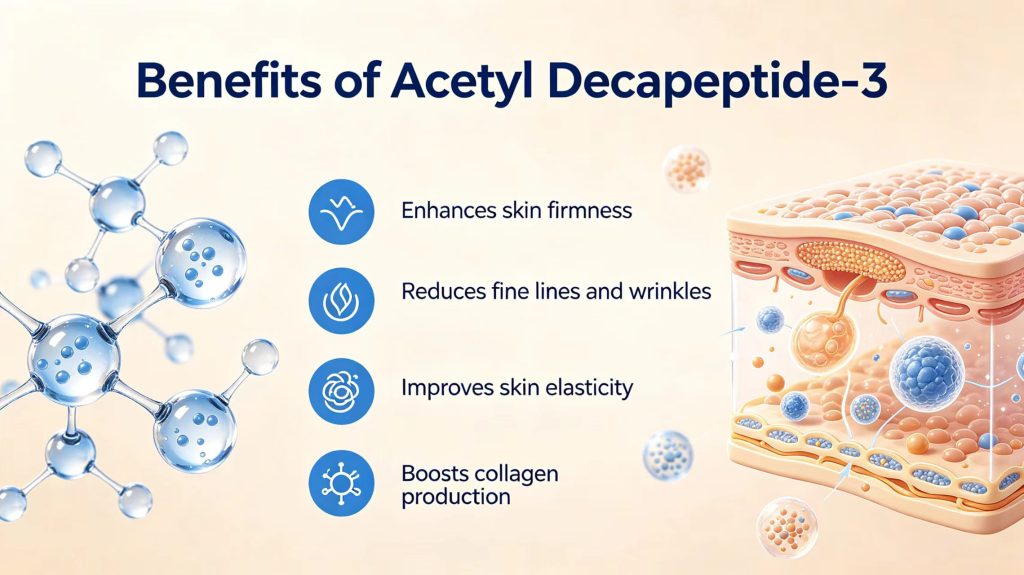
3. Stimulates Collagen Production
Collagen is essential for maintaining skin strength, elasticity, and structure.
Potential benefits:
- Supports fibroblast activity
- Encourages collagen synthesis
- Helps maintain skin density
- Improves skin firmness over time
4. Improves Skin Elasticity
Acetyl Decapeptide-3 may help strengthen the extracellular matrix that supports the skin.
Results may include:
- Firmer skin texture
- Better skin resilience
- Improved elasticity
- Reduced skin sagging
5. Supports Skin Barrier Recovery
Healthy skin depends on an intact barrier that protects against moisture loss and environmental stressors.
Benefits:
- Assists skin recovery after damage
- Supports barrier repair
- Helps maintain hydration
- Improves skin comfort
6. Enhances Post-Procedure Recovery
Acetyl Decapeptide-3 is often used in products intended for recovery after aesthetic treatments.
Common applications:
- After microneedling
- Following laser procedures
- Post-chemical peel care
- Skin resurfacing recovery
Potential benefits:
- Supports tissue regeneration
- Promotes healing processes
- Helps reduce recovery time
- Improves treatment outcomes
7. Improves Skin Texture
Regular use may help create a smoother and more refined skin surface.
Possible improvements:
- Softer skin feel
- More even texture
- Improved skin appearance
- Enhanced radiance
8. Provides Anti-Aging Support
By supporting multiple pathways involved in skin maintenance, Acetyl Decapeptide-3 contributes to comprehensive anti-aging care.
Anti-aging benefits:
- Helps maintain youthful skin structure
- Supports long-term skin quality
- Reduces visible signs of aging
- Enhances skin rejuvenation programs
9. Suitable for Most Skin Types
Acetyl Decapeptide-3 is generally considered well tolerated.
Appropriate for:
- Mature skin
- Dry skin
- Sensitive skin
- Normal skin
- Combination skin
It is commonly incorporated into formulations designed for daily use.
Comparison with Traditional Anti-Aging Ingredients
| Feature | Acetyl Decapeptide-3 | Retinoids | Vitamin C |
| Collagen Support | High | High | Moderate |
| Skin Renewal | Moderate–High | High | Moderate |
| Irritation Potential | Low | Moderate–High | Low–Moderate |
| Post-Procedure Use | Often Suitable | Usually Avoided Initially | Depends on Formulation |
| Sensitive Skin Compatibility | Good | Variable | Variable |
Ideal Candidates
Acetyl Decapeptide-3 may be particularly beneficial for individuals who want to:
- Improve skin firmness
- Minimize fine lines and wrinkles
- Support collagen production
- Enhance skin recovery
- Maintain youthful-looking skin
- Complement professional aesthetic treatments
Summary
The main benefits of Acetyl Decapeptide-3 include:
✓ Promoting skin regeneration
✓ Supporting collagen synthesis
✓ Improving skin firmness and elasticity
✓ Reducing fine lines and wrinkles
✓ Enhancing skin texture and smoothness
✓ Supporting skin barrier repair
✓ Assisting post-procedure recovery
✓ Providing gentle anti-aging benefits suitable for many skin types
Although laboratory and cosmetic studies suggest promising regenerative and anti-aging effects, the clinical evidence for Acetyl Decapeptide-3 is still more limited than for well-established ingredients such as retinoids, vitamin C, and niacinamide. Therefore, it is best viewed as a complementary peptide within a broader skincare strategy rather than a standalone anti-aging solution.