

Acetyl Tetrapeptide-11 is a synthetic cosmetic peptide used primarily in anti-aging and skin-conditioning formulations. It belongs to the family of short, acetylated tetrapeptides and is designed to support the appearance of firmer, smoother, and more youthful-looking skin.
1. Basic profile
| Property | Information |
| Name | Acetyl Tetrapeptide-11 |
| INCI name | Acetyl Tetrapeptide-11 |
| Type | Synthetic tetrapeptide |
| Peptide size | 4 amino-acid residues + N-terminal acetyl group |
| Main field | Cosmetic skincare |
| Primary positioning | Anti-aging, skin firmness, skin conditioning |
| Typical formulations | Serums, creams, lotions, eye-care products |
| Appearance | Generally supplied as a peptide-containing cosmetic raw material, often in an aqueous solution or blend |
| Origin | Synthetic/manufactured peptide rather than a botanical extract |
| Primary target | Signs of skin aging and loss of skin quality |
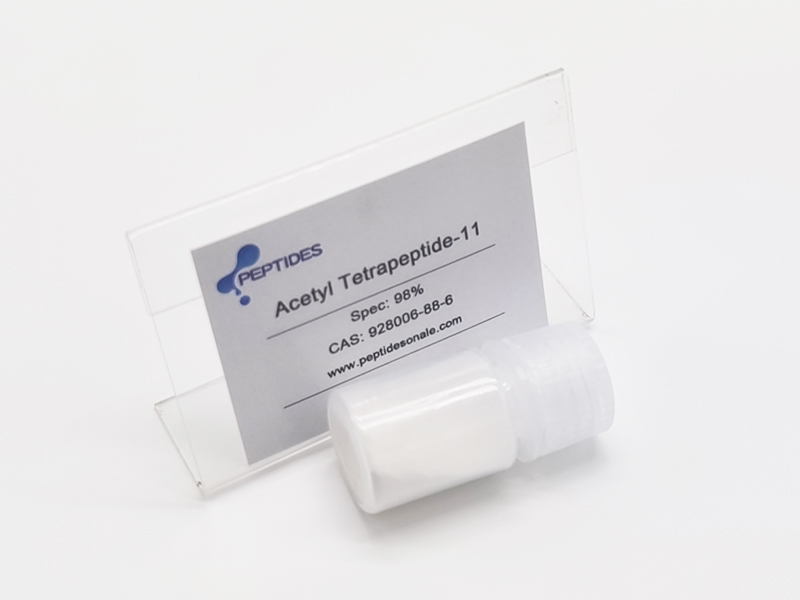
2. What does the name mean?
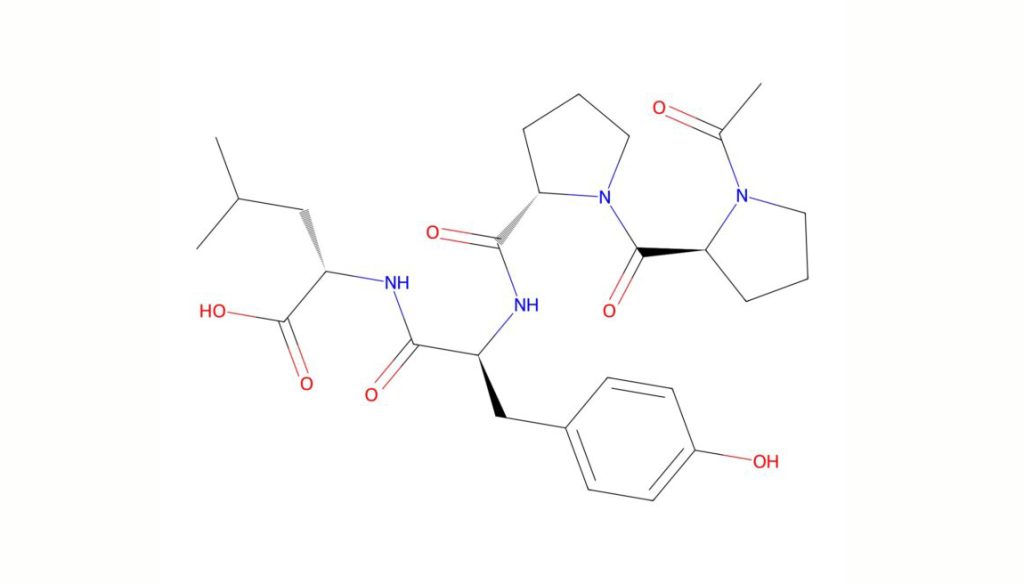
The name describes its chemical construction:
- Acetyl- — an acetyl group is attached to the peptide’s N-terminal end.
- Tetrapeptide — the molecule contains four amino-acid residues.
- -11 — identifies the specific peptide sequence designated as Tetrapeptide-11 in cosmetic nomenclature.
Acetylation can alter a peptide’s chemical properties, stability, and biological interactions, which is one reason acetylated peptides are widely used in cosmetic formulations.
3. What is it used for?
Acetyl Tetrapeptide-11 is mainly incorporated into products intended to improve the visible signs of skin aging. Its cosmetic functions are generally associated with:
- Improving the appearance of skin firmness
- Supporting a smoother-looking skin surface
- Helping improve the appearance of fine lines and wrinkles
- Supporting overall skin conditioning
- Contributing to a more youthful appearance
- Potentially supporting extracellular-matrix-related processes involved in skin structure
It is therefore most relevant to anti-aging and firming skincare rather than cleansing, exfoliation, or pigmentation control.
4. How does it fit into peptide skincare?
Cosmetic peptides are usually divided according to their intended biological role. Acetyl Tetrapeptide-11 is generally considered a skin-conditioning/anti-aging signaling-type peptide, rather than a conventional humectant or exfoliating ingredient.
Its proposed effects are related to peptide-mediated interactions with skin cells and/or extracellular-matrix processes. However, the strength of evidence can vary considerably between in-vitro studies, supplier testing, and independent clinical research.
5. Important distinction
Acetyl Tetrapeptide-11 should not be confused with other similarly named cosmetic peptides such as:
- Acetyl Tetrapeptide-1
- Acetyl Tetrapeptide-5
- Acetyl Tetrapeptide-9
- Acetyl Tetrapeptide-7
Although they share the tetrapeptide/acetylated-peptide naming pattern, their amino-acid sequences, mechanisms, formulation properties, and cosmetic claims can be different.
6. Overall assessment
In short, Acetyl Tetrapeptide-11 is a small synthetic acetylated peptide used as a cosmetic anti-aging and skin-conditioning active. Its main commercial interest lies in formulations aimed at firmness, smoothness, and reduction of visible age-related skin changes.
For a technical evaluation, the next useful sections are chemical structure and physical properties, mechanism of action, efficacy, benefits, applications, recommended formulation concentration, stability/pH compatibility, and pros and cons.