

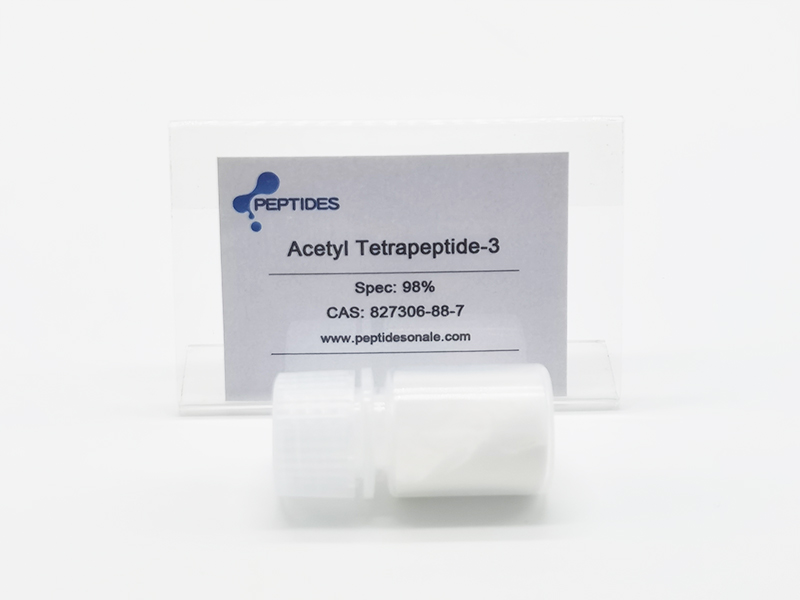
Acetyl Tetrapeptide-3 is a synthetic, short-chain peptide consisting of four amino-acid residues with an acetyl group attached to the peptide structure. Its INCI name is Acetyl Tetrapeptide-3. According to the European COSMILE ingredient database, it is defined as a product obtained by acetylating Tetrapeptide-3 and is classified primarily as a skin-protecting cosmetic ingredient.
It is particularly well known in hair-care and scalp-care formulations, where it is commonly incorporated into peptide complexes designed to support the hair follicle environment and improve the appearance of thinning or weakened hair.
Origin
Acetyl Tetrapeptide-3 is synthetic rather than plant- or animal-derived. Cosmetic ingredient databases identify its origin as synthetic.
It is produced by chemical synthesis of a tetrapeptide followed by acetylation. One ingredient database describes the starting peptide as a synthetic tetrapeptide containing amino acids including lysine, threonine, and serine, followed by acetylation.
A commonly cited structural representation is Ac-KGHK, although commercial ingredient specifications and naming conventions should be checked when identifying a particular raw material.
The acetyl modification is important because chemical modification of peptides can alter their physicochemical characteristics, including stability, polarity, and interaction with biological targets.
Chemical and Physical Properties
Some useful reported properties include:
| Property | Description |
| INCI name | Acetyl Tetrapeptide-3 |
| Type | Synthetic oligopeptide |
| Peptide length | Tetrapeptide |
| Structural modification | Acetylated peptide |
| Molecular formula | C₂₂H₃₉N₉O₅ |
| Molecular weight | ~509.6 g/mol |
| XlogP3-AA | −3 |
| Hydrogen-bond donors | 8 |
| Hydrogen-bond acceptors | 8 |
| Topological polar surface area | ~240 Ų |
| Primary cosmetic function | Skin protecting |
| Common application | Hair/scalp and skin-care formulations |
The molecular-property data are computational values reported by PubChem and therefore should be regarded as physicochemical descriptors rather than measurements of every commercial grade.
Because it is a small peptide with many polar functional groups, Acetyl Tetrapeptide-3 is relatively hydrophilic and polar. This is relevant to formulation because peptide ingredients generally require an appropriately designed aqueous or water-compatible delivery system.
Why is it important in cosmetics?
Acetyl Tetrapeptide-3 has attracted particular attention because of its proposed role in extracellular-matrix and follicular support.
Research summarized in the scientific literature indicates that Acetyl Tetrapeptide-3 can stimulate the production of structural extracellular-matrix components such as collagen III and laminin in experimental models. These proteins contribute to the structural environment surrounding cells and hair follicles.
This has led to its use in cosmetic products aimed at:
- Supporting scalp condition
- Improving the appearance of thinning hair
- Supporting the hair follicle environment
- Helping hair appear fuller and stronger
- Supporting skin structure
- Hair-aging and scalp-care products
It is also a component of Capixyl, a commercial cosmetic active complex combining Acetyl Tetrapeptide-3 with red-clover-derived ingredients.
Acetyl Tetrapeptide-3 and Hair Care
Its strongest commercial identity is arguably in hair and scalp cosmetics rather than conventional facial anti-aging products.
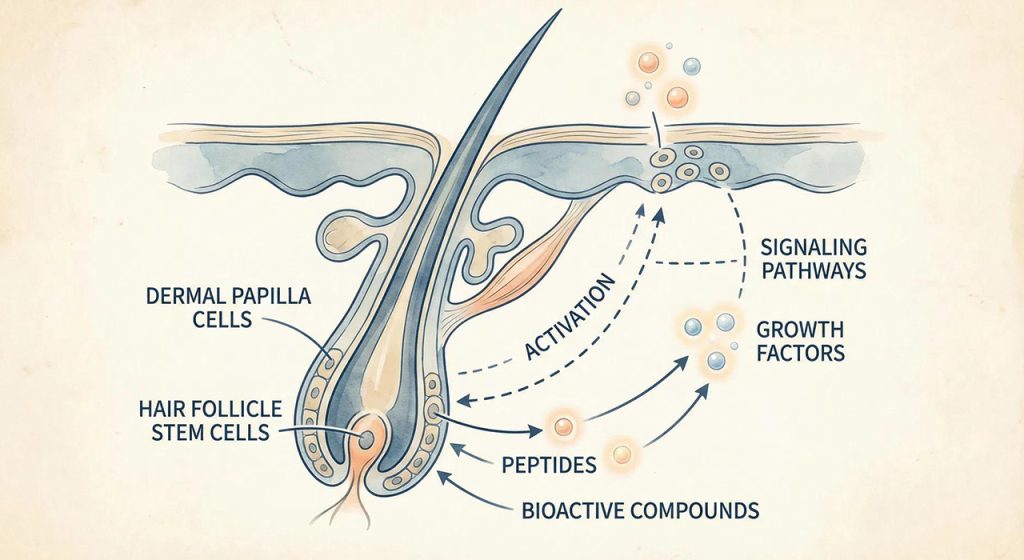
The rationale is that the peptide may influence the extracellular matrix around the follicle. Increased production of structural proteins such as collagen III and laminin could potentially provide a more supportive follicular microenvironment.
Importantly, Acetyl Tetrapeptide-3 should not be equated with an established drug treatment for androgenetic alopecia. Clinical evidence has often evaluated it as part of multi-ingredient formulations rather than as a purified peptide alone.
For example, a 24-week randomized controlled study investigated a formulation containing biochanin A, Acetyl Tetrapeptide-3, and ginseng extracts and compared it with 3% minoxidil. This provides evidence relevant to the combination product, but it does not establish that Acetyl Tetrapeptide-3 alone has the same efficacy as minoxidil.
Introduction to Its Cosmetic Role
Acetyl Tetrapeptide-3 can therefore be viewed as a biomimetic signaling/structural-support peptide used primarily in advanced cosmetic formulations.
Its overall concept can be summarized as:
Synthetic peptide → interacts with biological signaling pathways → supports extracellular-matrix components → helps maintain the structural environment of skin/scalp and hair follicles → potentially improves the appearance and condition of hair and skin.
Its appeal to formulators comes from the fact that it can be incorporated into leave-on products such as:
Scalp serums
- Hair-growth/thickening serums
- Anti-hair-loss cosmetic products
- Eyebrow and lash products
- Hair treatments
- Anti-aging skin formulations
- Peptide-based skin-care products
Commercial formulation databases show Acetyl Tetrapeptide-3 being used in hair-repair, scalp, beard, and brow-related products.
Key Takeaway
Acetyl Tetrapeptide-3 is a synthetic acetylated tetrapeptide used mainly as a cosmetic active for skin and, especially, hair/scalp care. Its scientific and commercial interest comes from evidence that it can promote extracellular-matrix proteins such as collagen III and laminin in experimental systems. It is therefore positioned as a follicle-supporting and structural-support peptide, rather than as a conventional stimulant such as caffeine or a pharmaceutical hair-loss drug.
The evidence is promising but should be interpreted carefully: much of the clinical evidence concerns multi-ingredient systems containing Acetyl Tetrapeptide-3, so the independent efficacy of the peptide itself remains less firmly established.