
Acetyl Octapeptide-3 is a synthetic cosmetic peptide used in anti-aging skincare products to help reduce the appearance of expression lines and fine wrinkles. It is designed to provide a mild “muscle-relaxing” cosmetic effect on the skin surface.
1. Name and identity
- Common name: Acetyl Octapeptide-3
- Type: Synthetic peptide (cosmetic active)
- Category: Anti-aging / neuromodulating peptide
- Related ingredient: Acetyl Hexapeptide-8 (Argireline-type peptide family)
2. Nature of the compound
- Structure: Short chain of 8 amino acids (octapeptide)
- Modification: N-terminal acetylation (improves stability and skin compatibility)
- Origin: Laboratory-synthesized (not naturally occurring in skin or body)
3. Physical characteristics
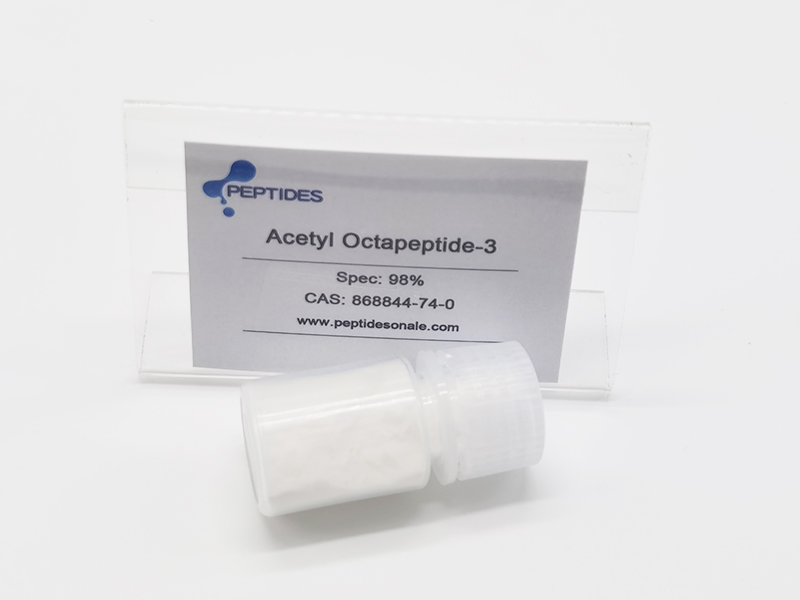
- Form: Fine powder (raw material)
- Color: White to off-white
- Solubility: Water-soluble
- Stability: Moderate; sensitive to high heat, extreme pH, and oxidation
- Storage: Cool, dry, protected from light and moisture
4. Primary function
- Designed to reduce the appearance of expression wrinkles
- Works through mild modulation of neurotransmitter-related signaling
- Helps relax micro-muscle contractions responsible for dynamic lines
5. Main cosmetic uses
- Anti-wrinkle serums
- Eye creams (crow’s feet reduction)
- Facial anti-aging creams
- “Botox-alternative” cosmetic formulations
6. Key properties
- Water-compatible cosmetic peptide
- Non-invasive, topical use only
- Mild and temporary effect
- Best suited for long-term skincare routines

7. Safety profile
- Generally considered safe for cosmetic use
- Low irritation potential
- Not intended for injection or medical treatment
8. Overall role in skincare
Acetyl Octapeptide-3 is mainly used as a functional cosmetic active that helps smooth facial expression lines and improve skin appearance through a gentle neuromodulating effect.
If you want, I can also summarize it in a one-table “datasheet format” (like an ingredient specification sheet) or compare it side-by-side with similar peptides like SNAP-8 or Argireline.