

Acetyl Hexapeptide-49 is a synthetic, acetylated hexapeptide, meaning it is composed of 6 amino acids linked by peptide bonds with an acetyl group (CH₃CO–) attached to one end of the molecule (usually the N-terminus).
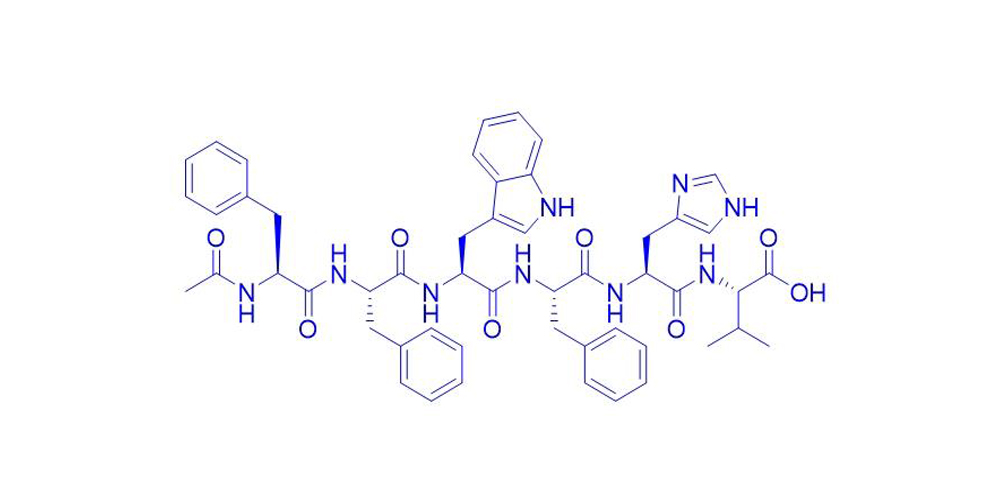
Chemical structure of Acetyl Hexapeptide-49
1. General structural features
Because the exact amino-acid sequence is typically proprietary to suppliers, the public description is usually limited to its class structure:
- Backbone: 6 amino acids connected via peptide (amide) bonds
- Modification: N-terminal acetylation
- C-terminal: usually free or amidated depending on formulation (varies by supplier)
- Structure type: linear peptide (not cyclic)
2. Typical molecular architecture (conceptual)
Ac–AA1–AA2–AA3–AA4–AA5–AA6
Where:
- Ac = acetyl group
- AA = amino acid residues (sequence not publicly standardized)
- Each AA contributes different side chains (R-groups) affecting polarity, stability, and skin interaction
3. Functional structural implications
Even without full sequence disclosure, key structural traits include:
- Amphiphilic balance (hydrophilic + hydrophobic regions)
→ helps skin penetration and interaction with the stratum corneum
- Small molecular size (hexapeptide)
→ improves topical absorption compared with larger peptides
- Acetylation increases stability
→ protects against enzymatic degradation on skin surface
Physical properties of Acetyl Hexapeptide-49
Because it is used in cosmetic formulations, its physical properties are described in formulation-relevant terms rather than strict pharmaceutical constants.
1. Appearance
- Typically a white to off-white powder
- May also appear as a lyophilized (freeze-dried) solid
2. Molecular weight
- Generally in the range of ~600–900 Da
- (exact value depends on amino acid sequence and terminal modifications)
3. Solubility
- Highly water-soluble
- Poor solubility in oils
- Often incorporated into aqueous serums, gels, and emulsions
4. Stability
Stable under mild acidic to neutral pH (≈ 4–7)
Sensitive to:
- High temperature
- Strong oxidizing agents
- Extreme pH conditions
Acetylation improves resistance to enzymatic breakdown
5. Charge properties
- Net charge depends on formulation pH and terminal modifications
- Often behaves as a weakly amphoteric peptide
6. Skin penetration characteristics
Limited natural deep penetration (like most peptides)
Works mainly in:
- Stratum corneum
- Upper epidermal layers
Delivery is often enhanced using:
- Liposomes
- encapsulation systems
- penetration enhancers
Key takeaway
Acetyl Hexapeptide-49 is a:
- Small, acetyl-protected linear peptide
- Water-soluble cosmetic active
- Designed for stability + skin interaction rather than deep systemic activity