

Acetyl Hexapeptide-8 is a short synthetic peptide with a defined amino-acid sequence and well-characterized cosmetic formulation properties.
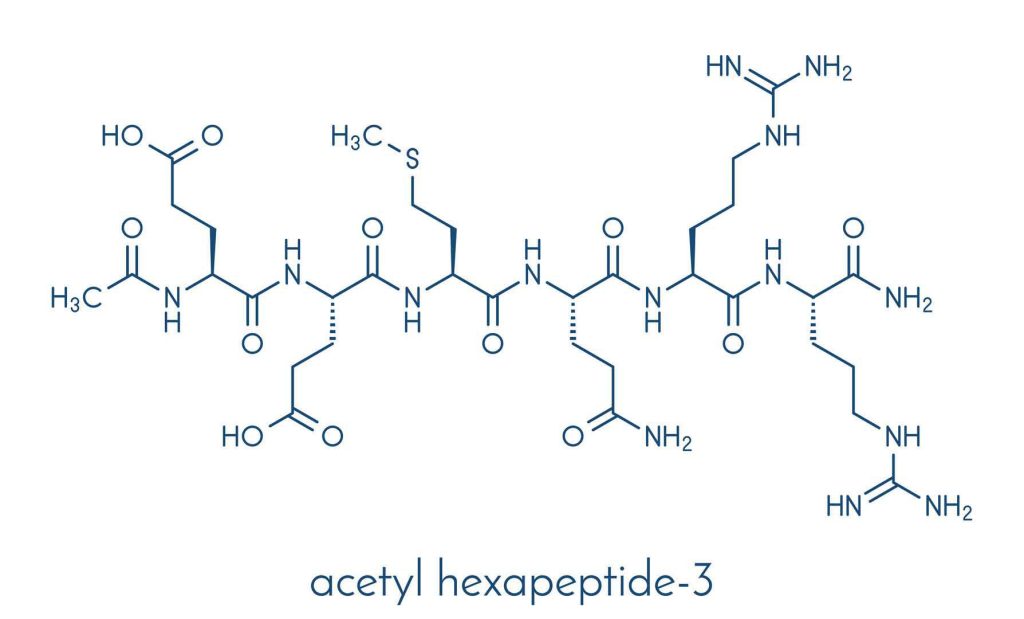
Chemical Structure of Acetyl Hexapeptide-8
Peptide identity
- Type: synthetic hexapeptide (6 amino acids)
- Modified form: N-acetylated peptide amide
Amino acid sequence
The most commonly reported structure is: Ac–Glu–Glu–Met–Gln–Arg–Arg–NH₂
Where:
- Ac = Acetyl group (N-terminal modification)
- Glu = Glutamic acid
- Met = Methionine
- Gln = Glutamine
- Arg = Arginine (×2)
- NH₂ = C-terminal amide
Structural features
- Short linear peptide chain
- Highly polar due to multiple charged amino acids (Glu, Arg)
- Contains both acidic (Glu) and basic (Arg) residues → amphoteric character
- N-acetylation improves stability and skin compatibility
- C-terminal amidation reduces degradation by exopeptidases
Molecular Formula and Weight
- Approximate molecular formula: C₃₄H₅₈N₁₄O₁₄S (varies slightly by reporting standard)
- Molecular weight: ~888–889 g/mol
This relatively low molecular weight (for a peptide) supports better formulation handling in topical products.
Physical Properties of Acetyl Hexapeptide-8
Appearance
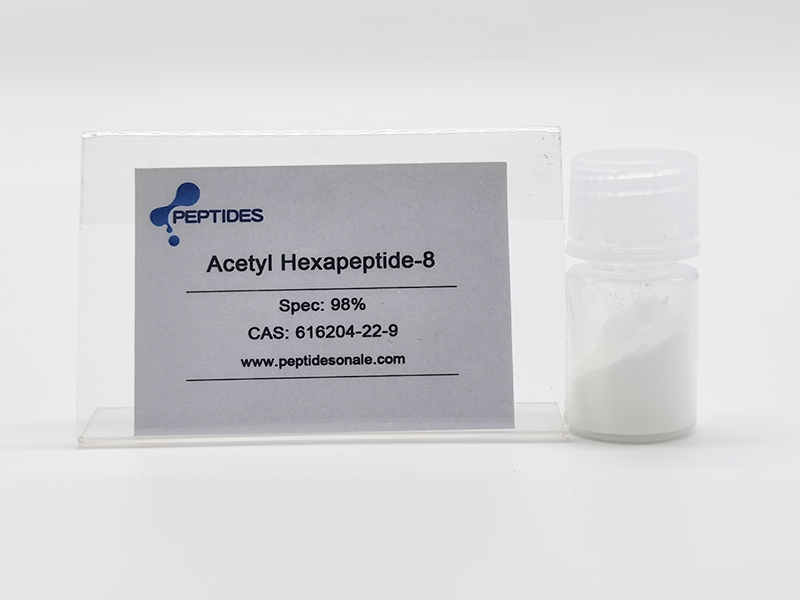
- White to off-white amorphous powder (pure form)
- Typically supplied as lyophilized powder in cosmetic raw material form
Solubility
- Highly soluble in water
- Insoluble in oils and non-polar solvents
- Often incorporated into aqueous gels, serums, and emulsions
Stability
Stable under mild cosmetic conditions
Optimal pH range: ~5.0–7.0
Sensitive to:
- Strong acids or bases (hydrolysis risk)
- High temperatures
- Prolonged exposure to UV (indirect degradation via formulation instability)
N-terminal acetylation and C-terminal amidation significantly enhance stability compared with unmodified peptides.
Charge characteristics
Net charge varies with pH:
- Slightly cationic at physiological pH
- Strong ionic interaction potential due to multiple charged residues
This influences:
- Skin interaction
- Formulation compatibility with other actives
- Binding to formulation matrices
Lipophilicity / permeability
- Highly hydrophilic
- Very limited passive skin penetration on its own
- Typically relies on formulation systems (liposomes, carriers, penetration enhancers) for enhanced delivery
Key Structural–Functional Relationship
The structure is designed to mimic part of the SNAP-25 protein segment, which is involved in neurotransmitter release. This structural mimicry is the basis for its cosmetic “expression line–softening” effect.
Summary
- A 6–amino acid synthetic peptide (Ac-Glu-Glu-Met-Gln-Arg-Arg-NH₂)
- ~889 Da molecular weight
- Highly water-soluble and strongly polar
- Stabilized by acetylation and amidation
- Chemically designed to mimic a fragment of SNAP-25 protein