

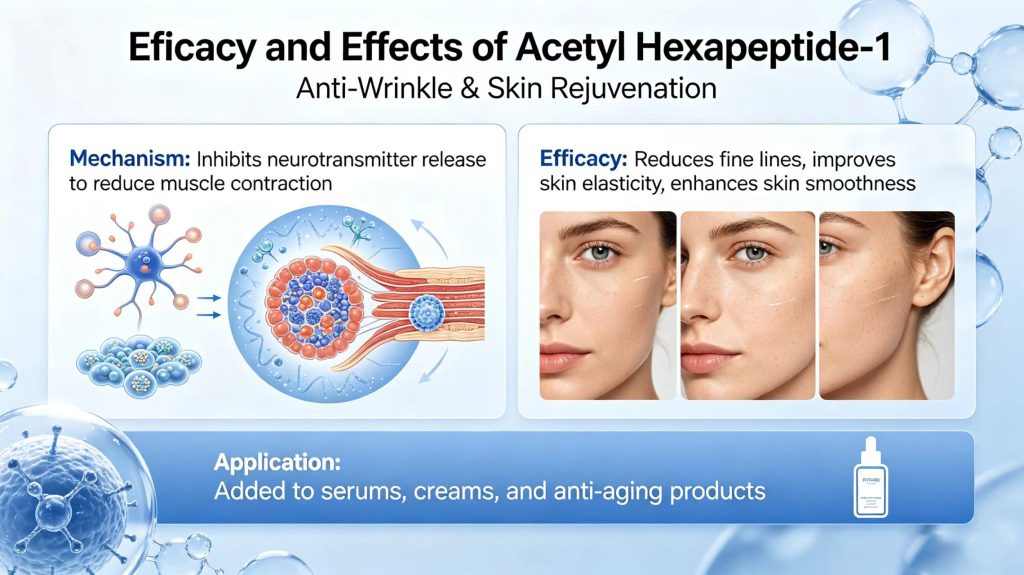
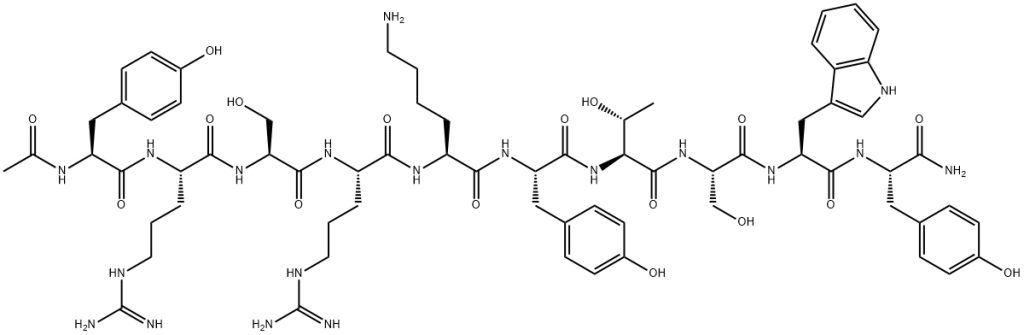
Acetyl Hexapeptide-1 is a cosmetic signal peptide mainly studied for its role in skin pigmentation regulation, photoaging protection, and skin tone improvement. Its efficacy is considered moderate in cosmetic science, with most evidence coming from in vitro and formulation-based studies rather than large independent clinical trials.
Functions of Acetyl Hexapeptide-1
1. Regulation of skin pigmentation (core function)
Its primary biological role is modulation of melanogenesis (melanin production).
Proposed actions:
- Influences melanocyte signaling activity
- Helps regulate tyrosinase-related pathways (key enzyme in melanin synthesis)
- Reduces overproduction of pigment after UV or inflammatory stress
Functional outcome:
- More even skin tone
- Reduced appearance of dark spots and discoloration
2. Anti-photoaging activity
Acetyl Hexapeptide-1 helps counteract UV-induced skin changes by:
- Reducing oxidative stress signaling in skin cells
- Modulating inflammatory responses after UV exposure
- Limiting excessive pigmentation response (sun-induced spots)
Outcome:
- Improved skin radiance
- Less visible sun damage over time
3. Anti-inflammatory modulation (mild)
It may help regulate low-level inflammation in the skin:
- Dampens inflammatory cytokine signaling
- Helps prevent inflammation-driven pigmentation (post-inflammatory hyperpigmentation)
4. Skin tone normalization
A key cosmetic function is improving overall complexion uniformity:
- Reduces uneven pigmentation patterns
- Enhances skin brightness
- Improves “dull” or tired-looking skin appearance
5. Skin quality improvement (secondary function)
Although not a primary collagen booster, it may indirectly support:
- Smoother skin appearance
- Improved overall skin clarity
- Healthier-looking complexion
Efficacy Overview
1. Evidence strength
| Type of evidence | Strength |
| Cell studies (melanocyte assays) | Moderate |
| Cosmetic formulation studies | Moderate |
| Human clinical trials | Limited |
| Independent replication | Sparse |
2. Observed effects in cosmetic use
When used consistently in topical formulations:
- Visible improvement in skin brightness (4–8 weeks)
- Reduction in mild pigmentation irregularities
- Enhanced overall skin radiance
- Subtle improvement in photoaged skin appearance
3. Limitations of efficacy
- Effects are gradual and subtle, not rapid or dramatic
- Works best in combination formulas (e.g., niacinamide, vitamin C derivatives)
- Limited deep dermal penetration without delivery systems
- Less potent than prescription depigmenting agents (e.g., hydroquinone, retinoids)
4. Mechanism-dependent effectiveness
Efficacy depends heavily on:
- Formulation stability (encapsulation improves performance)
- Skin penetration systems (liposomes, nano-carriers)
- Concentration and synergy with other actives
Bottom line
Acetyl Hexapeptide-1 works primarily by modulating melanocyte signaling and oxidative stress pathways, leading to gradual improvements in skin tone, brightness, and photoaging appearance. Its efficacy is best described as moderate, cosmetic-level, and formulation-dependent.