

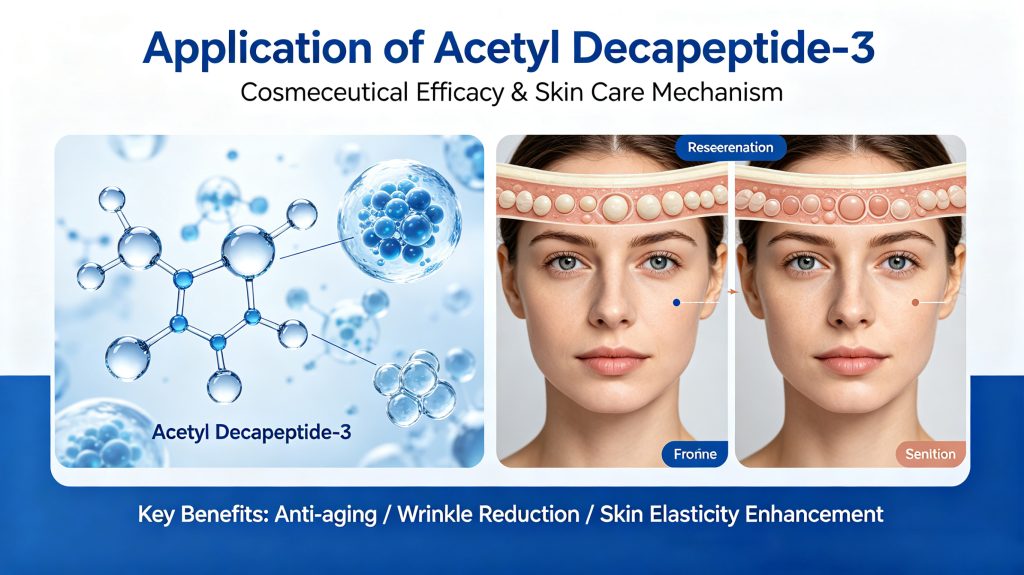
Acetyl Decapeptide-3 is a biomimetic peptide widely used in cosmetic and dermatological formulations due to its potential to promote skin regeneration, collagen production, and tissue repair. It is often marketed as a peptide that mimics certain biological activities associated with growth factors, particularly those involved in skin renewal.
1. Anti-Aging Skincare
The primary application of Acetyl Decapeptide-3 is in anti-aging products.
Benefits
- Reduces the appearance of fine lines and wrinkles
- Improves skin firmness and elasticity
- Supports collagen and elastin production
- Helps maintain a youthful skin structure
Common Products
- Anti-aging serums
- Firming creams
- Night repair treatments
- Eye creams
2. Skin Regeneration and Repair
Acetyl Decapeptide-3 is frequently included in formulations designed to enhance the skin’s natural repair processes.
Functions
- Stimulates skin cell renewal
- Supports fibroblast activity
- Promotes extracellular matrix (ECM) reconstruction
- Helps repair environmental damage
Applications
- Damaged skin recovery products
- Sensitive skin repair creams
- Recovery serums
3. Post-Procedure Recovery
Many professional skincare products use Acetyl Decapeptide-3 to support recovery after cosmetic procedures.
Procedures
- Microneedling
- Laser resurfacing
- Radiofrequency treatments
- Chemical peels
- Microdermabrasion
Potential Benefits
- Accelerates skin recovery
- Reduces visible irritation
- Enhances tissue regeneration
- Supports wound-healing processes
4. Collagen-Boosting Formulations
Collagen loss is a major contributor to skin aging. Acetyl Decapeptide-3 is commonly used in products targeting collagen support.
Potential Effects
- Encourages fibroblast proliferation
- Supports collagen synthesis
- Helps maintain skin density
- Improves skin resilience
Product Categories
- Collagen-enhancing serums
- Firming masks
- Intensive anti-aging ampoules
5. Eye Area Treatments
The delicate eye area often shows signs of aging first.
Benefits
- Improves skin firmness around the eyes
- Softens crow’s feet
- Reduces the appearance of fine lines
- Supports skin renewal
Common Products
- Eye serums
- Eye creams
- Anti-fatigue eye treatments
6. Advanced Cosmeceuticals
Acetyl Decapeptide-3 is frequently incorporated into premium “cosmeceutical” products that combine cosmetic and biologically active ingredients.
Often Combined With
- Hyaluronic acid
- Niacinamide
- Peptides
- Ceramides
- Antioxidants
- Growth factor complexes
Purpose
- Multi-pathway skin rejuvenation
- Hydration and repair
- Enhanced anti-aging performance
7. Sensitive and Mature Skin Care
Because it is generally well tolerated, Acetyl Decapeptide-3 is often included in products designed for:
Target Users
- Mature skin
- Dry skin
- Aging skin
- Sensitive skin
Goals
- Restore skin vitality
- Improve texture
- Enhance elasticity
- Strengthen the skin barrier
8. Professional Aesthetic Treatments
Some aesthetic clinics incorporate peptide-containing formulations into treatment protocols.
Uses
- Adjunct to skin rejuvenation therapies
- Post-treatment maintenance
- Long-term anti-aging programs
Expected Outcomes
- Improved skin appearance
- Better recovery after procedures
- Enhanced skin quality over time
Typical Use Levels
In cosmetic formulations, Acetyl Decapeptide-3 is generally used at low concentrations, often ranging from:
- 0.001%–0.05% in finished products
- Higher concentrations may be used in professional or concentrated serum formulations
Actual concentrations vary by manufacturer and formulation strategy.
Summary
The major applications of Acetyl Decapeptide-3 include:
- Anti-aging skincare
- Wrinkle reduction
- Skin regeneration and repair
- Collagen stimulation
- Post-procedure recovery
- Eye-area rejuvenation
- Sensitive and mature skin care
- Professional aesthetic treatments
Its value lies in its ability to support skin renewal and collagen production, making it a popular ingredient in advanced anti-aging and regenerative skincare products. However, while laboratory and manufacturer data are promising, independent clinical evidence remains more limited than for some established skincare actives.