

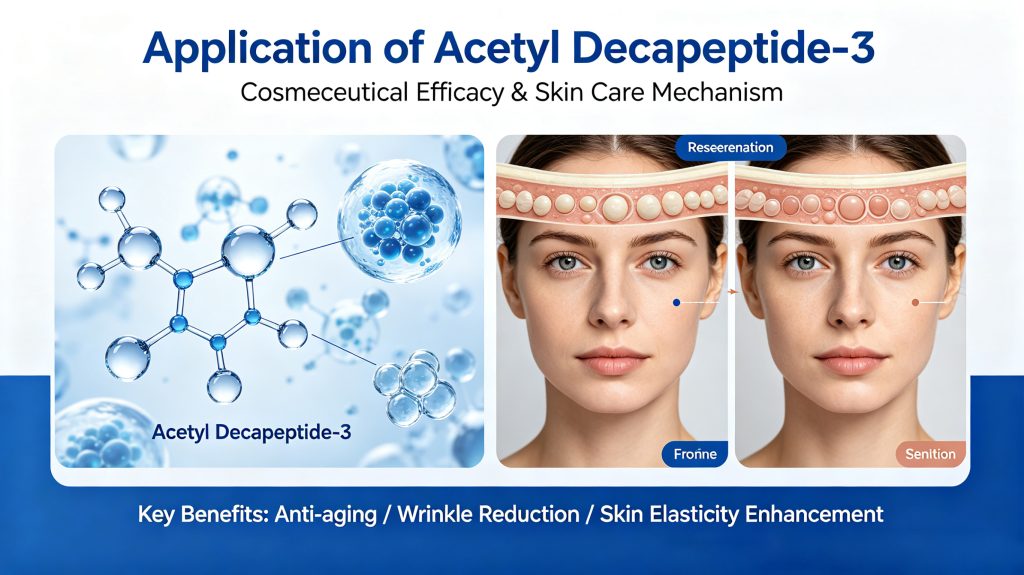
Acetyl Decapeptide-3 is a synthetic cosmetic signal peptide used in skincare products for anti-aging and skin-repair support. It is primarily included in serums, creams, and professional cosmetic formulations aimed at improving skin quality rather than treating medical conditions.
1. Name & Classification
- INCI / Common name: Acetyl Decapeptide-3
- Type: Synthetic peptide (decapeptide = 10 amino acids)
- Category: Biomimetic / signal peptide
- Primary use: Cosmetic anti-aging ingredient
- Marketed forms: Often found in multi-peptide complexes (e.g., anti-wrinkle blends)
2. Origin
- Developed through peptide engineering and biomimetic design
- Inspired by natural extracellular matrix signaling fragments
- Designed to mimic skin repair communication signals

3. Molecular Characteristics
- Length: 10 amino acids (decapeptide)
- Modification: N-terminal acetylation (Ac- group)
- Molecular weight: ~900–1300 Daltons (varies by sequence)
- Structure: Linear peptide chain (not cyclic)
4. Physical Properties
- Appearance: White to off-white powder (pure form)
- Solubility: Highly soluble in water
- Stability: Moderate (sensitive to heat, pH extremes, and enzymes)
- Best storage: Cool, dry, protected from light (often refrigerated in bulk form)
5. Primary Cosmetic Functions
- Supports collagen and extracellular matrix activity
- Helps improve skin firmness and elasticity
- Reduces appearance of fine lines and wrinkles
- Promotes skin repair and renewal processes
- Contributes to overall skin texture improvement
6. Mechanism Type (Simple Summary)
It works mainly by:
- Sending “repair signals” to fibroblast cells
- Encouraging increased production of structural skin proteins
- Supporting gradual skin remodeling over time
7. Applications
Commonly used in:
- Anti-aging serums
- Firming creams
- Eye-area skincare products
- Multi-peptide cosmetic blends
8. Evidence Level
- In vitro (lab studies): Moderate support for fibroblast activity
- Cosmetic studies: Some supportive results in skin texture improvement
- Clinical trials: Limited independent large-scale research
9. Safety Profile
- Generally considered safe for topical cosmetic use
- Low irritation potential
- No known systemic toxicity at cosmetic concentrations
- Not intended for injection or medical use
10. Key Takeaway
Acetyl Decapeptide-3 is a cosmetic signaling peptide designed to support skin structure and anti-aging effects by enhancing fibroblast activity and extracellular matrix maintenance, with effects that are gradual and mild to moderate depending on formulation quality.