

Acetyl Decapeptide-3 is a synthetic decapeptide (10–amino-acid peptide) used primarily in cosmetic formulations. Its exact amino acid sequence is generally proprietary and not consistently disclosed in public literature, but its structural class and physicochemical properties are well understood.
Chemical Structure of Acetyl Decapeptide-3
Core structural features
Type: Linear decapeptide (10 amino acids)
Modification: N-terminal acetylation (Ac- group)
Backbone: Standard peptide bonds (-CO-NH-) linking amino acids
General formula: Ac–(Amino acid)₁₀–OH (simplified representation)
Key structural implications
Acetyl group (Ac-) at N-terminus
- Increases stability against enzymatic degradation
- Reduces charge at the N-terminus
- Improves skin penetration slightly compared to non-acetylated peptides
C-terminal carboxyl group (-COOH)
- Contributes to hydrophilicity and ionic interactions
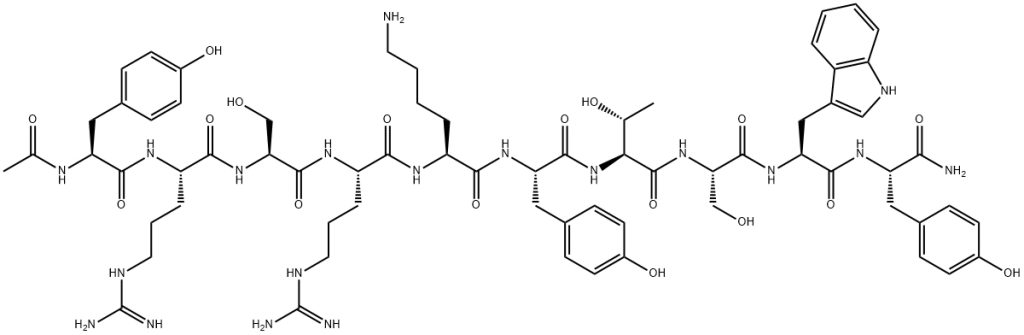
Overall structure
- Flexible linear peptide (not cyclic)
- No disulfide bonds (unlike cysteine-rich peptides)
Molecular Characteristics (Typical Range)
Because the exact sequence is not universally published, values are given as typical for a decapeptide cosmetic peptide:
Molecular weight: ~900–1300 Da (varies with sequence)
Structure type: Linear oligopeptide
Charge at physiological pH: Variable (depends on amino acid composition, often slightly positive or neutral)
Lipophilicity: Low (hydrophilic molecule)
Physical Properties of Acetyl Decapeptide-3
Appearance
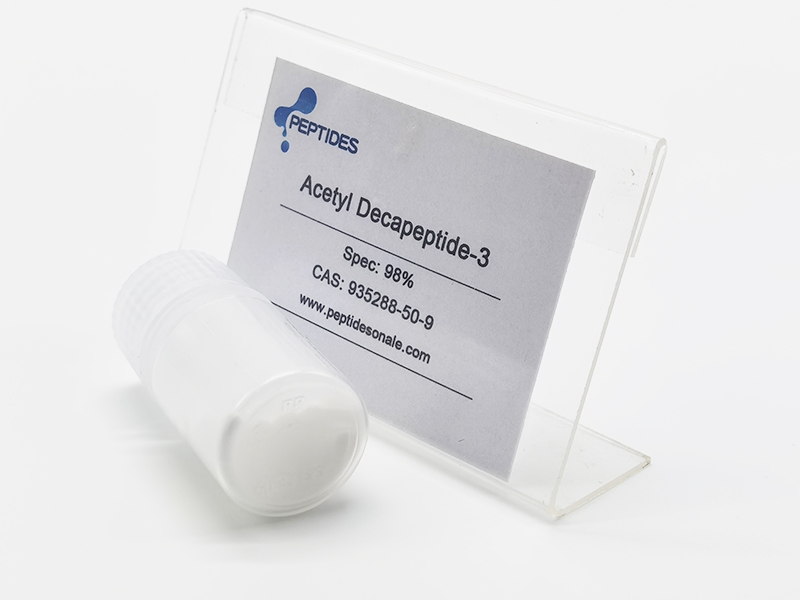
White to off-white lyophilized powder (pure form)
Sometimes supplied as a solution in cosmetic-grade solvents
Solubility
Highly soluble in water
Poor solubility in oils and non-polar solvents
Often formulated in aqueous serums or emulsions
Stability
Sensitive to:
- Heat (degrades at elevated temperatures)
- Extreme pH (best stability around pH ~4–7)
- Proteolytic enzymes (e.g., skin proteases)
More stable than non-acetylated peptides due to N-terminal acetylation
Storage requirements
Typically stored:
- 2–8°C (refrigerated) for long-term stability
- Protected from light and moisture
- Sometimes lyophilized for extended shelf life
Biophysical Behavior
Skin penetration: Limited by size (~1 kDa), but improved via formulation technologies (liposomes, nanoemulsions)
Membrane permeability: Low intrinsic permeability; relies on delivery systems
Bioavailability in skin: Primarily epidermal and upper dermal layers in topical use
Degradation: Broken down into amino acids by peptidases if not stabilized
Functional Link to Structure
The structure directly explains its cosmetic behavior:
- Small size (~10 aa): Enables signaling activity in skin cells
- Acetylation: Enhances resistance to breakdown and prolongs activity
- Hydrophilicity: Supports interaction with extracellular matrix and cell surface receptors
- Linear flexibility: Allows binding interactions with dermal signaling pathways
Bottom line
Acetyl Decapeptide-3 is a small, water-soluble, N-acetylated linear decapeptide with moderate stability and low intrinsic skin permeability. Its physical and chemical properties are typical of cosmetic signaling peptides: hydrophilic, enzymatically labile, and highly dependent on formulation technology for real-world effectiveness.