

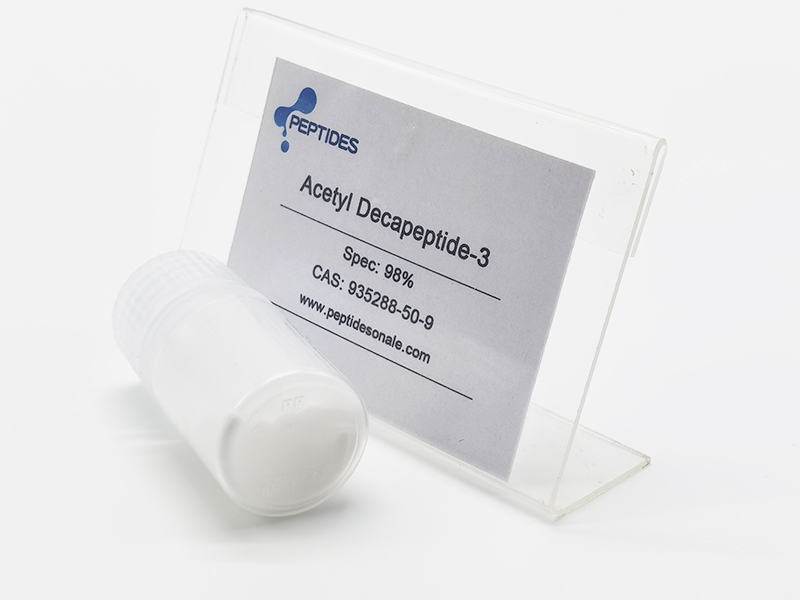
Acetyl Decapeptide-3 is a synthetic bioactive peptide composed of 10 amino acids with an acetyl group attached to its N-terminus. It is primarily used in cosmetic and skincare formulations as an anti-aging and skin-rejuvenating ingredient. It was developed to mimic certain biological activities of growth factors involved in skin repair and regeneration.
Basic Information
| Property | Description |
| INCI Name | Acetyl Decapeptide-3 |
| Peptide Type | Synthetic biomimetic peptide |
| Amino Acid Length | 10 amino acids (decapeptide) |
| Main Use | Anti-aging, skin regeneration, wrinkle reduction |
| Solubility | Water-soluble |
| Application | Serums, creams, anti-aging treatments |
Origin and Development
Acetyl Decapeptide-3 is derived from research into the biological activity of the naturally occurring growth factor known as Epidermal Growth Factor (EGF), an important signaling molecule that regulates:
- Skin cell proliferation
- Tissue repair
- Collagen synthesis
- Wound healing
Unlike full EGF proteins, Acetyl Decapeptide-3 is a much smaller peptide designed to provide some regenerative signaling benefits while offering greater formulation stability and lower production costs.
Mechanism of Action
Acetyl Decapeptide-3 is believed to:
- Stimulate skin cell renewal.
- Promote fibroblast activity.
- Encourage collagen and elastin synthesis.
- Support extracellular matrix (ECM) repair.
- Improve skin barrier recovery.
These effects may contribute to firmer, smoother, and younger-looking skin.
Potential Benefits
1. Skin Rejuvenation
Enhances skin renewal processes.
Supports repair of damaged skin tissue.
2. Wrinkle Reduction
Helps improve the appearance of fine lines and wrinkles.
May increase skin elasticity over time.
3. Collagen Support
Encourages production of collagen types involved in skin firmness.
4. Improved Skin Texture
Promotes smoother and more even skin surface.
5. Wound-Healing Support
May assist recovery after cosmetic procedures such as:
- Microneedling
- Laser treatments
- Chemical peels
Cosmetic Applications
Acetyl Decapeptide-3 is commonly found in:
- Anti-aging serums
- Firming creams
- Eye treatments
- Post-procedure recovery products
- Regenerative skincare formulations
It is often combined with:
- Hyaluronic Acid
- Niacinamide
- Copper peptides
- Growth-factor complexes
- Antioxidants
- Ceramides
Scientific Evidence
Research on Acetyl Decapeptide-3 itself remains relatively limited compared with larger growth factors such as Epidermal Growth Factor. Most available data come from:
- Ingredient manufacturer studies
- In vitro (cell culture) experiments
- Cosmetic efficacy testing
Current evidence suggests potential benefits for skin regeneration and anti-aging, but large-scale independent clinical trials are still lacking.
Safety Profile
Acetyl Decapeptide-3 is generally considered safe for topical use.
Possible Side Effects
- Mild skin irritation
- Temporary redness
- Rare allergic reactions
These effects are uncommon and usually associated with sensitive skin or high-concentration formulations.

Advantages
- Mimics regenerative growth-factor signaling.
- Stable and easy to formulate.
- Suitable for most skin types.
- Supports collagen production.
- May improve skin recovery after cosmetic treatments.
Limitations
- Limited independent clinical research.
- Results are gradual and require consistent use.
- Less potent than medical regenerative therapies.
- Benefits vary depending on formulation quality and concentration.
Summary
Acetyl Decapeptide-3 is a synthetic biomimetic peptide designed to imitate some of the regenerative effects of growth factors involved in skin repair. It is mainly used in anti-aging skincare products to promote collagen synthesis, improve skin texture, enhance firmness, and support skin renewal. While preliminary studies and cosmetic testing indicate promising benefits, more independent clinical research is needed to fully confirm its long-term efficacy.