

Acetyl Tetrapeptide-2 is a synthetic, acetylated tetrapeptide used primarily as an anti-aging and skin-conditioning cosmetic active. It belongs to the growing class of signal peptides designed to support the skin’s extracellular matrix and improve the appearance of firmness, elasticity, and age-related skin changes.
Origin
Acetyl Tetrapeptide-2 is synthetic rather than directly extracted from plants or animals. It is produced through controlled peptide synthesis, where four amino-acid residues are assembled into a specific sequence and an acetyl group is introduced at the N-terminal end.
The acetylation is important because modifying the peptide terminus can influence its:
- Stability in a cosmetic formulation
- Resistance to enzymatic degradation
- Lipophilicity and skin interaction
- Biological activity
It is therefore considered a biomimetic cosmetic peptide: its design is intended to interact with biological processes involved in maintaining youthful-looking skin.
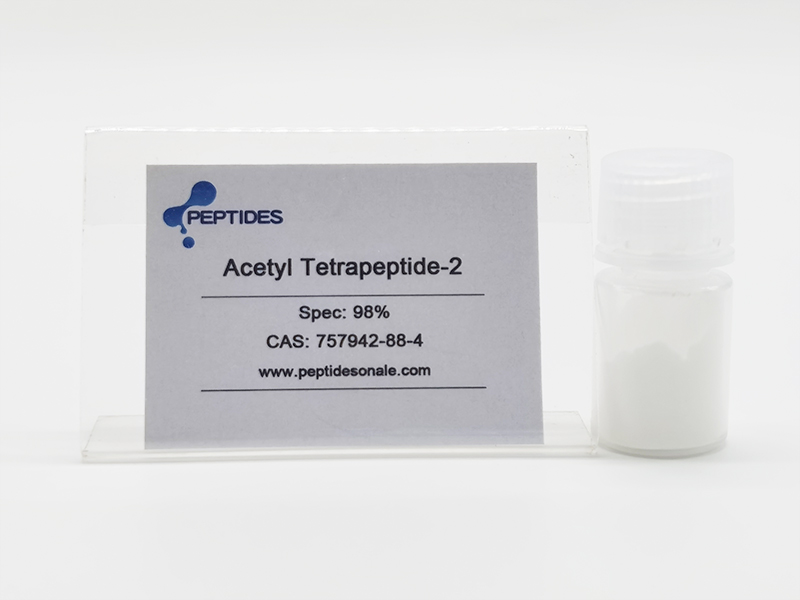
What does “Tetrapeptide-2” mean?
The name can be broken down as:
- Acetyl- — indicates N-terminal acetyl modification.
- Tetra- — indicates four amino-acid residues.
- Peptide — indicates that the amino acids are linked through peptide bonds.
- -2 — part of the INCI/designation naming system used to distinguish this particular peptide from other tetrapeptides.
The exact amino-acid sequence and molecular details should be taken from the supplier’s technical documentation because commercial peptide materials may be supplied in different forms or concentrations.
Key Properties
| Property | Description |
| Chemical class | Synthetic acetylated tetrapeptide |
| Peptide size | Four amino-acid residues |
| Cosmetic role | Anti-aging, skin-conditioning active |
| Origin | Synthetic/biotechnological manufacture |
| Primary application | Facial and body skincare |
| Target concerns | Loss of firmness, elasticity and visible signs of aging |
| Formulation role | Active ingredient rather than a bulk moisturizer |
| Mechanistic category | Biomimetic/signaling peptide |
Cosmetic Characteristics
Acetyl Tetrapeptide-2 is particularly interesting because peptides can act at very low concentrations compared with conventional structural ingredients. Rather than simply forming an occlusive film or increasing water content, peptide actives are generally developed to interact with cellular or extracellular signaling pathways.
Its intended cosmetic benefits include supporting the appearance of:
- Skin firmness
- Elasticity
- Smoothness
- Skin density
- Wrinkle appearance
- Overall youthful appearance
The ingredient is therefore more appropriately viewed as a bioactive anti-aging peptide than as a conventional humectant or emollient.
How It Fits Into Anti-Aging Skincare
Aging skin is associated with changes in the extracellular matrix, including alterations in collagen, elastin, glycosaminoglycans, and other structural components. Peptide-based cosmetic actives are designed to influence some of these processes.
Acetyl Tetrapeptide-2 is consequently used in formulations aimed at improving the visible structural quality of mature or stressed skin.
It can be incorporated into products such as:
- Anti-aging serums
- Firming creams
- Eye-area products
- Facial emulsions
- Neck and décolleté products
- Intensive skin-treatment formulations
- Premium peptide complexes

Important Formulation Consideration
Acetyl Tetrapeptide-2 should not be assumed to behave like a conventional ingredient simply because it is a peptide. Concentration, peptide purity, pH, temperature, preservatives, water activity, and interactions with other formulation ingredients can affect its stability and performance.
Commercial products are also frequently supplied as pre-dissolved peptide solutions or peptide blends, so the recommended use level should be based on the supplier’s specification rather than the concentration of pure peptide alone.
Overall Introduction
In summary, Acetyl Tetrapeptide-2 is a synthetic acetylated four-amino-acid peptide developed for cosmetic anti-aging applications. Its significance comes from the concept of using a small biomimetic peptide to influence biological processes associated with skin structure and aging.
It is best positioned as a specialized anti-aging/firming active, complementing—but not replacing—fundamental formulation components such as humectants, emollients, ceramides, antioxidants, and sunscreen.
If you’re studying it for cosmetic formulation, the next useful topics are its chemical structure and physical properties, mechanism of action, benefits, recommended concentration, stability, and Acetyl Tetrapeptide-2 vs. other anti-aging peptides.