

Acetyl Hexapeptide-49 is a synthetic cosmetic peptide developed within modern bioactive skincare research focused on skin sensitivity, inflammation control, and barrier repair.
Origin
Acetyl Hexapeptide-49 does not come from natural plant or animal extraction. It is:
- A laboratory-designed (synthetic) hexapeptide
- Built by assembling a specific sequence of six amino acids
- Chemically modified with an acetyl group to improve stability and skin interaction
Its amino acid sequence is typically reported as:
Ac-Phe-Phe-Trp-Phe-His-Val
It emerged from cosmetic peptide research programs exploring neurocosmetic and anti-inflammatory skin actives, particularly those targeting sensitive skin pathways.
Nature (What kind of ingredient it is)
Acetyl Hexapeptide-49 belongs to the category of:
- Cosmetic signaling peptides
- Neurocosmetic / anti-inflammatory peptides
- Skin barrier-support peptides
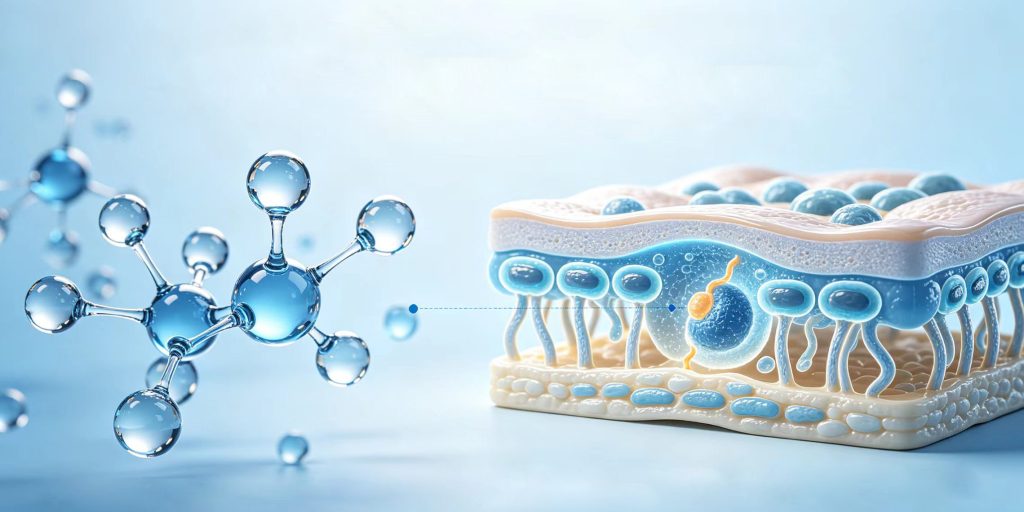
Its key biological target is the PAR-2 (Proteinase-Activated Receptor-2) pathway in the skin.
This receptor is involved in:
- Itch and irritation signaling
- Mast cell and inflammatory responses
- Release of cytokines like IL-6 and IL-8
- Neurogenic inflammation (skin “reactivity” and sensitivity)
So, rather than acting like a traditional moisturizer or exfoliant, its nature is closer to a:
cell-signaling modulator that calms overactive skin responses
Introduction (Why it was developed)
Acetyl Hexapeptide-49 was introduced as part of a newer generation of skincare peptides designed to address:
a) Sensitive and reactive skin
Researchers were looking for ingredients that could:
- Reduce redness
- Decrease stinging after acids or retinoids
- Improve tolerance of active skincare ingredients
b) PAR-2 pathway regulation
A key motivation was targeting PAR-2 overactivation, which is associated with:
- Irritation from surfactants and acids
- Itchy or inflamed skin conditions
- Barrier disruption and cytokine release
By modulating this pathway, the peptide helps reduce inflammatory cascades.
c) Barrier-support cosmetic science trend
It belongs to the broader trend of:
- “Skin barrier repair cosmetics”
- “Neurocosmetic ingredients”
- “Anti-redness / anti-stress skincare peptides”
These ingredients are designed not just to beautify skin, but to normalize how skin reacts to stress and irritation.
Commercial introduction
In cosmetics, it is often marketed under trade names such as:
- Delisens™
- Inhisens-type complexes (branding varies by supplier)
It is typically included in:
- Sensitive skin creams
- After-peel soothing products
- Barrier repair serums
- Anti-redness formulations
In short
Acetyl Hexapeptide-49 is a synthetic, lab-engineered hexapeptide developed for sensitive-skin care, designed to regulate the PAR-2 inflammatory pathway, reduce irritation, and support skin barrier recovery.
If you want, I can also map how it compares with Acetyl Hexapeptide-8 (Argireline) and Acetyl Hexapeptide-1 so you can see how different “hexapeptides” actually behave in skincare.