
Acetyl Hexapeptide-8 is a synthetic cosmetic peptide developed for anti-aging skincare, primarily aimed at reducing the appearance of facial expression lines. It is widely used in serums and creams as a topical “neuromodulating-like” ingredient, though its activity is far weaker and non-invasive compared with medical neurotoxins.
Origin
Acetyl Hexapeptide-8 was developed in the early 2000s by researchers working with peptide-based cosmetic actives, most notably through work associated with Lipotec (Spain). It is derived from a fragment of the SNAP-25 protein, which is involved in the regulation of neurotransmitter release.
Rather than being extracted from a natural source, it is:
- Fully synthetic
- Designed through peptide engineering
- Modeled after a naturally occurring protein sequence involved in nerve signaling
Its design goal was to mimic part of the mechanism of botulinum toxin in a safe, topical form without systemic effects.
Properties
1. Chemical nature
- Short-chain peptide (hexapeptide = 6 amino acids)
- Acetylated at the N-terminus to improve stability and skin compatibility
- Water-soluble and typically used in aqueous cosmetic formulations
2. Stability characteristics
- Moderately stable in cosmetic pH ranges (around pH 5–7)
- Sensitive to extreme heat and strong acids/bases
- Often formulated with stabilizing agents in serums and emulsions
3. Biological interaction (cosmetic-level activity)
Its activity is associated with modulation of the SNARE complex, which is involved in:
- Neurotransmitter vesicle fusion
- Muscle contraction signaling
In cosmetic use, this translates into:
- Mild reduction in neurotransmitter release in skin-associated nerve endings
- Temporary reduction in micro-muscle tension (surface-level effect only)
4. Physical characteristics
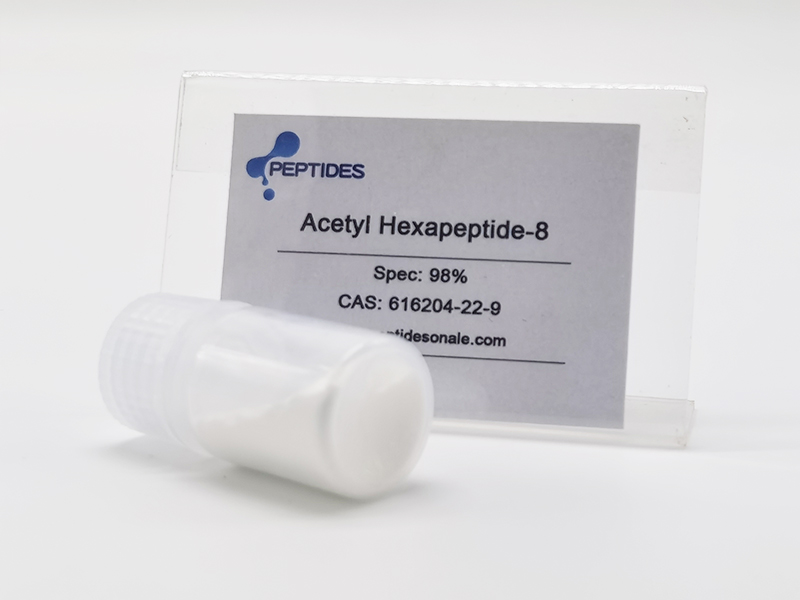
- White to off-white powder (in raw form)
- Highly water-soluble
- Typically used at very low concentrations in formulations (ppm-level ranges)
Introduction and functional concept
Acetyl Hexapeptide-8 was introduced into skincare as part of a new generation of biomimetic peptides designed to address aging through signaling pathways rather than exfoliation or hydration alone.
It is commonly referred to as:
- “Botox-like peptide” (marketing term)
- Argireline (trade name)
- Expression line peptide
Core concept in skincare:
Instead of physically filling wrinkles or exfoliating skin, it aims to:
- Reduce repetitive facial muscle contractions
- Soften dynamic wrinkles over time
- Improve the appearance of fine lines caused by facial expressions
Key positioning in cosmetics
It is typically used in:
- Anti-wrinkle serums
- Eye creams (crow’s feet targeting)
- Forehead line treatments
- “Botox alternative” skincare lines
Often combined with:
- Hyaluronic acid (hydration support)
- Other peptides (Matrixyl-type signaling peptides)
- Antioxidants (Vitamin C derivatives, etc.)
Important context
- It is not a drug and does not paralyze muscles like botulinum toxin
- Its effects are mild, cumulative, and cosmetic
- Results depend heavily on formulation quality and consistent use
If you want, I can also compare it directly with Acetyl Hexapeptide-1, SNAP-8, or Matrixyl peptides to show how different peptide anti-aging systems work.