

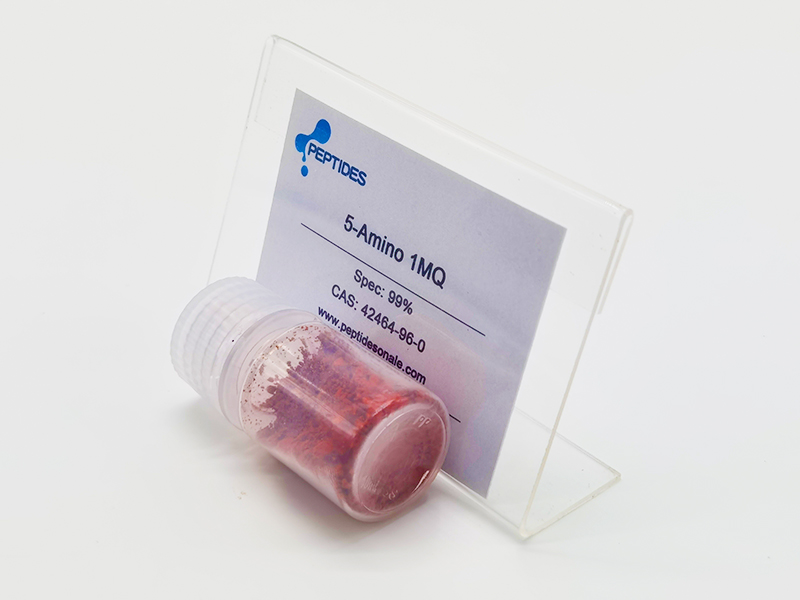
5-Amino 1MQ (5-Amino-1-Methylquinolinium) is a small-molecule compound being investigated as a potential metabolic and anti-obesity agent. It is primarily known for its ability to inhibit the enzyme Nicotinamide N-methyltransferase (NNMT), which plays a role in cellular energy metabolism, fat storage, and methylation pathways.
Overview
- Chemical name: 5-Amino-1-methylquinolinium
- Abbreviation: 5-Amino-1MQ
- Target: NNMT (Nicotinamide N-methyltransferase)
- Research status: Experimental; not approved as a drug by the U.S. Food and Drug Administration
- Administration: Most research has been conducted in animals and cell cultures; human clinical data remain limited.
Mechanism of Action
NNMT converts nicotinamide (a form of vitamin B3) into 1-methylnicotinamide using methyl groups from S-adenosylmethionine (SAM).
When 5-Amino 1MQ inhibits NNMT:
1. Nicotinamide levels increase
- More substrate becomes available for NAD⁺ synthesis.
2. NAD⁺ production may increase
- NAD⁺ is critical for mitochondrial energy production and cellular metabolism.
3. Fat storage may decrease
- Animal studies suggest reduced adipocyte (fat cell) size and fat accumulation.
4. Energy expenditure may increase
- Improved mitochondrial activity may promote greater calorie burning.
Potential Benefits Under Investigation
1. Weight Loss and Fat Reduction
Animal studies have reported:
- Reduced body fat
- Reduced adipocyte size
- Improved body composition
- Increased metabolic activity
Unlike many appetite suppressants, the proposed effect appears to be primarily metabolic rather than through reduced food intake.
2. Metabolic Health
Research suggests possible improvements in:
- Insulin sensitivity
- Glucose metabolism
- Energy utilization
- Mitochondrial function
3. NAD⁺ Support
Because NNMT inhibition may preserve nicotinamide, researchers have explored whether 5-Amino 1MQ could indirectly support cellular NAD⁺ levels.
Scientific Evidence
The strongest evidence currently comes from:
- Cell culture studies
- Rodent obesity models
- NNMT inhibition research
Some studies demonstrated:
- Significant reductions in fat mass
- Increased energy expenditure
- Improved metabolic markers
However:
- Large-scale human clinical trials are lacking.
- Long-term safety in humans remains unknown.
- Effective human dosing has not been established scientifically.
Potential Side Effects and Risks
Because human data are limited, the complete safety profile is unknown.
Potential concerns include:
1. Methylation Disruption
NNMT is involved in methyl-group metabolism.
Long-term inhibition could theoretically affect:
- SAMe metabolism
- Homocysteine balance
- Epigenetic regulation
2. Unknown Long-Term Effects
Potential risks include:
Metabolic adaptation
- Liver effects
- Neurological effects
- Cardiovascular effects
These remain largely unstudied in humans.
3. Drug Interactions
Theoretical interactions may occur with:
- NAD⁺ boosters
- Methyl donors
- Certain metabolic medications
Clinical interaction studies are not yet available.
Comparison with GLP-1 Drugs
| Feature | 5-Amino 1MQ | Semaglutide/Tirzepatide |
| Primary target | NNMT | GLP-1 receptor (and GIP for tirzepatide) |
| Appetite suppression | Minimal | Strong |
| Fat metabolism | Direct metabolic effect | Indirect through reduced calorie intake and hormonal effects |
| Human evidence | Very limited | Extensive clinical trials |
| Regulatory approval | No | Yes (for specific indications) |
Current Status
5-Amino 1MQ is best viewed as an experimental NNMT inhibitor with promising preclinical evidence for:
- Fat loss
- Improved metabolic health
- Enhanced energy metabolism
However, it remains far behind approved metabolic therapies such as Semaglutide, Tirzepatide, and Liraglutide in terms of demonstrated efficacy and safety in humans.
Bottom Line
5-Amino 1MQ is a research compound that inhibits NNMT, potentially increasing cellular NAD⁺ availability and reducing fat accumulation. Animal studies are encouraging, but robust human clinical evidence is still lacking, so its effectiveness and long-term safety in humans remain uncertain.